
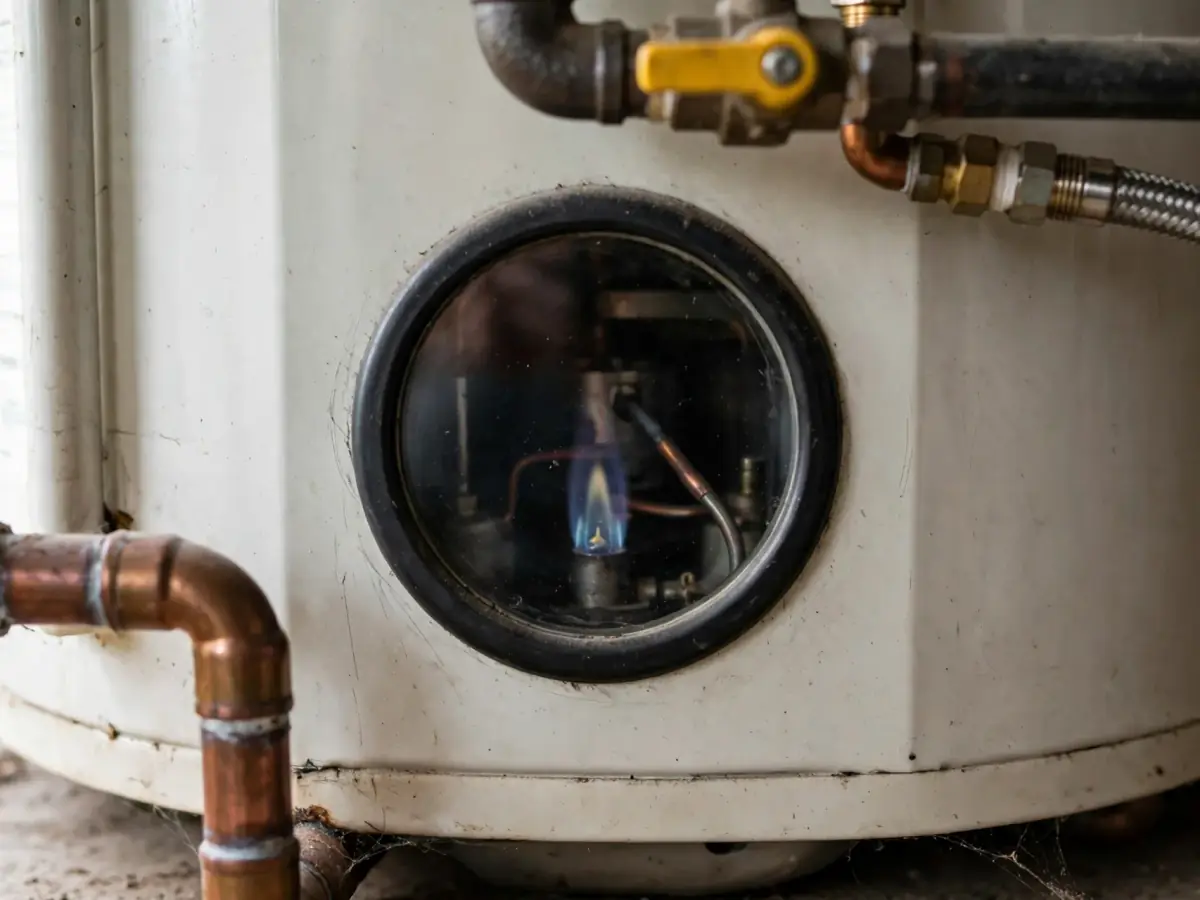
Key facts: Pilot light keeps going out
- The gas valve keeps the pilot lit only while the thermocouple produces a small voltage from the pilot flame.
- Goes out when you release the knob: suspect the thermocouple. Goes out after the burner fires: suspect air supply or venting.
- Lint and dust can clog the air screen under flammable-vapor-resistant heaters and starve the flame.
- Never relight if you smell gas; leave and call your gas utility from outside [2].
Short answer
Pilot light problems: the short answer
The gas control valve keeps gas flowing to the pilot only while a thermocouple or thermopile in the pilot flame produces a small electrical signal. If that signal drops, the valve closes and the pilot goes out. The usual causes are a worn or misaligned thermocouple, a dirty pilot that makes a weak flame, a clogged flame arrestor that chokes the burner of air, a draft, or a problem with the gas supply.
When the pilot goes out right as you release the knob, suspect the thermocouple. When it stays lit for a while and then goes out, often once the main burner fires, suspect air supply or venting.
Diagnose it
Pilot symptoms: likely causes and what to do
| What you see | Likely cause | What to do |
|---|---|---|
| Pilot goes out when you release the knob | Weak or misaligned thermocouple | Call; thermocouple replacement is a common repair |
| Pilot is small, yellow or flickering | Dirty pilot orifice or low gas pressure | Call for cleaning and a pressure check |
| Pilot lights, then goes out when the burner starts | Burner starved of air: clogged flame arrestor or blocked vent | Turn it off and call; do not keep relighting |
| Pilot will not light at all | Gas off, seismic valve tripped, failed igniter | Check other gas appliances; call if they work |
| Pilot goes out on windy days | Downdraft through the vent or a drafty garage | A plumber can check venting and the vent cap |
| Black soot around the burner door | Poor combustion or flame rollout | Turn it off and call; this is a safety issue |
Safe checks
What you can safely check
- Check for gas odor firstAny gas smell means stop, leave and call from outside. [2]
- Try another gas applianceIf the stove will not light either, the problem is the gas supply or a tripped seismic valve.
- Follow the label onceThe lighting instructions are printed on the heater. Relighting once is a normal homeowner task.
- Clear the areaMove storage, laundry and anything flammable away from the base of the heater.
- Don't keep relightingIf it goes out again, the heater is telling you something. Repeated relighting will not fix it.
Diagnosis
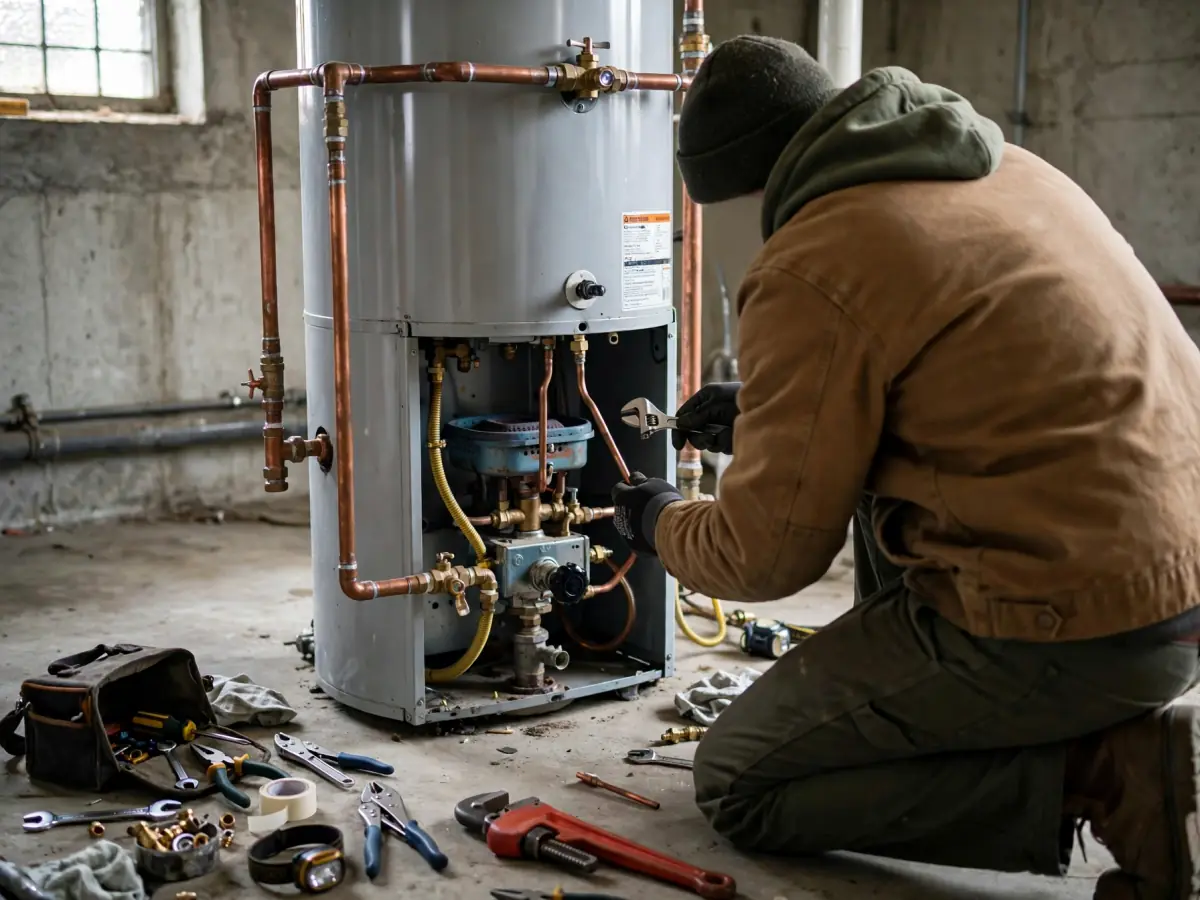
How a plumber fixes a pilot that won't stay lit
- 1
Safety and supply
Check for leaks, confirm gas pressure and confirm the seismic or excess-flow valve is open.
- 2
Measure the sensor
Thermocouple or thermopile output is measured with the pilot running.
- 3
Inspect air and venting
Look at the flame arrestor and burner, and confirm the vent draws properly.
- 4
Clean, replace and test
Replace or clean the faulty part and run a full burner cycle to confirm it stays lit.
Drafts and venting
Drafts, venting and the pilot
A pilot that goes out on windy days, or when a nearby door or window is opened, is often affected by air moving in the space or down the vent. A missing or damaged vent cap, a vent that is too short, or a heater placed in a drafty spot can all cause it. Closing a garage door should not put a healthy pilot out.
Venting problems matter beyond the pilot. If exhaust is not drawn up the vent properly, it can spill back into the room. [3] Signs include soot at the draft hood, a smell of exhaust, or condensation around the top of the heater, and any of these call for an inspection and working carbon monoxide alarms.
Thermocouples
How a thermocouple actually works
A thermocouple is two different metals joined at the tip. Heat at that junction produces a very small voltage, measured in millivolts, which holds an electromagnet in the gas valve open. As long as the pilot flame heats the tip, the magnet holds and gas keeps flowing. If the flame goes out, the tip cools within a minute or so, the voltage drops and the valve snaps shut. That is why the heater cannot leak unburned gas when the pilot dies.
Thermocouples wear out slowly. The tip oxidizes, the connection at the valve loosens, or the pilot flame shifts so it no longer covers the tip. Each of those reduces the voltage until it is just below what the valve needs, and the pilot starts dropping out intermittently before it fails completely. A meter reading during the visit shows which one it is.
Some heaters use a thermopile instead, a bundle of thermocouples that produces more voltage and can power the gas control without house electricity. They fail in similar ways and are tested the same way.
Before the visit
Information that speeds up the repair
- The brand, model and serial number from the rating plate, or a clear photo of it.
- Whether the heater has a standing pilot you can see or an igniter that clicks.
- When the pilot goes out: as soon as you release the knob, after a few minutes, after the burner fires, or at random.
- Anything that changed recently, such as new storage near the heater, a remodel, a windy spell or an earthquake.
- Whether other gas appliances are working normally.
FAQ
Pilot light questions
Can I replace a thermocouple myself?
On older open-burner heaters some homeowners do, but on FVIR heaters the pilot is part of a sealed assembly, and a bad seal affects safety. A licensed professional should do it.
My heater has no pilot, just a clicking igniter. Does this apply?
Partly. Electronic-ignition heaters use a hot-surface igniter or spark and a flame sensor instead of a standing pilot. The diagnosis is similar: confirm gas, air and venting, then test the igniter and sensor.
Why did the pilot go out after an earthquake?
A seismic gas shut-off valve may have closed. All gas appliances will be off until it is reset and pilots are relit.
How do I relight a water heater pilot safely?
Follow the lighting instructions printed on the heater, which differ between models. In general you turn the control to Off and wait several minutes for gas to clear, then set it to Pilot, hold the knob down while pressing the igniter, keep holding for the time the label says, and then turn it to On. Stop immediately if you smell gas.
Why is my pilot flame yellow?
A healthy pilot is mostly blue and wraps the thermocouple tip. A yellow, lazy or flickering flame usually means a dirty pilot orifice, poor air supply or low gas pressure, and it often goes along with a pilot that will not stay lit.