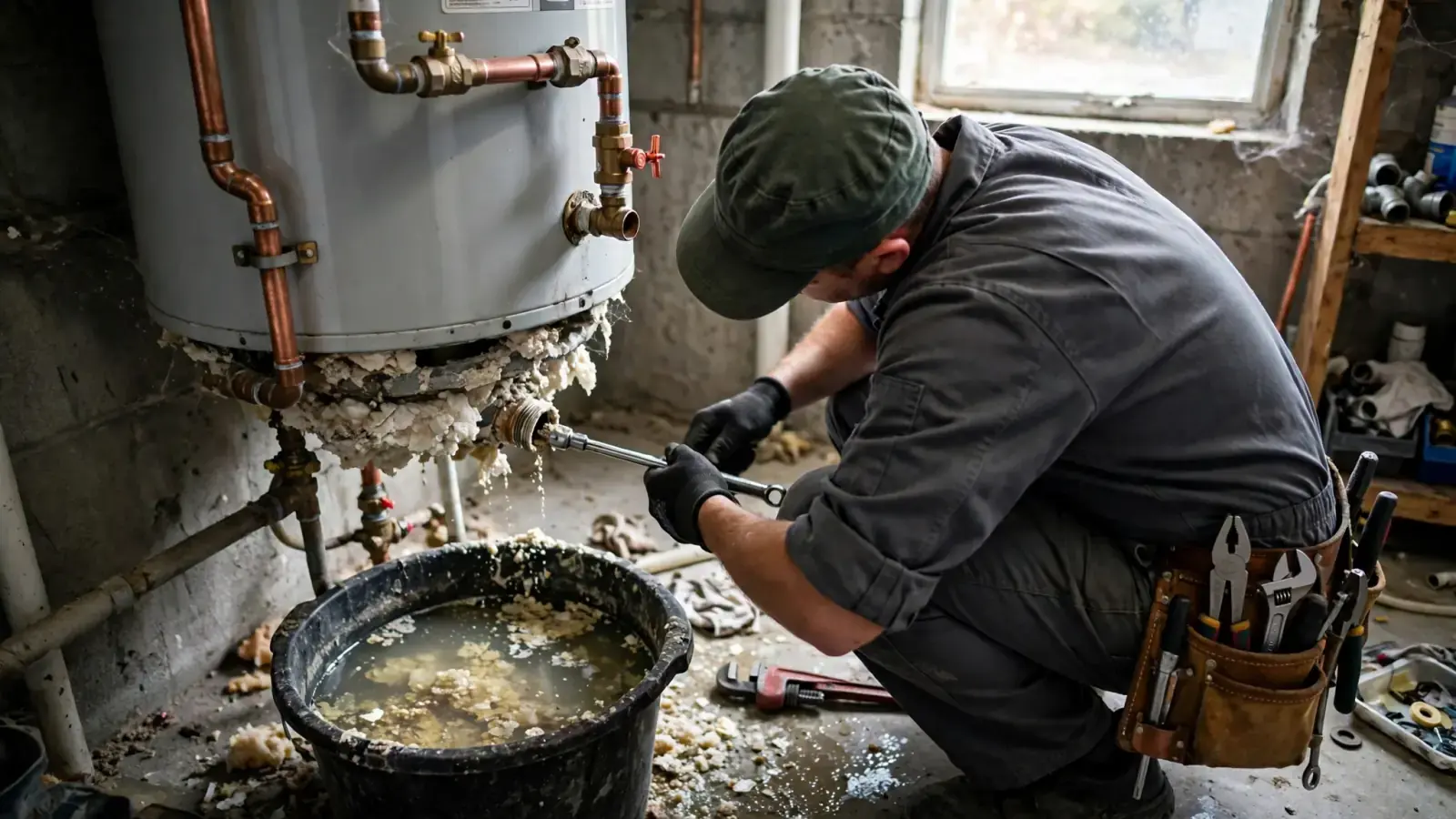
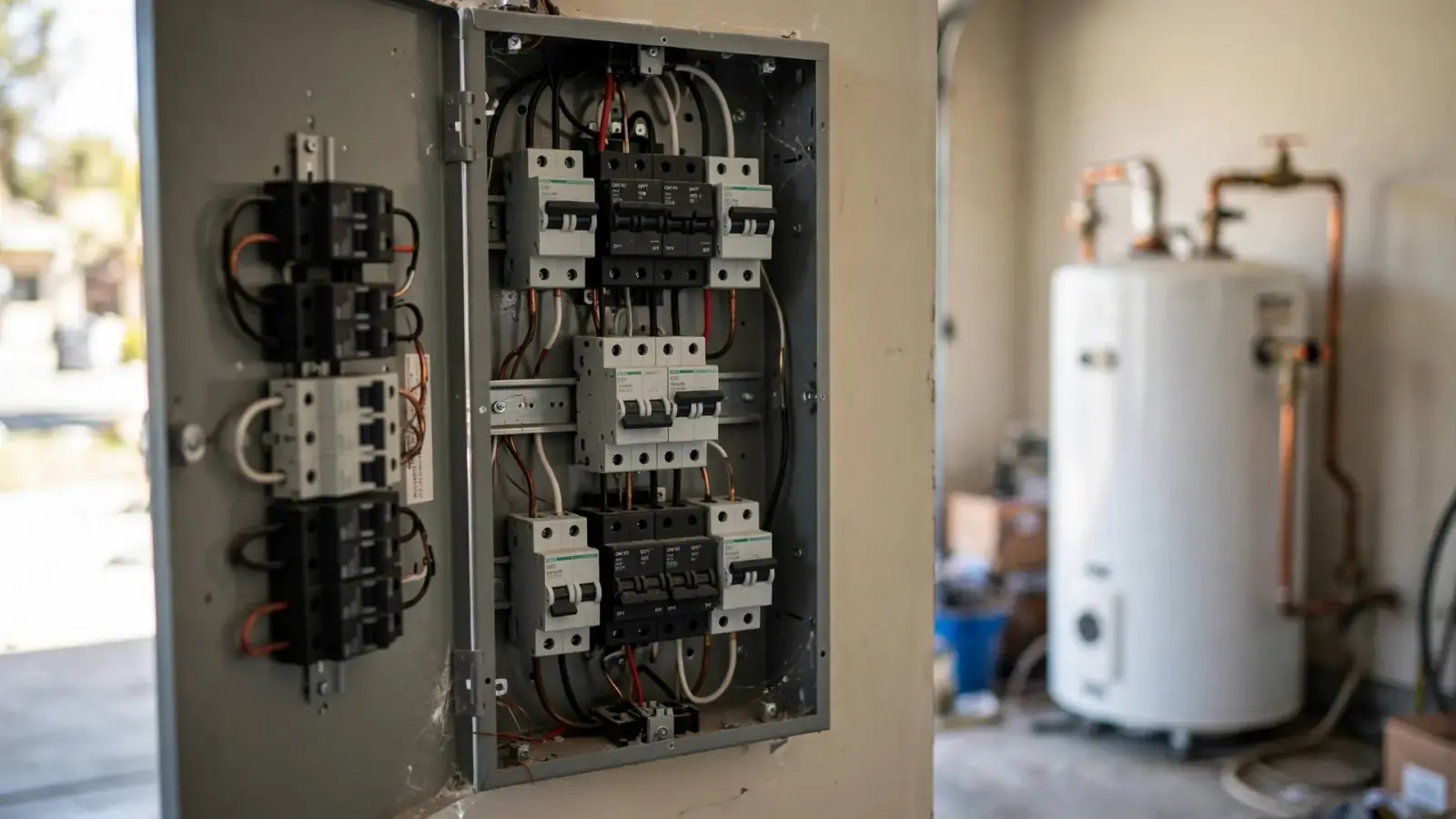
Key facts: Water heater keeps tripping
- A breaker trip means too much current: usually a shorted element, damaged wiring or a weak breaker [2].
- A red reset button trip means the water overheated: usually a stuck thermostat or a shorted element.
- Most electric tank heaters have two thermostats that must be set to the same temperature [1].
- Reset once only. If it trips again, leave the power off until the heater is tested.
- Never power a tank that is not completely full; the elements burn out in seconds.
Short answer
Water heater keeps tripping: the short answer
If the breaker in your electrical panel keeps tripping, the circuit is seeing too much current, most often from a heating element that has shorted to the tank, damaged wiring, or a failing breaker [2]. If the red reset button on the heater keeps tripping, the water inside got too hot, usually because a thermostat is stuck on, an element is shorted, or a terminal is loose and overheating.
Either way, a heater that trips again soon after it is reset is telling you something is wrong. Resetting it over and over hides the cause and can let a small electrical fault become a dangerous one. Reset once; if it trips again, leave the power off and have the heater tested.
Diagnose it
Breaker trip or reset trip: what each one points to
| What trips | What it protects against | Most likely causes | What to do |
|---|---|---|---|
| Breaker in the panel, right away | Short circuit | Element shorted to the tank, damaged supply wiring, failed breaker | Leave it off and call a plumber |
| Breaker after a few minutes of heating | Overload or ground fault | Element partly shorted, wiring heating up at a loose terminal | Leave it off and call a plumber |
| Red reset button on the heater | Water overheating | Thermostat stuck closed, shorted element, loose terminal | Reset once; if it trips again, leave the power off |
| Both the breaker and the reset | Several faults at once | A shorted element often causes both | Leave it off and call a plumber |
| Breaker trips when other appliances run | Circuit shared or undersized | Heater not on a dedicated circuit, breaker the wrong size | Have an electrician check the circuit |
The breaker
Why the breaker in the panel trips
A circuit breaker is designed to open automatically when it detects a short circuit or an overload, protecting the wiring from overheating [2]. An electric water heater normally has its own double-pole breaker on a dedicated circuit, so a trip there points to the heater, its wiring or the breaker itself.
The most common cause is a heating element that has failed in a way that lets current flow to the tank. Elements live in water for years, and sediment, scale and corrosion eventually crack the sheath. A plumber tests each element for continuity and for a short to ground; an element that reads as shorted is replaced.
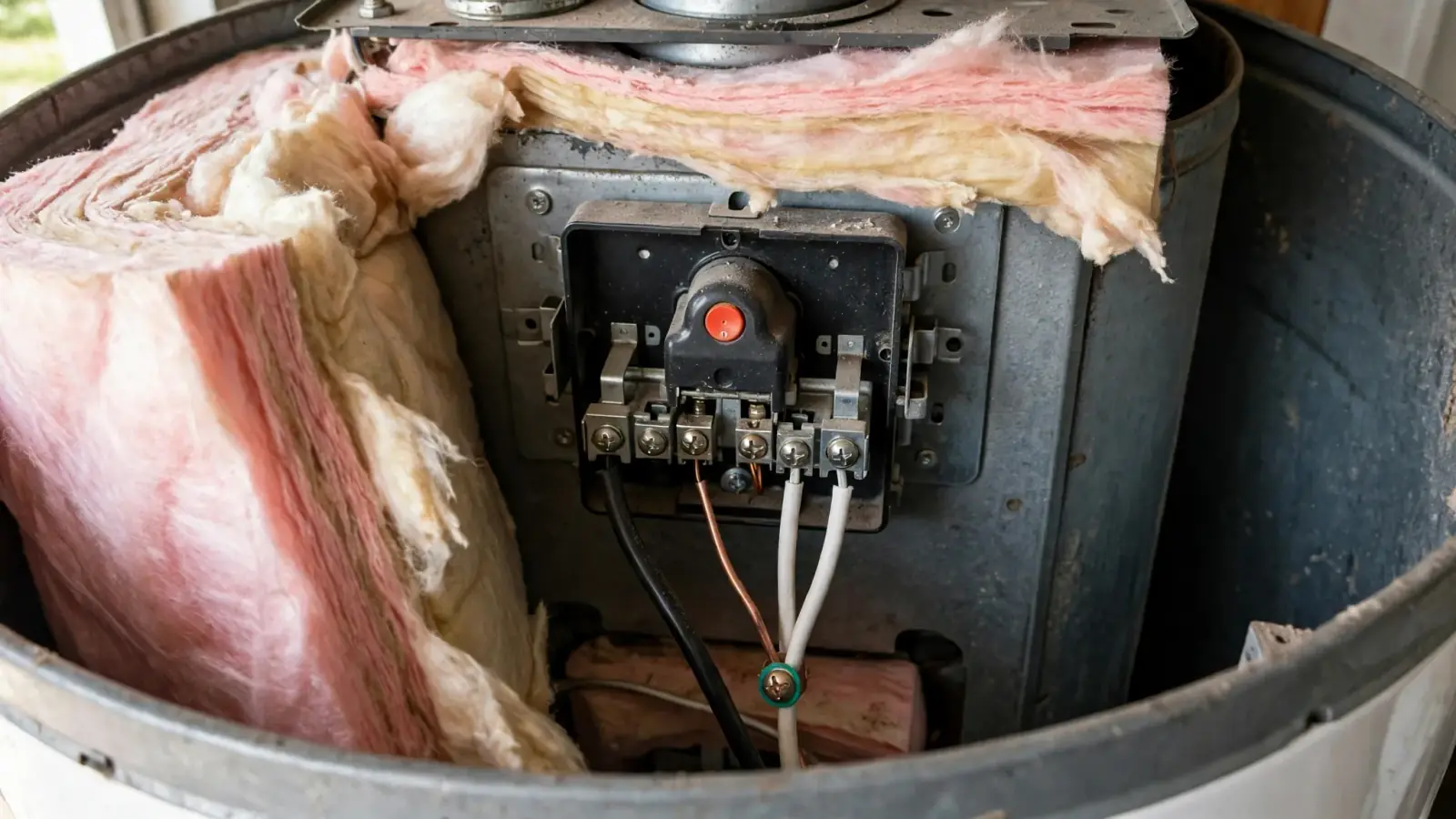
Wiring is the next suspect. Loose or corroded terminals at the element or thermostat heat up, discolor and can melt insulation. Supply wiring that was damaged during a past repair, or chewed by pests in a garage, can also cause trips. Less often, the breaker itself has weakened with age and trips below its rating, which an electrician can confirm.
Safe checks
Safe checks before you call about tripping
These checks need no tools and no access panels opened.
- Note what trippedLook at the panel first. If the heater's double-pole breaker sits in the middle or off position, the breaker tripped. If the breaker is on but there is no hot water, the reset button may have tripped.
- Reset once onlySwitch the breaker fully off, then on. If you know the reset button tripped, a professional or the manufacturer's instructions should guide pressing it, because the access panel must be opened with the power off at the breaker [1].
- Watch and listenNote how long the heater runs before it trips again, and whether you hear sizzling or smell anything hot. Those details help the plumber narrow the fault.
- Look for waterWater dripping near the access panels or pooling at the base can reach the wiring. If you see it, keep the breaker off and close the cold-water valve above the heater.
Diagnosis
How a plumber finds the cause of the tripping
- 1
Confirm the circuit
Check that the heater is on its own breaker of the size listed on the rating plate, and that the breaker and supply wiring are in good condition.
- 2
Test each element
With the power off, measure each element's resistance and test it for a short to the tank. A shorted element is the most common cause of both kinds of trip.
- 3
Test the thermostats
Check that each thermostat switches off at its setting and that the high-limit switch is not weak or damaged.
- 4
Inspect terminals
Look for loose, corroded or heat-damaged connections at the elements and thermostats, and repair any damaged wiring.
- 5
Run a test cycle
After the repair, restore power only with the tank full and watch the heater through a complete heating cycle.
Prevention
Preventing repeat trips
Sediment is the slow cause behind many element failures. Minerals settle around the lower element, insulate it from the water, and make it run hotter than it should until the sheath cracks. A yearly flush removes much of that sediment, and an anode rod check every few years helps protect the tank from corrosion.
Never restore power to a tank that has been drained until it is completely full. An element that switches on surrounded by air instead of water burns out almost instantly, and the damaged element can cause trips as soon as the tank is refilled.
Keep the thermostat at a sensible setting. The U.S. Consumer Product Safety Commission recommends 120°F to reduce the risk of scalding, and a lower setting also uses less energy [1].
Gas and tankless
Gas and tankless heaters that shut off
Gas tank heaters do not have heating elements, so a gas heater that keeps shutting off is usually a pilot or flame problem rather than a tripped breaker; see pilot light keeps going out. Some newer gas models with electronic controls flash a status light when they shut down, and the pattern points to the fault.
Electric tankless units draw a very large current, often on several dedicated breakers. Repeated trips there can mean a failed heating chamber, scale on the elements, or a circuit that is undersized for the unit, and the diagnosis is work for a qualified professional.
FAQ
Tripping water heater questions
Why does my water heater keep tripping the breaker?
Most often a heating element has shorted to the tank. Damaged or loose wiring and a weak breaker are the other common causes. Leave the breaker off and have the heater tested.
Why does the reset button on my water heater keep tripping?
The water is overheating. A thermostat stuck on, a shorted element or a loose, overheating terminal are the usual causes. Reset once; if it trips again, leave the power off.
Is it safe to keep resetting my water heater?
No. Each trip is a safety device doing its job. Resetting repeatedly hides the fault and can let an electrical problem get worse.
Can a bad thermostat trip the breaker?
A stuck thermostat usually trips the red reset button rather than the breaker. Breaker trips more often come from a shorted element or damaged wiring.
How long should a water heater run before tripping?
A healthy water heater should not trip at all in normal use. Note whether it trips immediately or after minutes of heating; the timing helps a plumber pinpoint the fault.
Who fixes a water heater that keeps tripping in Los Angeles?
A licensed plumber who works on electric water heaters. Call the number on this page and describe what trips and when.