Key facts: Hollywood Hills
- Hillside heaters often sit in closets, crawlspaces or lower levels, so leaks can damage finished rooms.
- Much of the hillside area is a state-mapped Very High Fire Hazard Severity Zone [1].
- A drain pan with a real drain line and an automatic shut-off are worth adding to any indoor heater.
- Wall-mounted tankless units free closet space [3]; replacement permits come from LADBS [2].
Hillside homes
What hillside homes are like
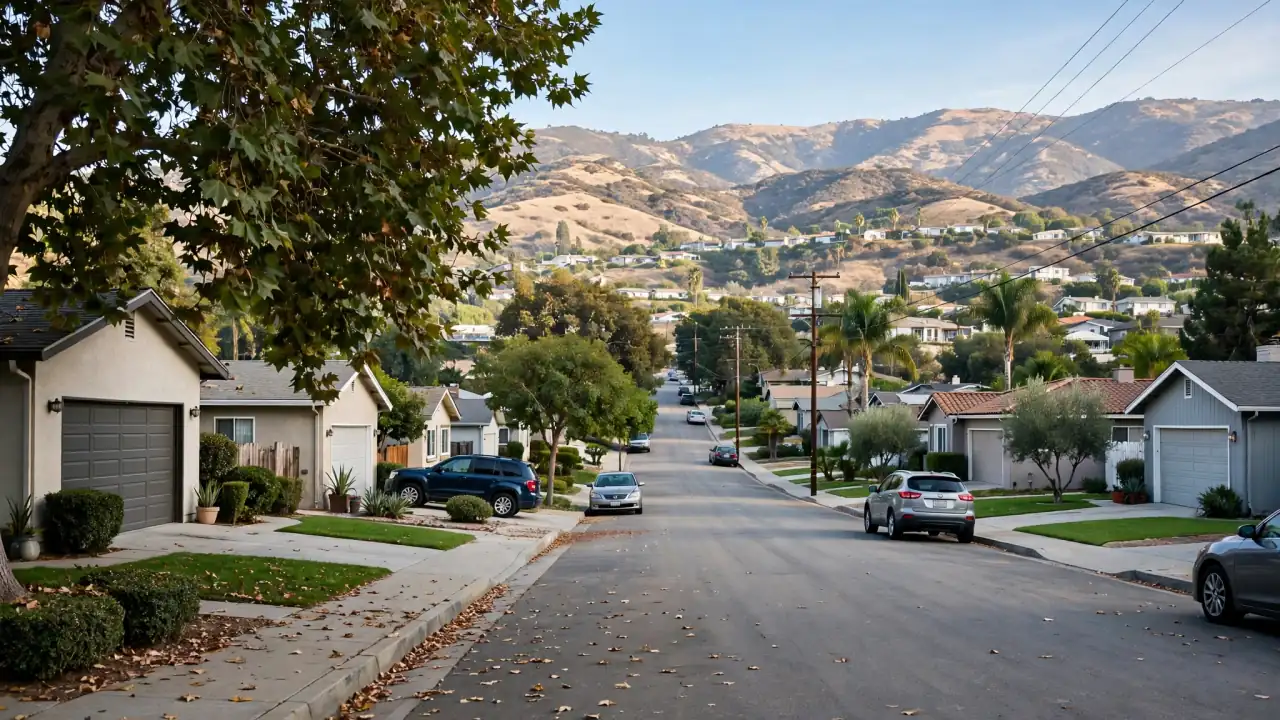
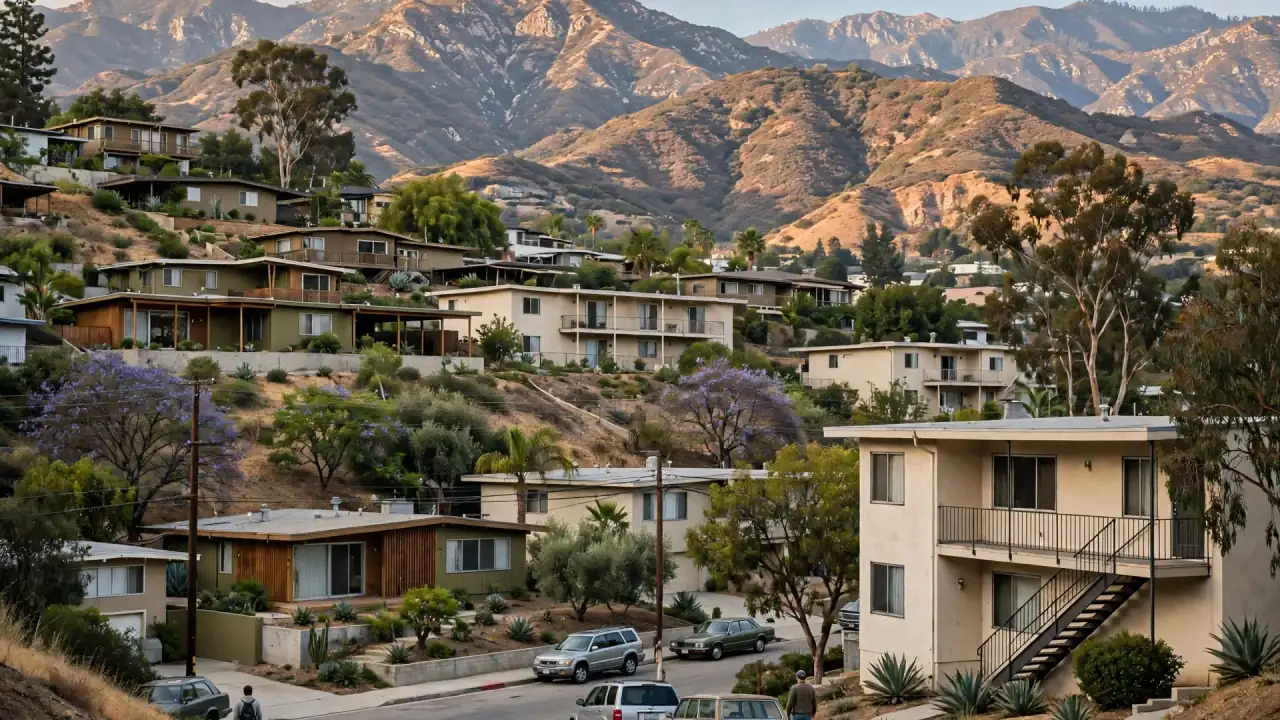
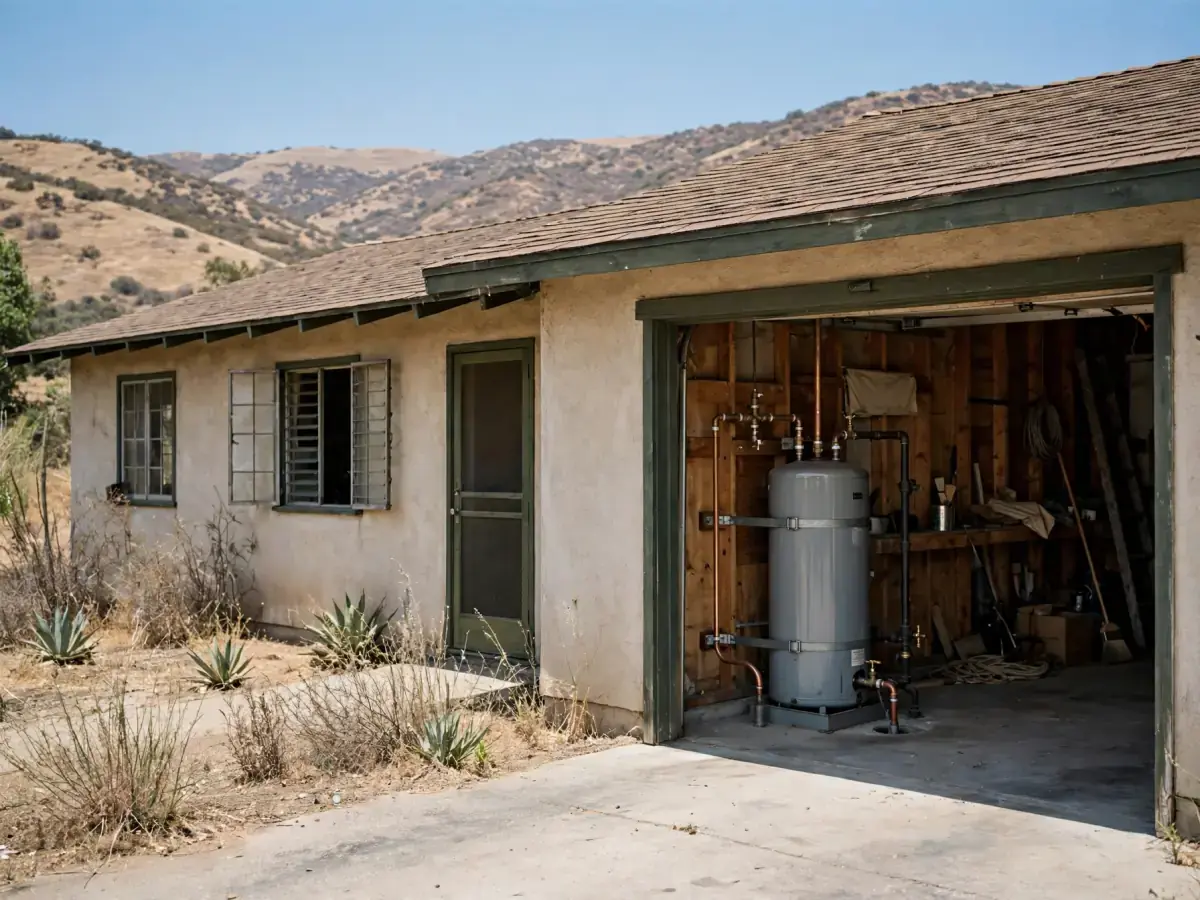
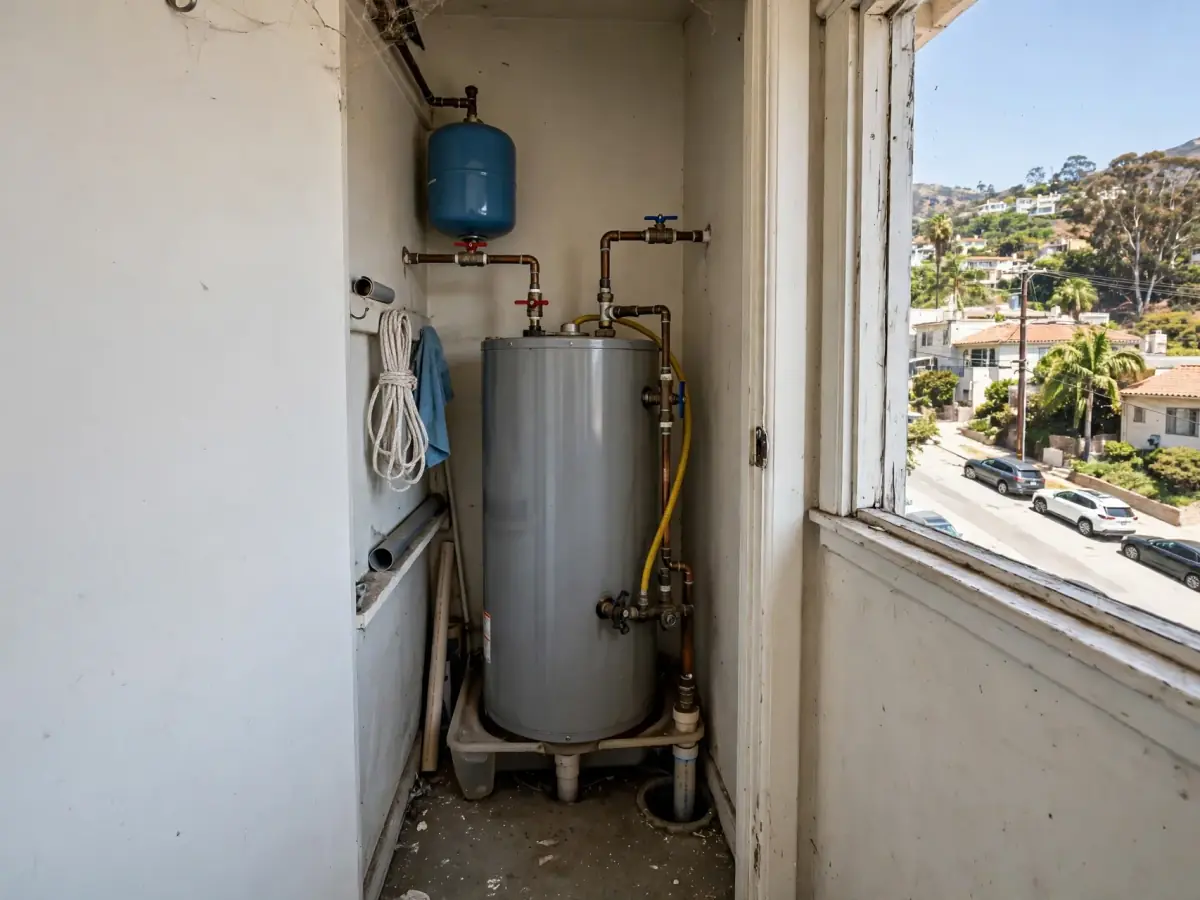
Homes in the Hollywood Hills and the canyons that cut through the Santa Monica Mountains were built on steep lots, often in stages over many decades. Few have a conventional garage where a heater can sit. Instead, the water heater might be in a hallway closet, in a utility room on a lower level, under the house in a crawlspace, or in a small exterior closet on a deck.
A failure in a closet above finished floors, or above a lower-level bedroom, can do real damage before anyone notices. They also make replacements more involved: narrow doorways, stairs, and limited room around the tank all add labor.
Common calls
What plumbers see most in the hills
Leaks inside the house
Closet and upper-floor heaters without a drain pan, or with a pan that has no drain line, are behind a lot of water-damage calls.
Tight-fit replacements
A new tank may be taller or wider than the old one because of efficiency rules, so the closet has to be measured before ordering.
Venting through the house
Interior gas heaters vent through long runs to the roof. Disconnected or damaged vents are a carbon monoxide risk.
Fire zones
Very High Fire Hazard Severity Zones
Much of the hillside area of Los Angeles is mapped by the state as a Very High Fire Hazard Severity Zone. [1] For water heaters that mostly matters for exterior installations: keeping the area around an outdoor unit or exterior closet clear of brush and stored combustibles, and making sure vents and terminations are intact.
After a wildfire or a red-flag event with power shutoffs, gas appliances may need relighting and electric tankless units may need a reset. Check for damage and gas odor before relighting anything, and call your gas utility if you are unsure.
Leak protection
Protecting a hillside home from water heater leaks
- Drain pan with a real drainA pan only helps if it drains somewhere. Where a leak would cause damage, California's plumbing code generally calls for a pan with a drain line.
- Automatic shut-offLeak sensors with automatic shut-off valves can close the water supply as soon as water reaches the pan.
- Relief valve dischargeThe relief valve line must run to an approved location outside or to a drain, not into a closet.
Access
Planning a visit up the hill
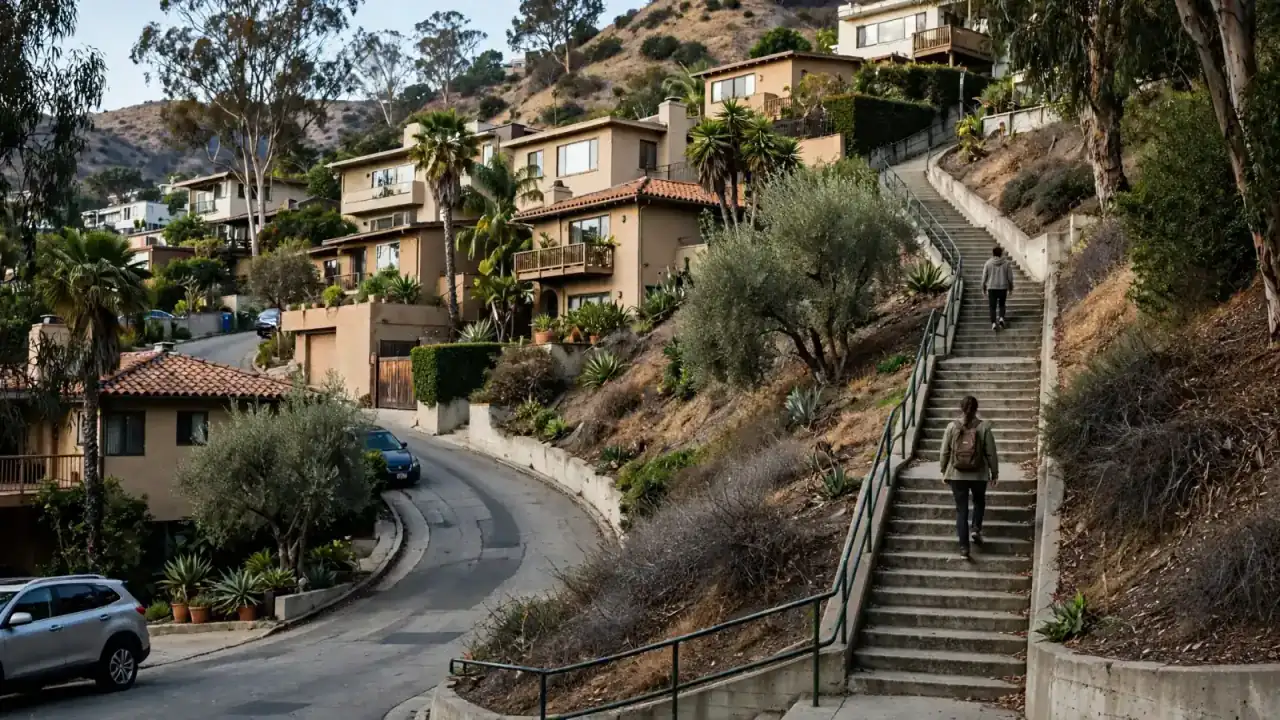
Narrow, winding streets and limited parking are part of life in the hills, and they affect a service visit. A plumber may need to park well away from the house or carry a tank down a long flight of stairs. Mentioning that on the phone helps the contractor plan time, people and equipment, and avoids surprises in the quote.
Most of the Hollywood Hills and Laurel, Nichols and Beachwood canyons lie within the City of Los Angeles, so replacement permits come from LADBS. [2] West Hollywood and Beverly Hills, just below, are separate cities with their own departments.
Gas or electric
Gas, electric and tankless in hillside homes
Many hillside homes have gas service and a gas tank heater in an interior closet with a vent running up through the house. That arrangement works, but it relies on the vent staying sealed and on enough combustion air reaching the closet. When it is time to replace, some owners move to a high-efficiency or tankless unit that vents directly outside, or to a heat pump water heater where there is room and airflow.
Electric tanks are more common in smaller hillside units, guest houses and lower-level apartments. They avoid venting entirely, but a whole-house electric tankless heater usually needs a very large electrical supply, which older hillside panels may not have.
Earthquakes
Earthquake readiness on a slope
Hillside houses can move differently in an earthquake than homes on flat lots, and a water heater on an upper floor or a raised platform has further to fall. Proper strapping into the wall framing, flexible water and gas connectors, and a working gas shut-off are basic protections that every hillside heater should have.
Because hillside homes often have only one way in and out, knowing where the water and gas shut-offs are, and keeping the tools to close them nearby, is part of being ready. A plumber can label valves and show you how to use them during a routine visit.
Coverage
Hillside neighborhoods covered by this service
The plumber confirms availability for your exact address when you call. These are the hillside areas most often served.
- Laurel Canyon and Lookout MountainNarrow canyon roads, homes built into the slope, and heaters in under-house rooms or small garages at street level.
- Beachwood Canyon and the Hollywoodland area1920s homes below the Hollywood Sign, with stairs between street and front door and heaters often in a lower level.
- Outpost Estates and the Hollywood DellSpanish Revival and mid-century homes on winding streets near the Hollywood Bowl and Mulholland.
- Nichols Canyon and Runyon Canyon areaHillside homes ranging from small cottages to modern builds, with access that can include long driveways and gated entries.
Under the house
Heaters in basements, under-house rooms and lower levels
Hillside homes rarely have a simple garage heater. Many have the water heater in a room under the house where the slope drops away, in a lower level reached by an outside stair, or in a small utility room carved into the hillside. These spaces are often tight, damp and poorly lit, and getting a tank in and out can be the hardest part of a replacement.
Before a replacement, measure the doorway and any stair path to the heater, and tell the plumber about tight turns, low ceilings and how far the heater is from where a work vehicle can park. A tank that fit through a door decades ago may not match the dimensions of a modern, better-insulated tank of the same capacity, and the plumber needs to know that before ordering.
Under-house rooms also need attention to combustion air for gas heaters and to drainage. A drain pan piped to daylight or a floor drain keeps a slow leak from soaking the soil under the foundation, which on a slope is a structural concern as well as a plumbing one.
Pressure
Water pressure on a hillside
Water pressure varies a great deal in the hills. Homes low on a slope near the main can see high street pressure, while homes near the top of a ridge may have low pressure or rely on a booster pump. Both extremes affect a water heater.
High pressure strains the tank, the relief valve and every fitting. A pressure-reducing valve at the main protects the plumbing, but it also closes the system, so an expansion tank is normally needed to absorb the water's expansion as it heats. A relief valve that drips after each heating cycle is a classic sign of a missing or failed expansion tank.
Low pressure is more of a nuisance for tankless heaters, which need a minimum flow to fire. If your home has a booster pump, mention it, because the pump's settings can affect how a tankless unit behaves.
Quick reference
Hillside water heater problems and first steps
| What you notice | Common hillside cause | What to do first |
|---|---|---|
| Relief valve drips after heating | High street pressure with a closed system | Have pressure tested; check the expansion tank |
| Pilot blows out on windy days | Exterior cabinet or vent exposed to canyon wind | Note the weather when it happens; call for a vent check |
| Water stain on a lower-level ceiling | Slow leak from a heater above | Close the cold-water valve; turn off gas or power |
| Tankless unit shuts down at low flow | Low pressure near the ridge or booster pump settings | Note when it happens; tell the plumber about the pump |
| No hot water after a quake | Seismic gas valve tripped at the meter | Check other gas appliances; contact the gas company |
Wildfire season
Water heaters and wildfire season
Much of the Hollywood Hills lies in a Very High Fire Hazard Severity Zone. [1] During a Red Flag warning or an evacuation, the gas utility or fire officials may shut off gas to the area, and you may choose to shut it off at your own meter if told to. After any gas shut-off, pilots on water heaters and other appliances must be relit, and the gas utility or a qualified professional should restore service.
Keeping the area around an exterior water heater cabinet free of dry brush and debris is part of good defensible-space practice. Inside, a heater in a lower-level room should not share space with stored fuel or flammable materials.
Hillside checklist
Hillside water heater checklist
A few checks suited to homes on a slope.
Pan and drain
Confirm a drain pan with a line to daylight or a drain under any heater above living space or the foundation.
Leak shut-off
An automatic leak valve closes the water supply if a sensor gets wet, useful for heaters in rarely visited rooms.
Pressure check
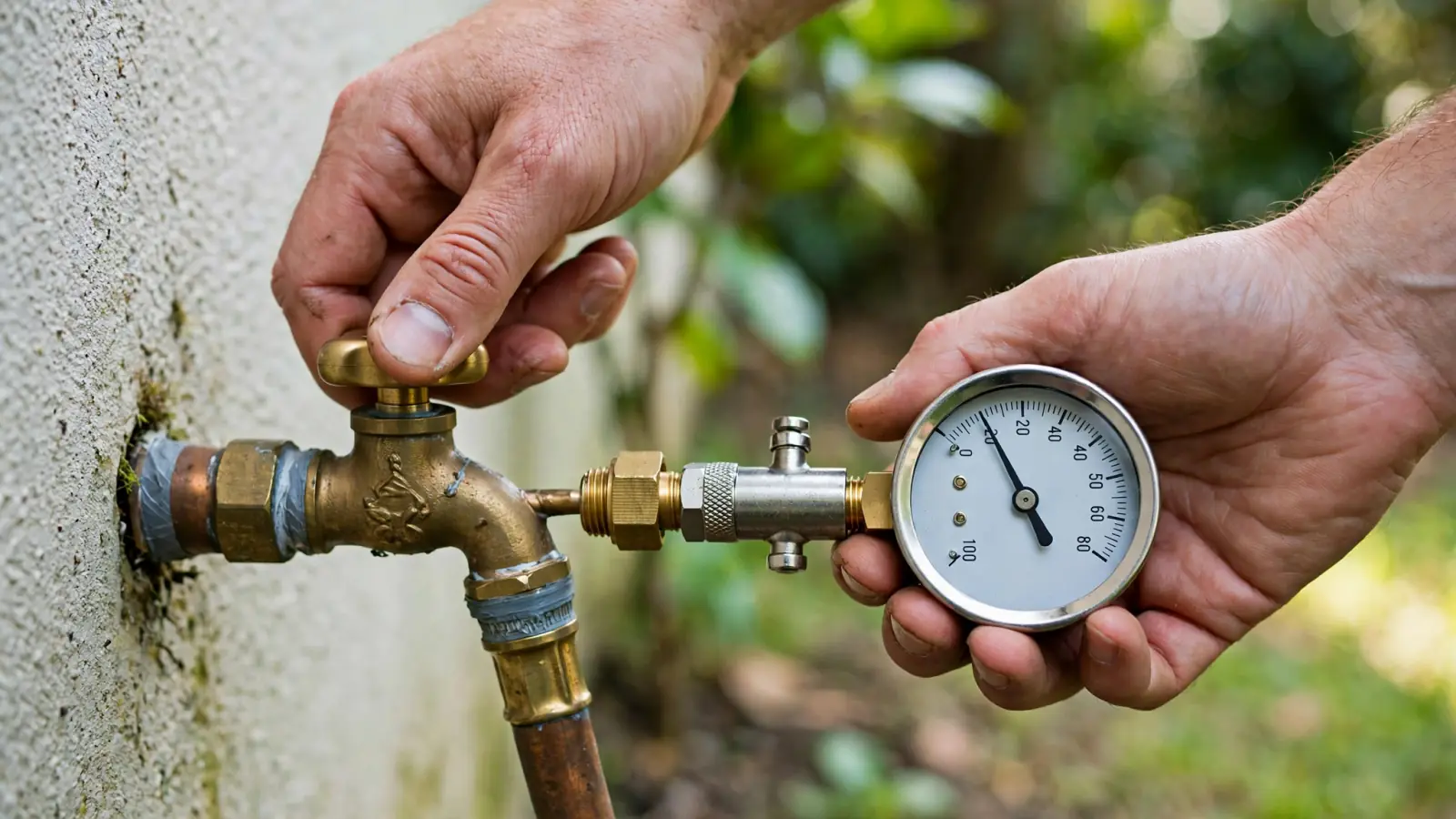
A simple gauge on a hose bib shows whether house pressure is in a safe range.
Straps and connector
Two straps into framing and a flexible gas connector matter more on a slope.
Clear access
Keep the path to the heater clear and lit for a fast response in an emergency.
Vent and cabinet
Check exterior cabinets and vent caps for wind damage and debris after storms.
Older hillside homes
1920s and mid-century hillside homes
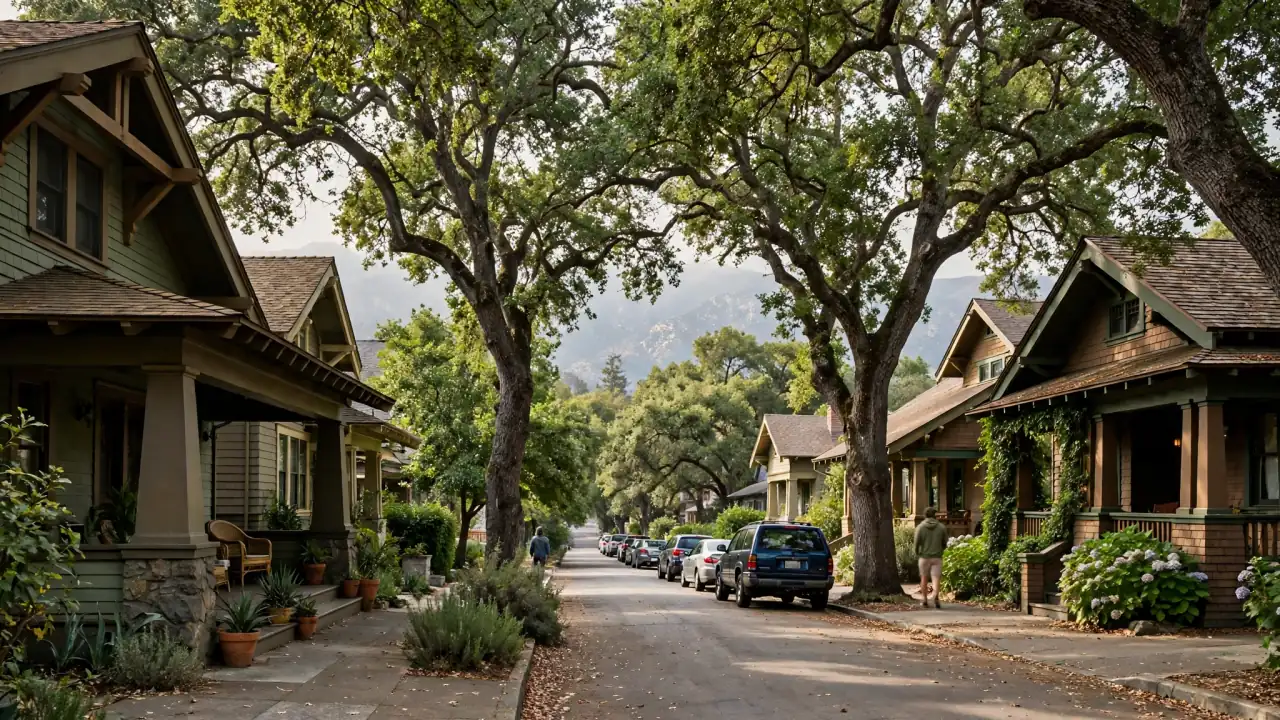
Many Hollywood Hills homes date from the 1920s building boom or the post-war decades, and the plumbing has usually been changed in pieces. It is common to find galvanized steel pipe mixed with copper, older gas lines that were extended when a heater moved, and vents that were rerouted during a remodel. None of this is unusual, but it means a water heater visit can turn up issues beyond the heater itself.
Galvanized pipe corrodes from the inside and can shed rust and scale into a new heater, and it restricts flow, which matters for tankless units. Mixed metals joined without a proper dielectric fitting can corrode at the connection to the heater. A plumber replacing a heater in an older home will look at the pipe right at the heater and tell you if anything nearby needs attention.
If your house is in a historic district or has architectural significance, exterior changes such as a new vent through a visible wall may need review. Interior water heater replacements usually do not, but ask before planning a relocation.
Modern builds
Modern hillside homes and high-demand hot water
Newer and remodeled hillside homes often have large primary bathrooms, multiple showers, soaking tubs and sometimes a spa. These homes frequently use one or more tankless units, a large storage tank with a recirculation loop, or a combination. When something goes wrong, the system as a whole has to be understood, not just a single heater.
If your home has a recirculation pump, a mixing valve, a buffer tank or more than one heater, a diagram or a photo of the equipment area helps the plumber enormously. Note the brand and model of each unit and any error codes. For tankless systems, check whether a service contract or warranty applies before calling. [3]
Replacement planning
Planning a water heater replacement in the hills
A hillside replacement takes more planning than a flatland garage swap, and the planning is what keeps the day running smoothly. The plumber needs to know the route from the street to the heater, the size of every door and stair turn along it, and whether the new heater will need to be carried in by hand. Photos and a few measurements sent ahead make an accurate quote possible.
Permits for water heater replacements in the hills come from LADBS like anywhere else in the city. [2] The inspector will look at strapping, the gas connector, venting, the relief valve discharge and, where needed, the expansion tank and drain pan. On a slope, the relief valve line often has to run some distance to reach an approved discharge point, and that is worth discussing up front.
If the heater is near the end of its life, replacing it on your schedule is much easier than doing it as an emergency, when access and parking problems are harder to solve and a leak may already be running downhill.
Mudslides and storms
After heavy rain or a slide
Heavy winter storms can send water and debris down hillside lots. If an under-house room or lower level floods, do not try to relight or restart a water heater that has been under water. Gas controls, burners, igniters and electrical parts that have been submerged generally need to be replaced, and many manufacturers recommend replacing the whole heater. Turn the gas and power off and have a professional inspect it.
Storms can also dislodge vent caps and clog exterior closet vents with leaves and mud. After a big storm, a quick look at the vent and closet is worthwhile, especially if the pilot has gone out.
Outages
Hot water during a power outage
Standing-pilot gas tank heaters keep working through a power outage, which is useful in the hills, where outages can follow wind events. Tankless units, heat pump water heaters and gas heaters with electronic ignition need electricity and will stop until power returns.
FAQ
Questions from hillside homeowners
Will a new water heater fit in my closet?
Not always. Current efficiency standards made some tanks larger than older models of the same capacity. The plumber should measure the closet, door and route before quoting.
Is tankless a good choice for a hillside home?
It often is, because it frees space and does not hold 40 or 50 gallons that could leak. It does need adequate gas supply, proper venting and periodic descaling.
My heater is under the house. Can it stay there?
Crawlspace installations can be legal when they meet access, clearance and venting requirements, but they are hard to service and to inspect for leaks. A plumber can tell you whether relocating makes sense during a replacement.
Do I need anything special because I'm in a fire zone?
Keep the area around exterior heaters clear, maintain vent caps and terminations, and know how to shut off gas. The heater itself is the same equipment used elsewhere.
Why does my hillside home have low water pressure at the heater?
Pressure can vary with elevation and with how far the house sits above or below the supply main. Very low or very high pressure affects water heaters and relief valves, so a plumber may test it and adjust or add a pressure-reducing valve.
Can a plumber reach my house on a narrow canyon road?
Usually yes. Share parking options, gate codes and how far the heater is from the street when you call so the plumber can plan.
Why does my relief valve drip on a hillside home?
High water pressure or a missing expansion tank is common in the hills. A plumber can test the pressure and check the expansion tank.
Who fixes water heaters in the Hollywood Hills?
A licensed plumber familiar with hillside access. Call the number on this page and the plumber will confirm your address.
My lower level flooded. Can I relight the water heater?
No. Any gas or electrical part that has been under water needs professional inspection, and many manufacturers recommend replacing the heater.
How do I find my water heater's age?
The serial number on the rating plate usually encodes the manufacture date. A photo of the plate lets the plumber read it for you.
Should a hillside heater have an automatic leak shut-off?
It is a sensible addition for any heater above living space or the foundation. A sensor in the drain pan closes a valve on the cold-water supply if it gets wet, limiting damage while no one is home.
Can a water heater be moved out of an under-house room?
Sometimes. Relocating means new water and gas lines, a new vent route and a permit, and the new spot must meet clearance and access rules.