Key facts: Water Heater Installation
- Size a new heater by its first-hour rating, not gallons alone [1].
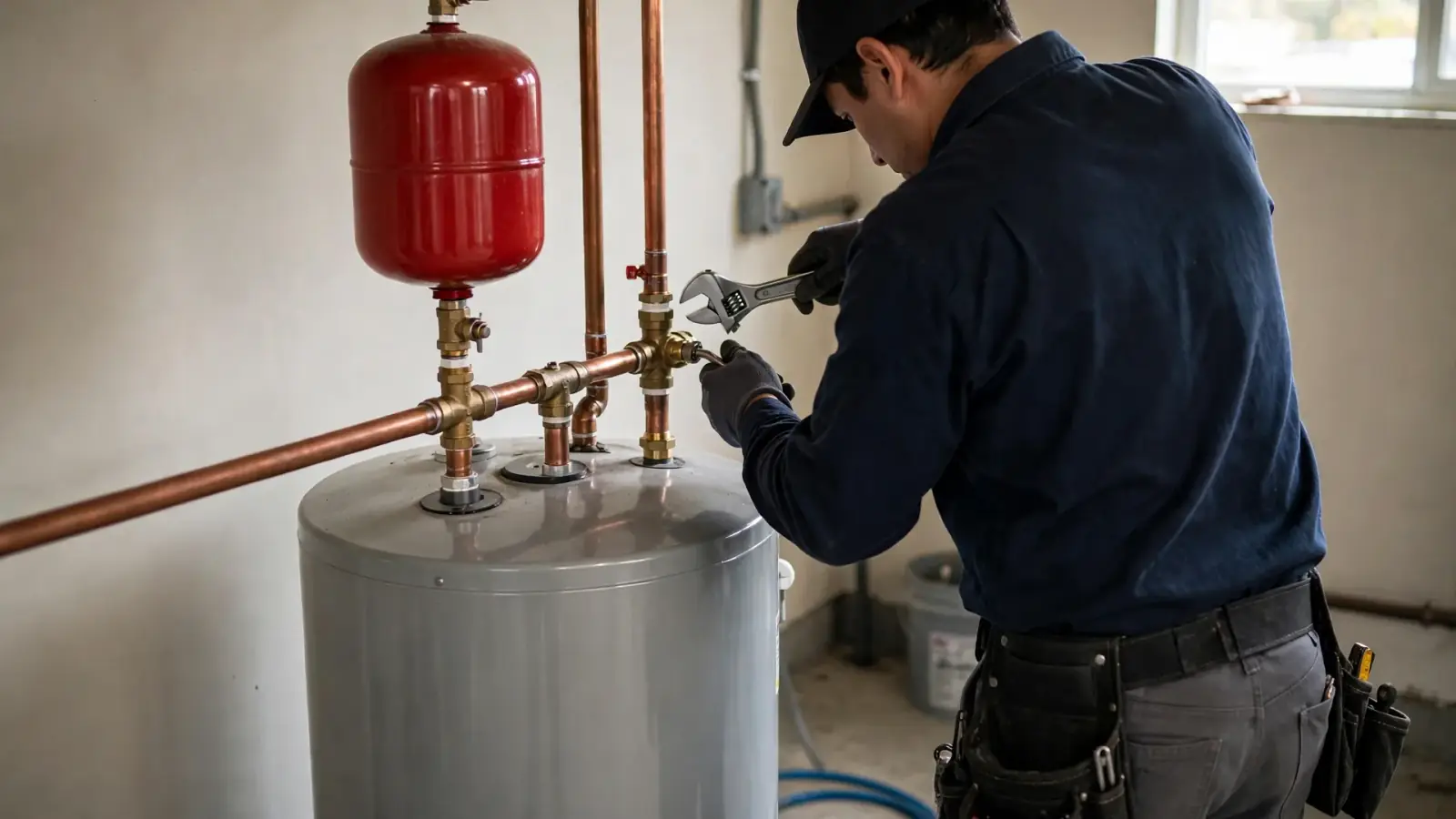
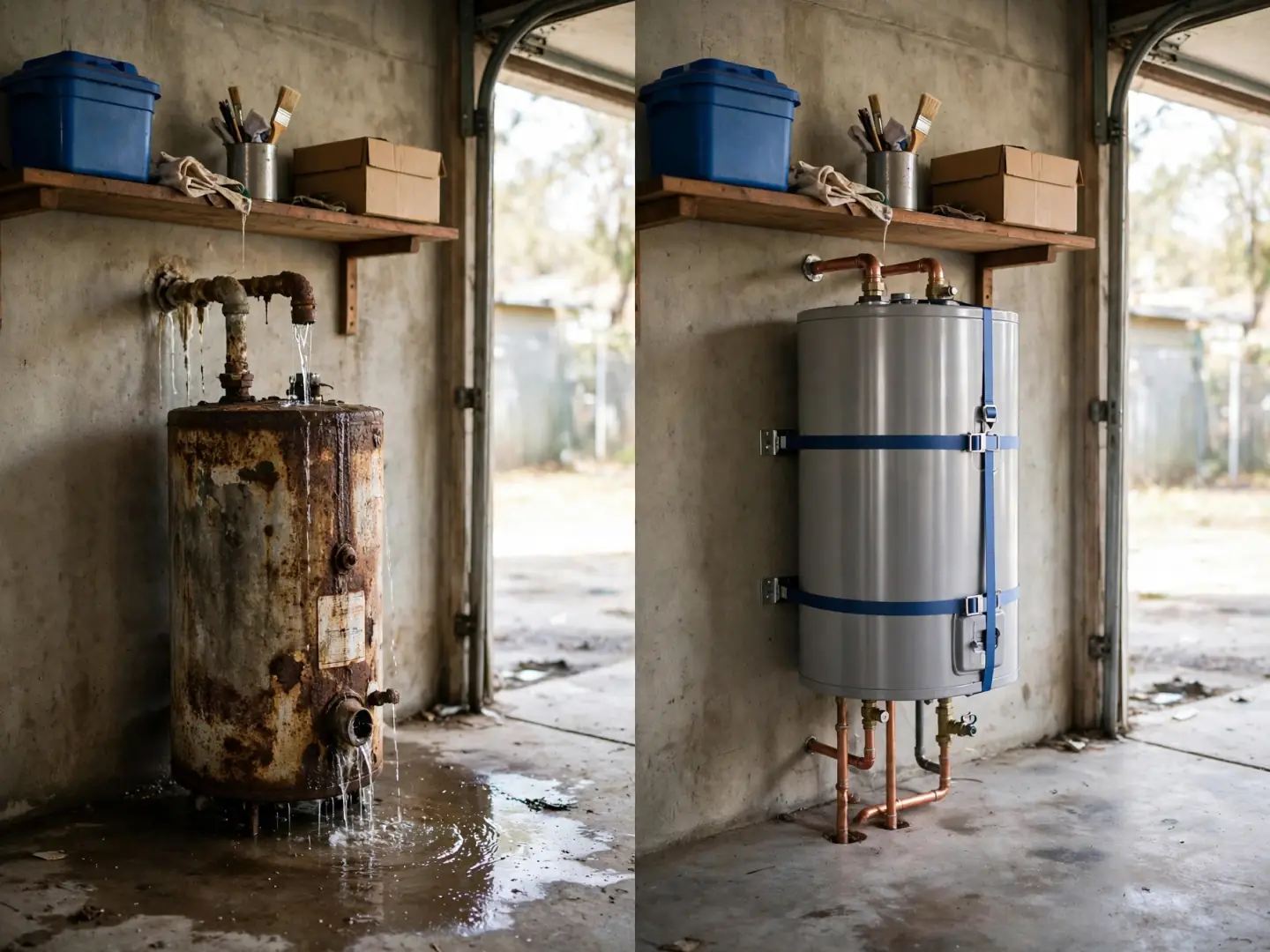
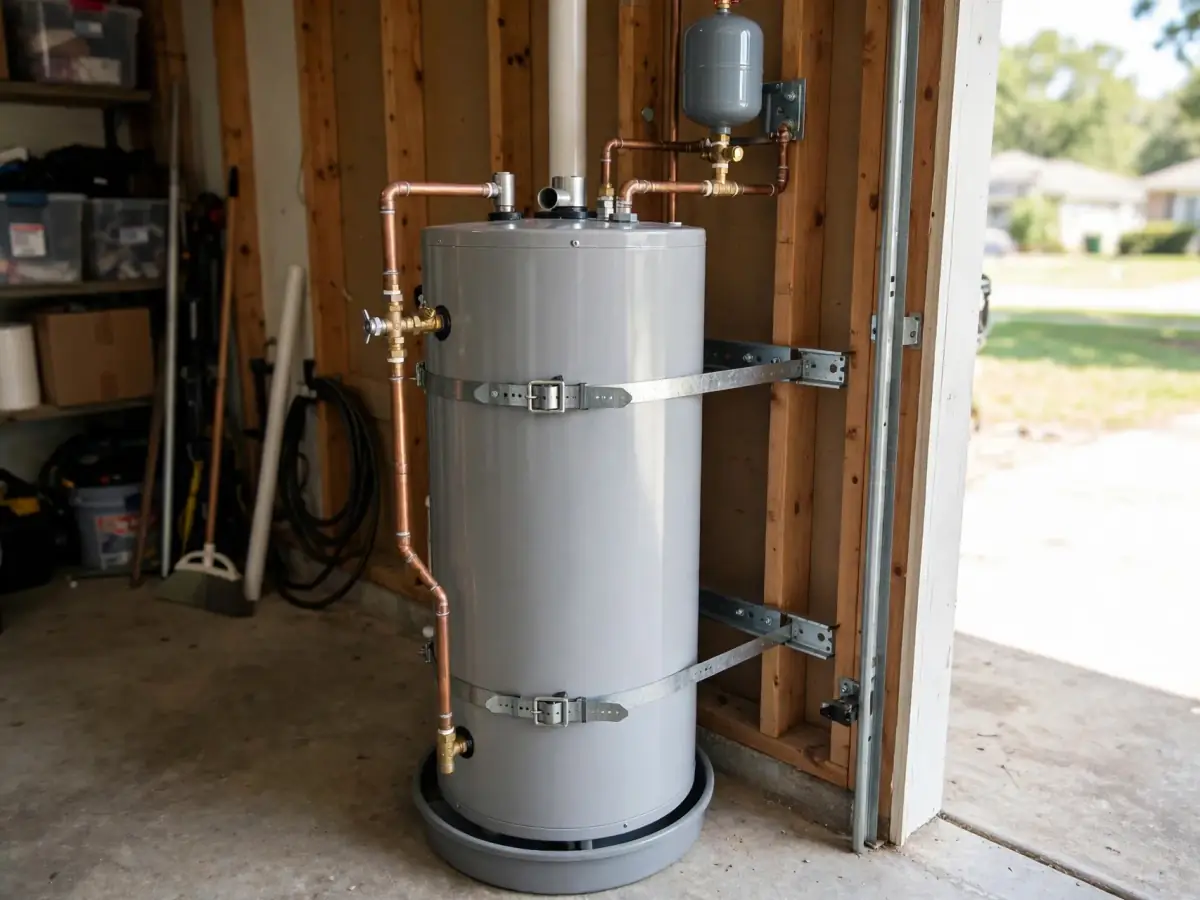
- A code-compliant swap includes two seismic straps [2], a safe relief-valve discharge, correct venting and an expansion tank where the plumbing is closed.
- In the City of Los Angeles, water heater replacement is permitted through LADBS [3].
When to replace
When installation makes more sense than another repair
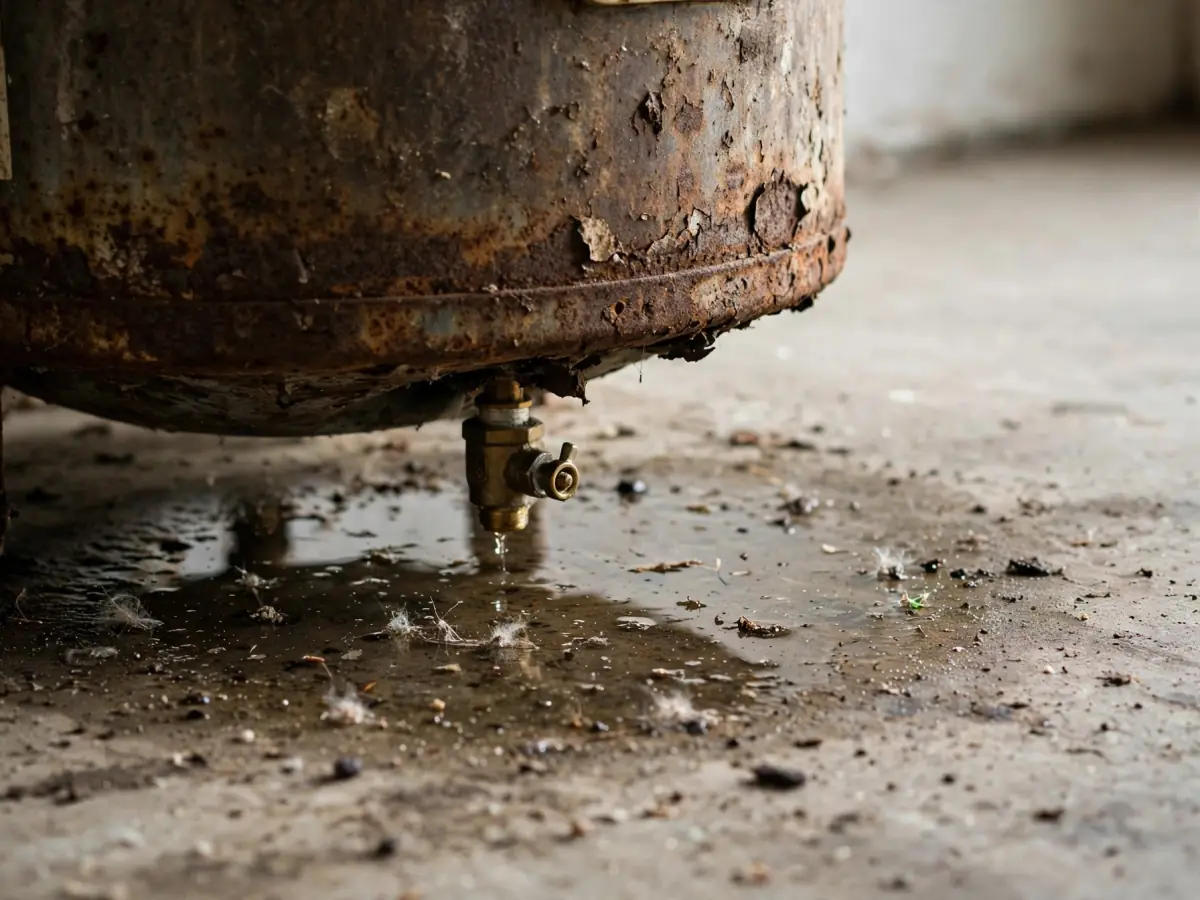
A tank's age is encoded in the serial number on the rating plate; an installer can decode it in seconds.
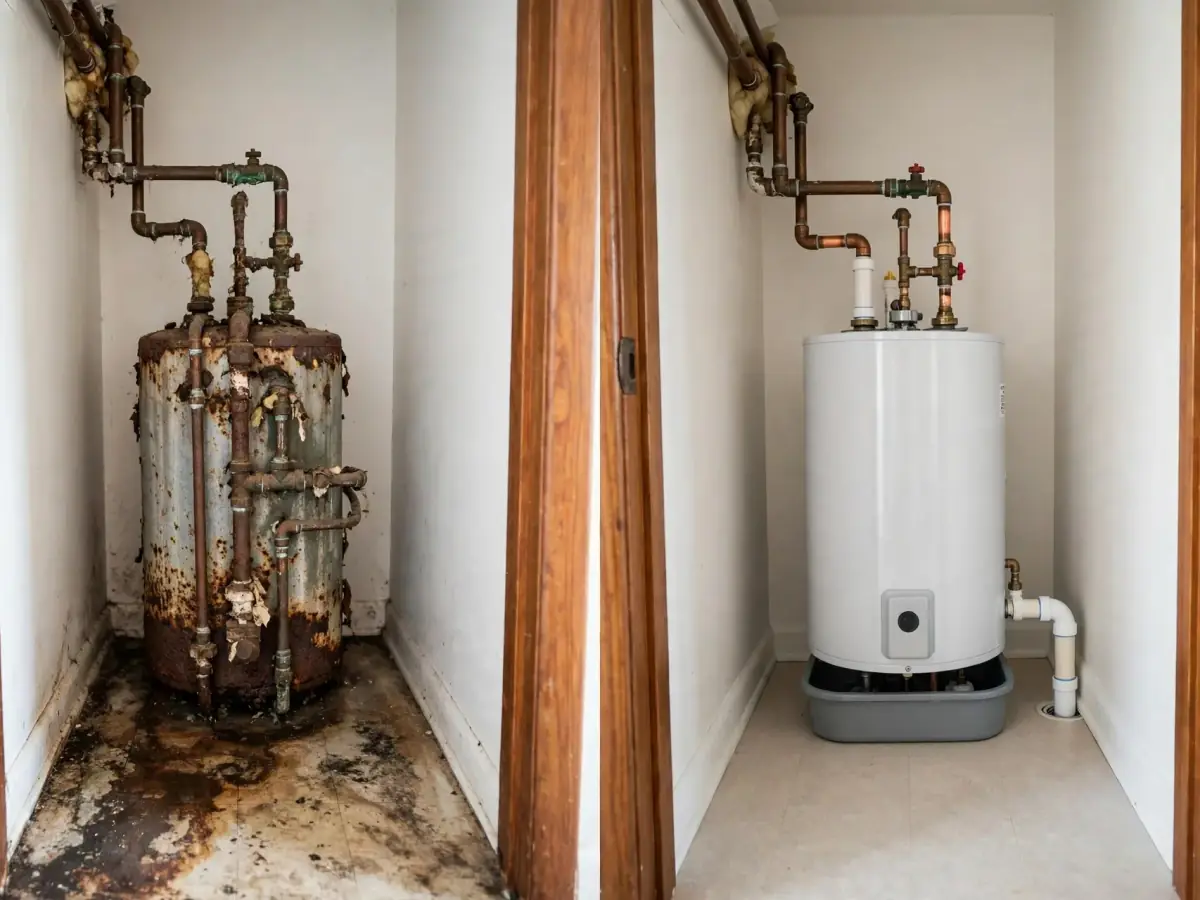
It is also worth replacing on your own schedule instead of waiting for a failure if the current heater sits where a leak would damage finished floors, such as an interior closet, an attic or a unit above someone else's ceiling. That situation is common in Los Angeles condos and in hillside homes where the heater sits in a hallway closet.
Before the install
Decisions to make before the installer arrives
None of these need a final answer in advance, but thinking about them makes the quote conversation much faster.
- CapacityTank size is matched to peak use, mostly showers back to back in the morning. The first-hour rating on the label is a better guide than gallons alone. [1]
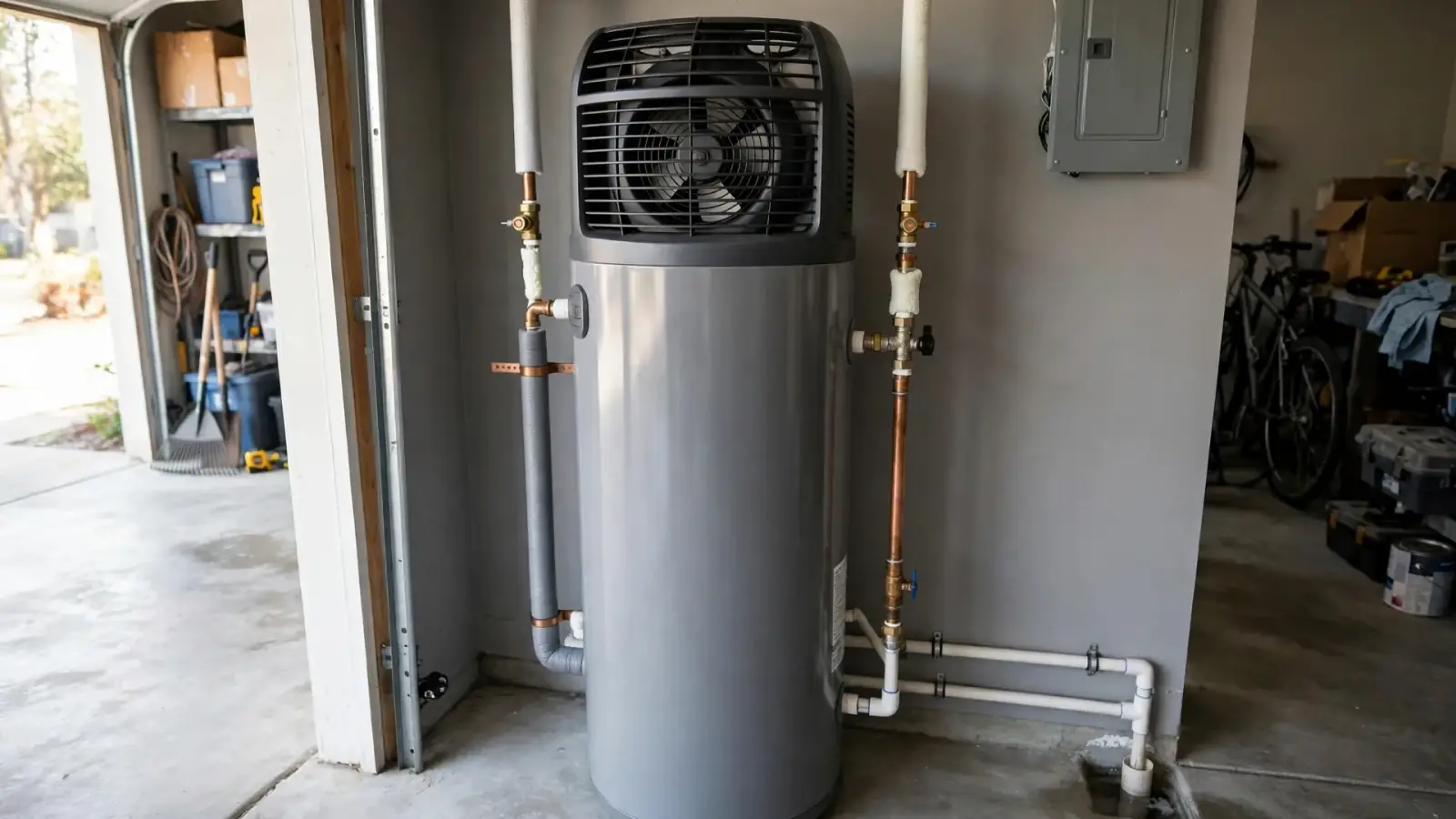
- FuelStaying with the same fuel is simplest. Switching from gas to an electric heat pump unit needs a suitable circuit and room for airflow around the unit. [4]
- LocationGarages, exterior closets, interior closets and attics each have different venting, drain pan and clearance requirements.
- Expansion controlIf the home has a pressure-reducing valve or a check valve at the meter, a thermal expansion tank is normally required so heated water has somewhere to expand.
Types
Types of water heater installation
What each option involves in a typical Los Angeles home.
| Option | Good fit when | What changes in the install |
|---|---|---|
| Like-for-like gas tank | The old tank failed and the household's needs are the same | Usually just new connectors, straps and venting checks; the fastest swap |
| Larger gas tank | The family grew or hot water runs out | May need a bigger vent, more gas supply and a closet that fits |
| Tankless gas | Space is tight or long showers matter | Larger gas line, new venting, condensate drain on condensing models |
| Electric tank | No gas line, or a small unit or ADU | Correct breaker and wire size; drain pan in interior closets |
| Heat pump water heater | Ask the plumber on the visit | Dedicated circuit, condensate drain, room volume or ducting |
The installation
What a code-compliant swap includes
A replacement should leave the installation safer than it was, not just hotter.
- 1
Permit and shut-off
The contractor arranges the permit, shuts off gas or power and water, and drains the old tank. [3]
- 2
Remove and set
The old heater is hauled away. The new one is set level, on a stand where required, with a drain pan where a leak would cause damage.
- 3
Connect and strap
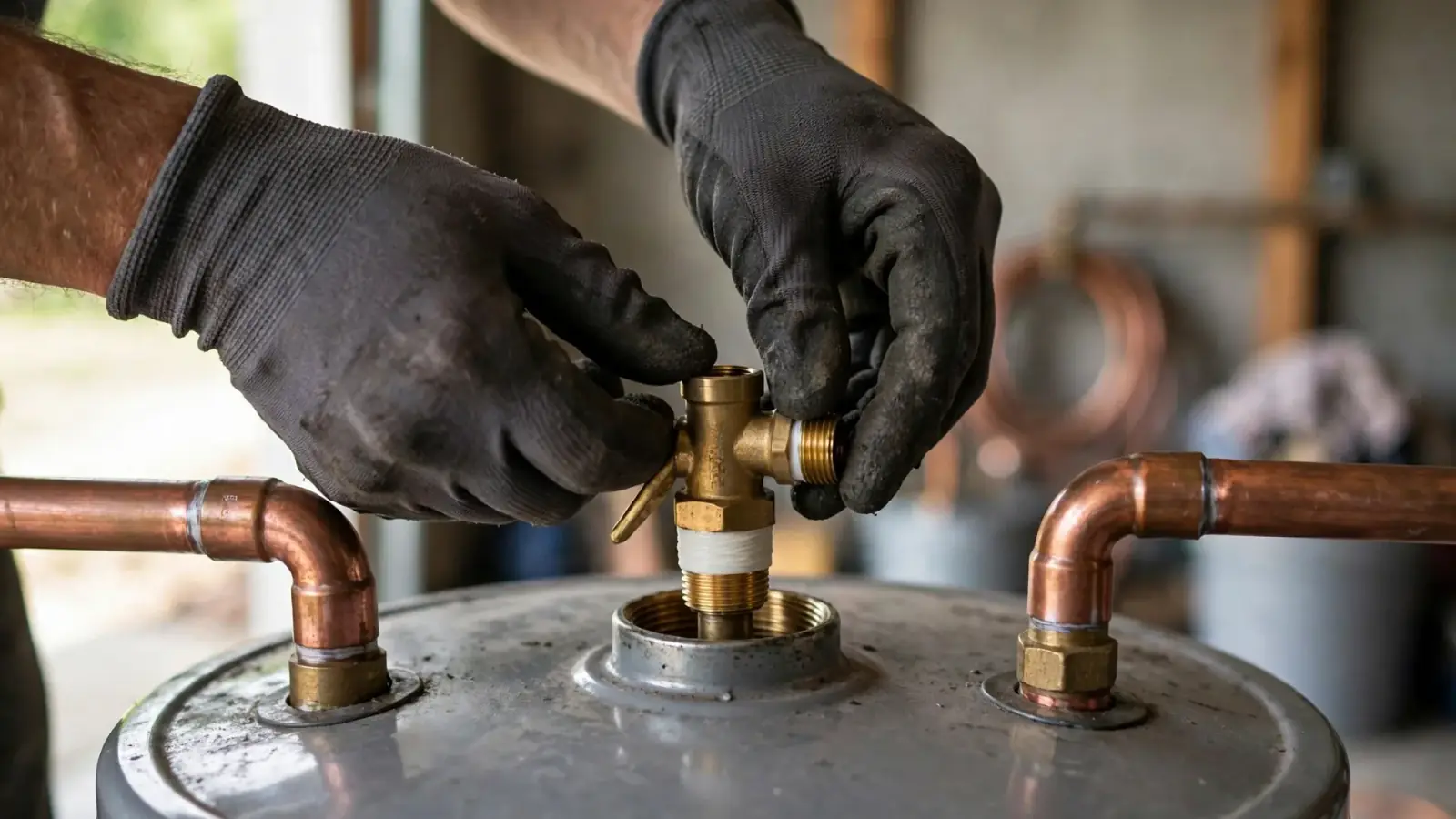
New water connectors, a properly piped relief-valve discharge, correctly sized venting and two seismic straps at the upper and lower thirds of the tank. [2]
- 4
Fire up and inspect
The tank is filled before power or gas is turned on, then tested for draft and leaks, set to a safe temperature and left ready for inspection.
Permits
Permits and inspections in Los Angeles
In the City of Los Angeles, water heater replacement goes through the Department of Building and Safety, and many contractors pull the permit online and schedule the inspection for you.
An inspector typically looks at the venting, gas connection, seismic strapping, relief-valve discharge, combustion air and, where required, the expansion tank and drain pan. Skipping the permit can cause problems when you sell the house, and an unpermitted installation can complicate an insurance claim if something goes wrong later.
Timing
Planned versus emergency replacement
Replacing a heater before it fails lets you compare models, check the gas line or electrical capacity, and schedule the permit and inspection without a cold house.
Choosing
Choosing the right replacement for your home
A water heater replacement is a chance to choose, not just to swap. The right heater depends on how many people live in the home, how they use hot water, what fuel is available at the location, how much space there is, and what the existing gas line, venting and electrical service can support. [1]
For most Los Angeles houses with a garage or closet gas heater, a like-for-like gas tank of the same size is the quickest and least disruptive choice: the gas line, vent and location already work. Going up a size, switching to tankless, or moving to a heat pump water heater can each make sense, but each changes something about the installation, and those changes belong in the quote.
A good installer asks questions before naming a model: how many showers run at the same time in the morning, whether there is a large tub, how long you plan to stay in the home, and whether you are planning other work such as solar or an electrical panel upgrade that could affect the choice.
Sizing
What changes when you change the type of heater
| Replacement path | What usually stays the same | What may need to change |
|---|---|---|
| Gas tank, same size | Gas line, vent, location, strapping points | Vent connector fit, flexible gas connector, expansion tank |
| Gas tank, larger size | Location and fuel | Gas line capacity, vent size, space and clearances |
| Gas tank to gas tankless | Fuel | Gas line size, new vent type, condensate drain, mounting, electrical outlet |
| Gas tank to heat pump | Water connections | New electrical circuit, condensate drain, space and airflow, gas line capped |
| Electric tank, same size | Circuit, location | Drain pan, relief valve line, strapping |
| Electric tank to heat pump | Circuit in many cases | Space and airflow, condensate drain |
Code items
What a code-compliant installation includes
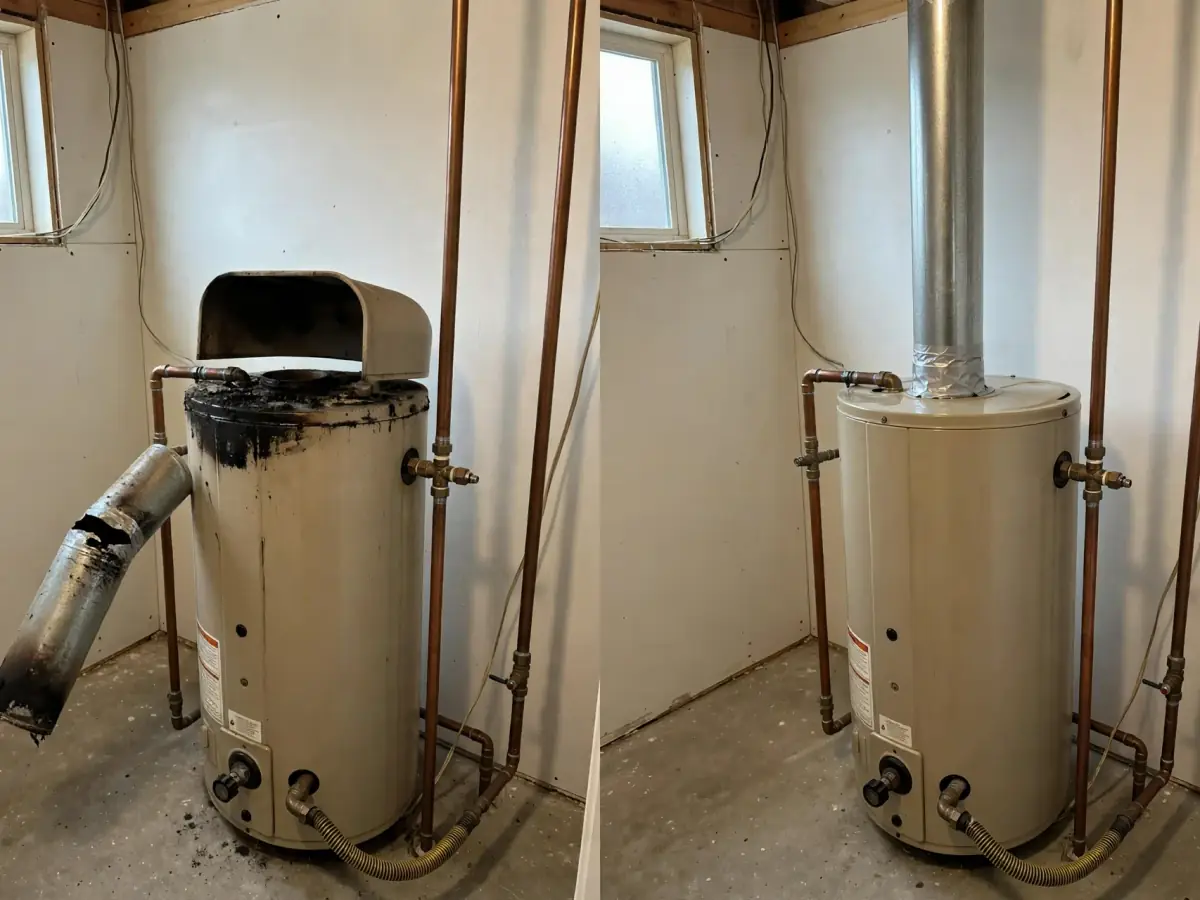
In California, every water heater must be braced, anchored or strapped against earthquake motion. [2] In practice that means two straps at the right heights fastened into the wall framing, not into drywall alone. Gas heaters get a flexible connector and a shut-off valve, and a sediment trap where required. The vent connector must be the correct size, sloped up toward the flue, and fastened at every joint.
Every tank needs a temperature and pressure relief valve with a discharge line that runs full size to an approved location. Where the house has a pressure-reducing valve or a check valve, the plumbing is a closed system and an expansion tank is normally required to absorb the water's expansion as it heats. Heaters in locations where a leak would cause damage need a drain pan piped to a suitable drain.
These items are what the inspector looks at. In the City of Los Angeles a permit from LADBS is required for a water heater replacement, and other cities in the county have their own building departments. [3]
Install day
What happens on installation day
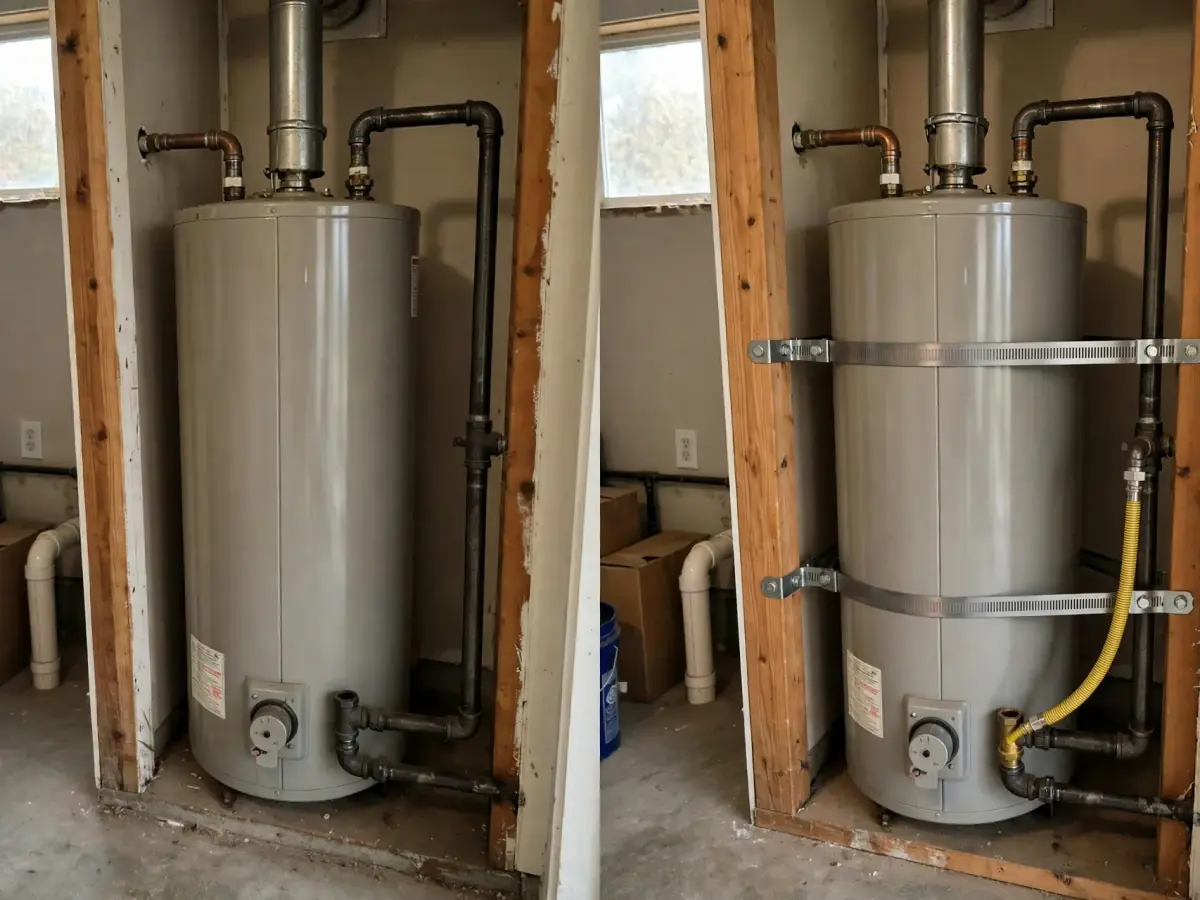
On the day, the installer shuts off the gas or power and the cold-water supply, drains the old tank and disconnects it. Draining takes time, especially if the tank is full of sediment, and an old tank can be heavy and awkward to move out of a closet or down a narrow side yard.
The new heater is set in place, leveled, strapped and connected. Gas connections are leak-tested, the vent is fastened and checked for draft, the relief valve line is run, and any expansion tank, drain pan or sediment trap is installed. The tank is then filled completely, with air bled from a hot tap, before the gas is turned on or the power restored.
Finally the installer lights or powers the heater, checks the burner or elements through a full heating cycle, sets the temperature, and walks you through the controls. Ask to see the shut-off valve locations and the relief valve before they leave.
After the install
Looking after a new water heater
A new heater lasts longest when it gets a little attention from the start.
Keep the paperwork
Save the invoice, permit, model and serial number and the warranty registration in one place.
Register the warranty
Many manufacturers ask for registration within a set time. Check the documents that came with the heater.
Book the inspection
If the installer pulled the permit, confirm when the inspection happens and whether you need to be home.
Flush yearly
Starting maintenance in the first year keeps sediment from building up.
Read moreInspect the anode rod
An anode check every few years protects the tank from corrosion.
Read moreTry the relief valve lever
Lift the lever once a year to make sure it opens and reseats.
Read more
Locations
Garage, closet, attic and outdoor installations
The location of the heater shapes the job. A Los Angeles garage install is usually the most straightforward: good access, room to work, and a vent and gas line already in place. Gas heaters in garages generally need protection from vehicle impact, and where the code calls for it, the burner raised above the floor; newer flammable-vapor-resistant models have changed some of those requirements, so the installer and inspector confirm what applies.
Interior closets are tighter. The new heater has to fit through the door and within the closet with the required clearances, gas heaters need adequate combustion air, and a drain pan with a drain line protects the floors. Some newer tanks are larger than the old ones for the same capacity because of added insulation, which can make a closet that fit the old heater too small for the new one.
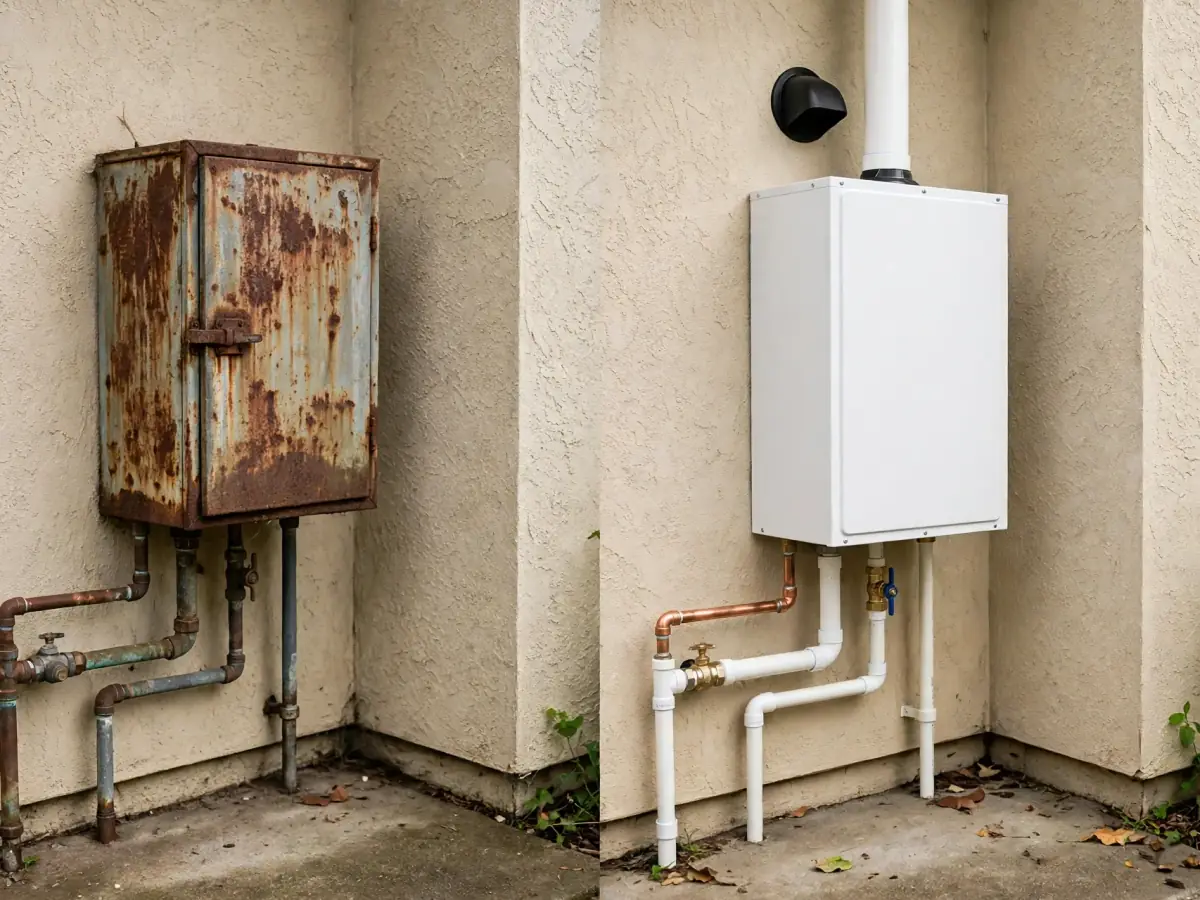
Attic heaters add the risk of a leak above living space, so a pan and drain are essential and access has to allow the heater to be carried in and out safely. Outdoor and exterior-cabinet installs need weather protection and a cabinet that still allows service. Each of these is worth discussing before you choose a model.
Old heater
Removal and disposal of the old heater
Most installers include removal of the old heater in the quote, but it is worth confirming. An old tank is heavy, often still holds sediment and water, and has to be handled and recycled properly. Steel tanks are generally recyclable as scrap metal.
If the old heater was the one that leaked, check the floor, wall and any nearby stored items for water damage while the space is open. It is much easier to dry out and repair the area before the new heater goes in than after.
Efficiency
Energy efficiency and rebates
Water heating is one of the larger energy uses in a home, so the efficiency of the replacement matters over its life. Water heaters carry a Uniform Energy Factor (UEF) rating; a higher number means less energy is used to deliver the same hot water. Heat pump models have much higher ratings than standard electric tanks, and condensing gas tankless units are generally more efficient than standard gas tanks. [1] [4]
Rebates and incentives for efficient water heaters, especially heat pump models, are offered from time to time by utilities, state programs and federal tax credits. They change often and have eligibility rules, including who installs the equipment and what paperwork is filed. Check the current programs with your utility and the official program sites before you buy, and ask the installer whether they can provide the documents a rebate requires.
Quotes
How to compare installation quotes
Water heater quotes can look very different because they include different things. To compare fairly, check that each one names the brand, model and capacity of the heater, and lists the permit, the seismic straps, the gas connector or electrical work, the vent connector, the relief valve line, any expansion tank or drain pan, and the removal and disposal of the old heater.
Ask how long the labor warranty lasts, separate from the manufacturer's tank and parts warranty, and who handles a warranty claim if something fails in the first year. Ask whether the installer obtains the permit and attends the inspection, and what happens if the inspector asks for a correction.
A higher quote that includes the permit and code items is often a better value than a lower one that leaves them out, because a heater installed without them may need to be corrected later or may cause trouble when the house is sold.
Tank or tankless
Choosing tank or tankless
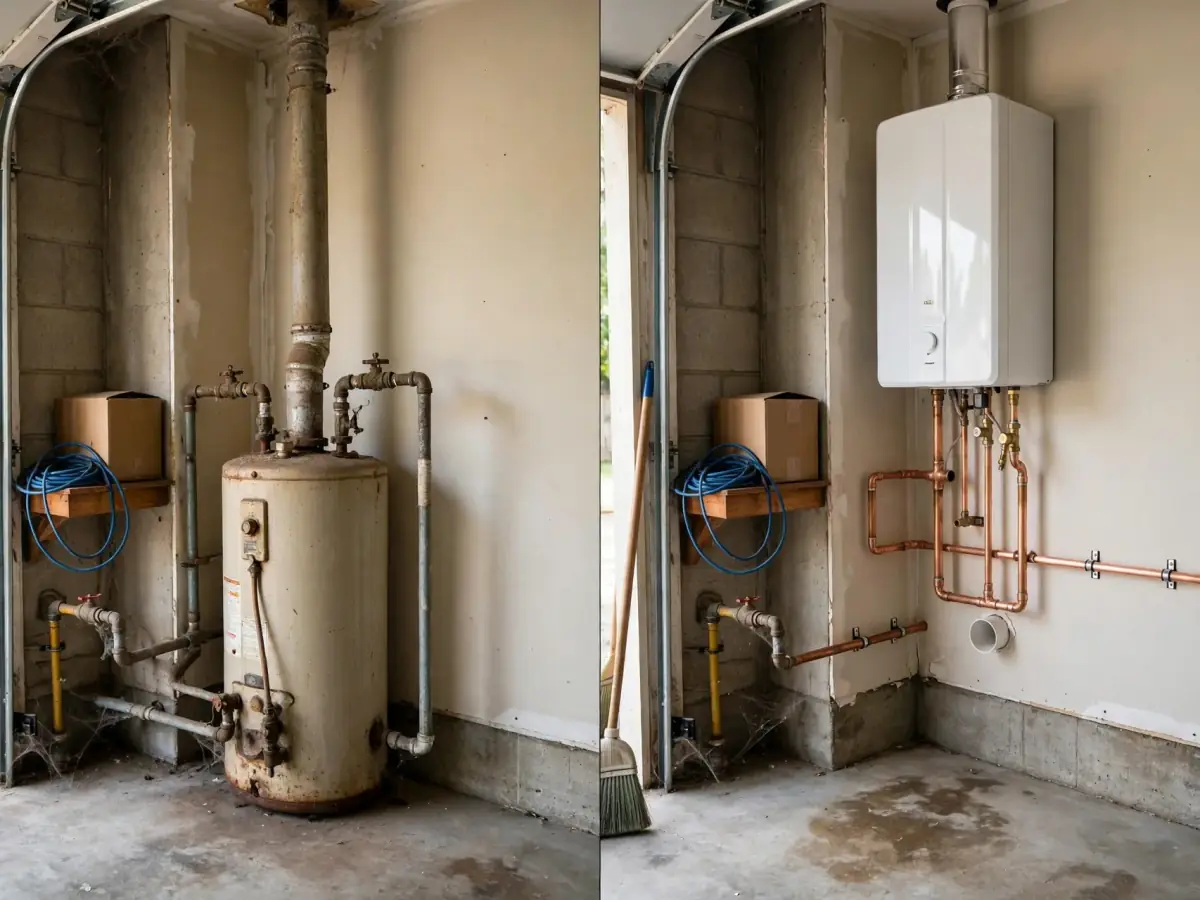
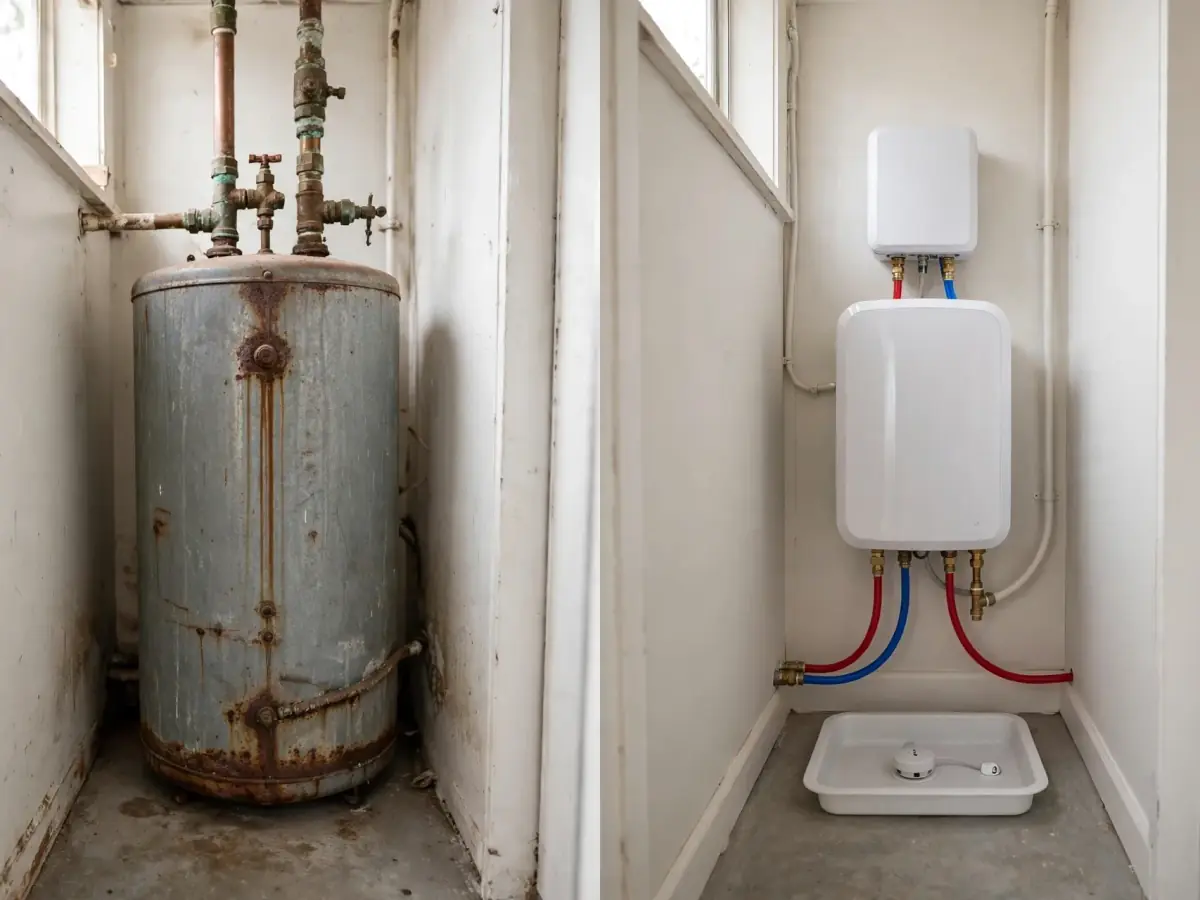
A storage tank holds a supply of hot water ready to use, recovers at a fixed rate and works with the gas line and vent most Los Angeles homes already have. A tankless unit heats water only when a tap opens, never runs out while it is working, and frees up floor space, but it needs a properly sized gas line or electrical supply, its own venting and regular descaling.
For a household that uses a lot of hot water at once, such as several showers running back to back, a tankless unit or a larger tank can both work, and the right choice depends on the space, utilities and how you use hot water. For a small household with modest use, a well-maintained tank is usually the simplest option.
Whichever you choose, ask the installer to explain what the new heater needs that the old one did not, and how long the work will take.
Compare
Tankless water heater pros and cons compared with a tank
A side-by-side view of the practical differences for a typical Los Angeles home.
| Factor | Tankless | Storage tank |
|---|---|---|
| Hot water supply | Continuous while running, limited by flow rate | A stored volume that recovers at a fixed rate |
| Space | Wall-mounted, frees floor space | Needs floor space in a garage or closet |
| Installation changes | Often a larger gas line, new venting and a condensate drain | Usually reuses the existing gas line and vent |
| Maintenance | Regular descaling, especially with hard water | Yearly flush and periodic anode checks |
| Power outage | Needs electricity to run, even on gas | Standing-pilot gas tanks keep heating |
| Cold water sandwich | Can occur between back-to-back uses | Does not occur |
Neither type is best for every home. The installer should explain what your house needs for each option before you choose.
FAQ
Installation questions
How long does a standard tank replacement take?
A like-for-like swap of a gas tank in an accessible garage is often finished in a few hours. Relocations, venting changes, fuel conversions and tankless installs take longer and may need more than one day.
Can I go up a size without other changes to the house?
Sometimes. A taller or wider tank may not fit the existing closet, may need a larger vent, or may need more gas than the line can supply. The installer should confirm clearances and gas sizing before quoting.
Do I need an expansion tank?
If your plumbing has a pressure-reducing valve or a backflow device that stops water from flowing back to the street, heated water has nowhere to expand. In that case an expansion tank is the standard fix and is usually required.
What happens to my old water heater?
Most installers haul it away and recycle the steel. Ask whether disposal is included in the quote.
Is a permit required for a new water heater in Los Angeles?
Yes. A water heater replacement in the City of Los Angeles needs a permit from LADBS, and other cities have their own building departments. Ask whether your installer obtains it.
Should I replace my water heater before it fails?
If the tank is old and showing signs of corrosion, a planned replacement avoids an emergency and water damage. A plumber can read the age from the serial number.
Who installs water heaters in Los Angeles?
A licensed plumber. Call the number on this page and a plumber will ask about your current heater and arrange a quote.
How long does a new water heater last?
It depends on the type, water quality and maintenance. Tankless units generally outlast storage tanks, and yearly flushing and anode checks help any tank reach the long end of its expected life.
Can I install a water heater myself in Los Angeles?
A permit is still required, and gas, venting, seismic strapping and relief valve work must meet code. Most homeowners hire a licensed plumber, who also handles the inspection.
Can a water heater be moved to a different spot?
Yes, but moving it means new water lines and, for gas, a new gas line and vent route.
How long does a tankless installation take?
Usually longer than a tank swap, often a full day, because it can involve a new gas line size, new venting, mounting and a condensate drain.
Will a new heater fit in my old closet?
Not always. Modern tanks can be wider for the same capacity because of extra insulation. Measure the closet and door before choosing a model.
What happens if the inspector asks for a correction?
The installer returns to make the change, such as adding a strap or adjusting the vent, and the inspection is rescheduled.
Can I keep using hot water during a replacement?
No. The water heater is out of service during the swap, usually for part of a day for a standard tank.
Who removes the old water heater?
Usually the installer, as part of the job. Confirm it is included and that the old tank will be recycled.
Does a new water heater need an expansion tank?
If the house has a pressure-reducing valve or check valve, the system is closed and an expansion tank is normally required. The installer confirms it.