
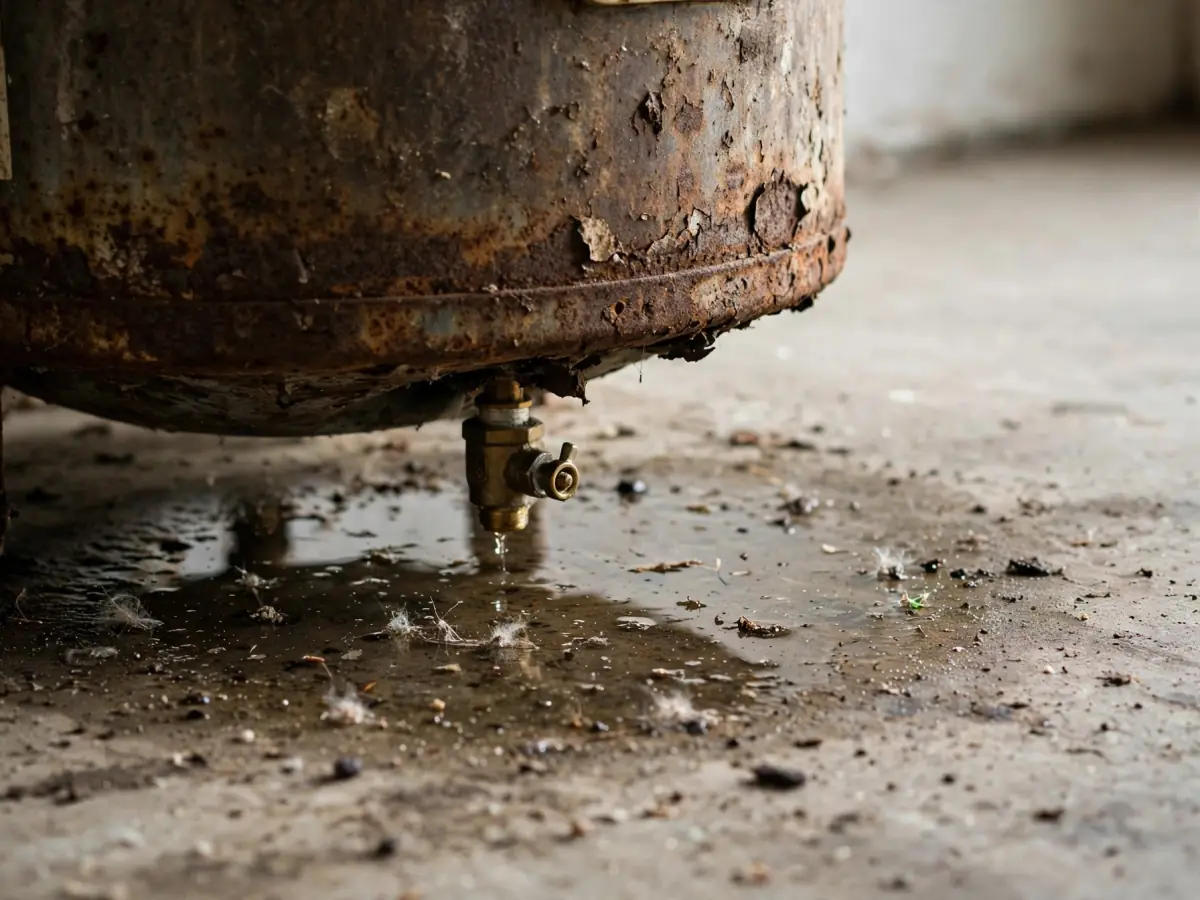
Key facts: Water heater leaking
- Leaks come from the relief valve, the drain valve, the top connections, condensation or the tank itself; only a tank leak forces replacement.
- First close the cold-water valve above the heater, then turn off the gas control or the breaker.
- A dripping relief valve often signals high temperature or pressure; never cap its discharge pipe.
- Keeping the temperature near 120°F reduces scald risk and stress on the tank [2].
Short answer
Why water heaters leak: the short answer
Most water heater leaks come from one of five places: the temperature and pressure relief valve, the drain valve at the bottom, the water connections on top, condensation, or the tank itself. Everything except the tank can usually be repaired. A leak from the tank shell or its seams means the steel has corroded through from the inside, and the only fix is a new heater.
Before diagnosing anything, limit the damage: close the cold-water supply valve on the pipe entering the top of the heater, then turn a gas heater's control to Off or switch off an electric heater's breaker.
Diagnose it
Leak symptoms: what they mean and what to do
| What you see | Likely cause | What to do |
|---|---|---|
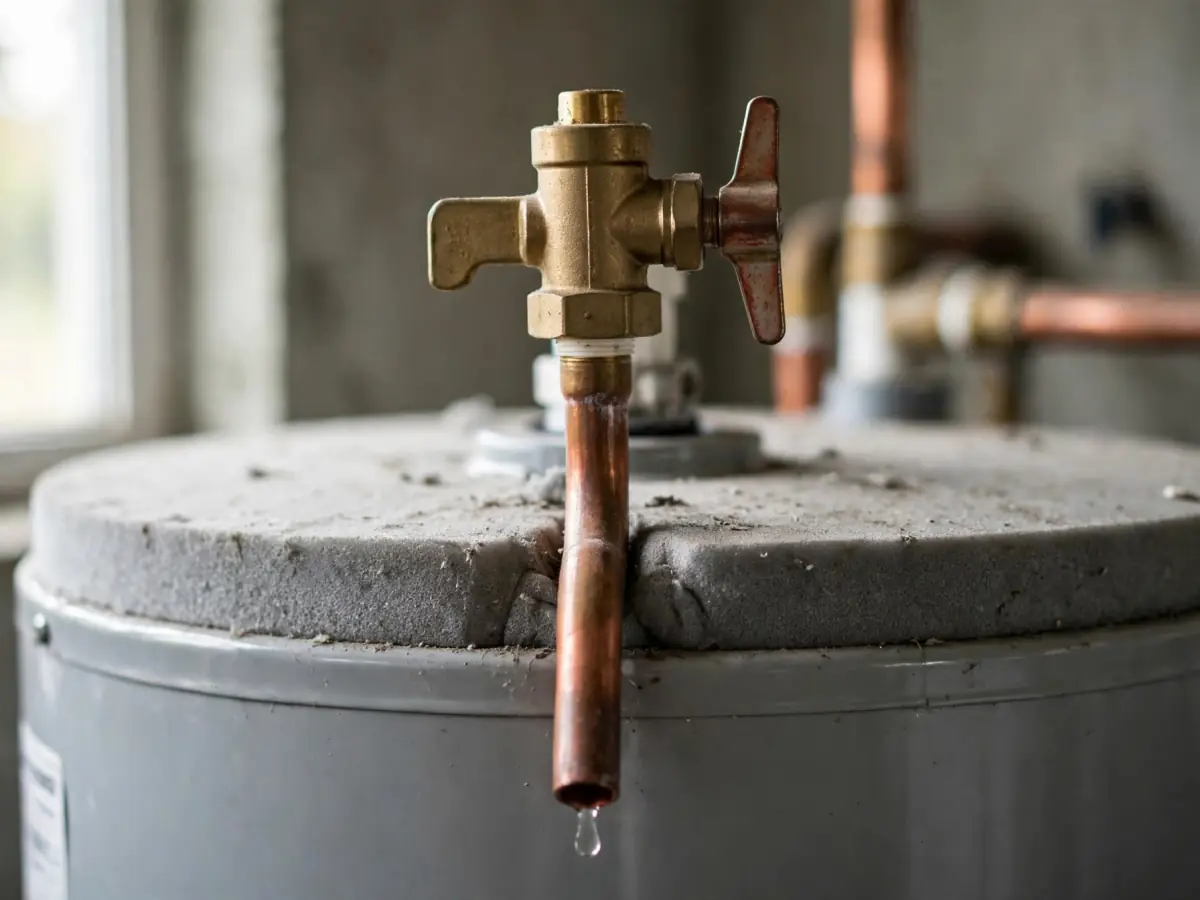
| Water dripping from the pipe on the side of the tank | Relief valve opening because pressure or temperature is too high, or the valve is worn | Turn the heater off; have pressure, temperature and the valve checked. Never cap the pipe |
| Drip from the spigot near the bottom | Drain valve not fully closed or its washer has failed | Check it is closed; a plumber can replace the valve |
| Wet fittings on top of the tank | Loose or corroded water connectors or nipples | Usually repairable; the connectors may need replacing |
| Water under a new heater, no visible drip | Condensation while a cold tank first heats up | Often stops within hours; call if it continues |
| Rust streaks and water from the tank body or base | Inner lining corroded through | Shut off water and power or gas; plan a replacement |
| Water inside the burner compartment | Leak from above, or a tank leak dripping onto the burner | Turn the heater off and call; this can also put out the flame |
Safe checks
What you can safely check before calling
These checks need no tools and help the plumber arrive with the right parts.
- Dry and watchWipe the tank, fittings and floor dry, put a paper towel on the floor, and look again in fifteen minutes to see where water reappears.
- Check the relief pipeTouch the end of the discharge pipe carefully. Water or warmth there means the relief valve is releasing.
- Feel the top connectionsRun a dry finger around the cold and hot connections and the relief valve threads.
- Look for rustRust streaks running down the jacket, or rusty water at the base, usually point to the tank.
- Photograph the rating plateThe model and serial number tell the plumber the heater's age and the parts it takes.
Relief valve
When the relief valve is the cause
The temperature and pressure relief valve is a safety device that opens if the water gets too hot or the pressure in the tank gets too high. A valve that releases water is often working correctly and pointing at a different problem. Common causes are thermal expansion in a home with a pressure-reducing valve and no expansion tank, very high street pressure, or a thermostat set too high.
Old relief valves can also start weeping because mineral deposits stop them sealing. Either way, the discharge pipe must stay open and run to a safe location; plugging it removes the protection that keeps a tank from failing violently.
Diagnosis
How a plumber diagnoses a leaking water heater
- 1
Trace the water
Dry the heater and trace the water to a fitting, valve, condensation or the tank.
- 2
Measure pressure
A gauge on a hose bib shows whether static or expansion pressure is pushing the relief valve open.
- 3
Check age and condition
The serial number and the state of the jacket, base and anode show how much life is left.
Repair or replace
Repair or replacement: what the fix usually involves
Replacing a drain valve, a relief valve or the water connectors on top is a routine repair that does not require a new heater. Adding a thermal expansion tank, or adjusting a pressure-reducing valve, fixes the underlying cause of a relief valve that keeps discharging.
A tank leak is different. The inner glass lining protects the steel only as long as the anode rod keeps sacrificing itself. [1] Once water reaches bare steel, it rusts through from the inside, and patching the outside does not work. At that point the safest choice is to drain the tank, keep the water off, and schedule a replacement.
Prevention
Preventing future leaks
- Have the anode rod checked every few years, more often in hard water.
- Flush sediment from the bottom of the tank as the manufacturer recommends.
- Install a thermal expansion tank where the plumbing system is closed.
- Keep the temperature around 120°F unless you have a specific need for hotter water. [2]
- Use a drain pan with a drain line, or a leak detector, for heaters in closets, attics or above finished rooms.
Damage control
Limiting water damage while you wait
Once the cold supply is closed and the heater is off, move anything stored near the heater, put down towels, and if the floor is finished, use a wet vacuum or mop to remove standing water quickly. For a tank leak, a plumber can drain the heater through a hose to a drain or outside, which stops the leak completely until the replacement.
Photograph the heater, the rating plate and any damage before cleanup. If insurance might be involved, those photos and the plumber's written description of the cause will help.
FAQ
Questions about a leaking water heater
Is it safe to use a leaking water heater?
If the leak is from the tank body, turn the water and power or gas off and stop using it. A small drip from a fitting is less urgent, but it should be fixed soon because it can corrode parts and damage floors.
Can a leaking tank be patched?
No lasting patch exists for a tank that has corroded through. Sealants on the outside may slow a drip briefly, but the corrosion inside continues.
Why is my brand-new water heater dripping?
Condensation often forms when a tank full of cold water first heats up, especially on gas units, and it stops once the water is hot. A drip that continues points to a connection that needs tightening.
Will my homeowners insurance cover water damage from a leak?
Many policies cover sudden water damage but not the heater itself or slow, long-term leaks. Check your own policy and photograph the damage before cleaning up.
How fast does a leaking tank get worse?
There is no reliable timeline. Some tank leaks stay a slow weep for weeks; others open up quickly. Because a 40- or 50-gallon tank can empty onto the floor, treat any tank-body leak as a reason to shut off the water and plan the replacement now.