Key facts: San Fernando Valley
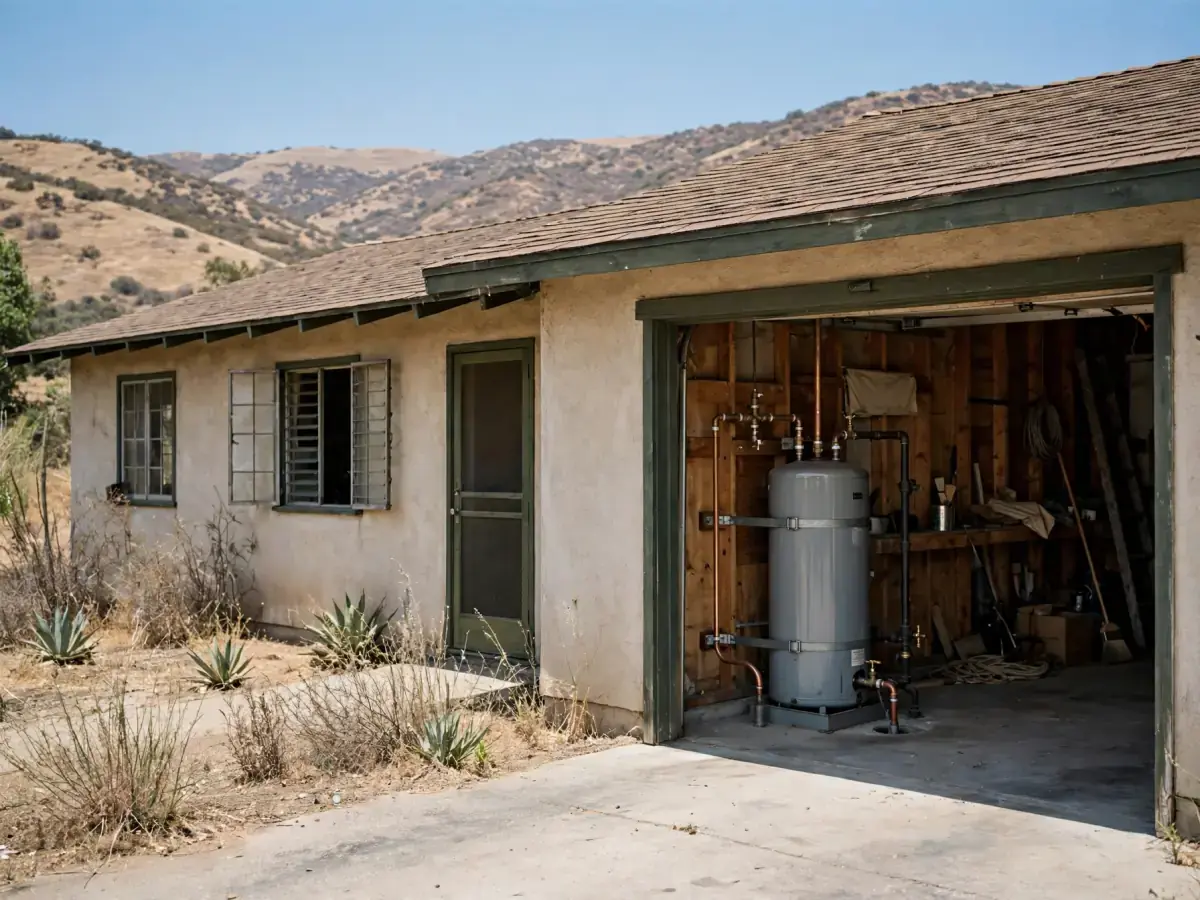
- Most Valley water heaters sit in the attached garages of post-war ranch homes.
- The 1994 Northridge earthquake struck beneath the Valley, and unbraced heaters were a known hazard [1].
- California requires water heaters to be braced or strapped [2]; replacements inside the City of LA use LADBS permits [3].
- Warm Valley garages suit heat pump water heaters, which draw heat from the surrounding air [4].
Valley homes
What Valley homes are like
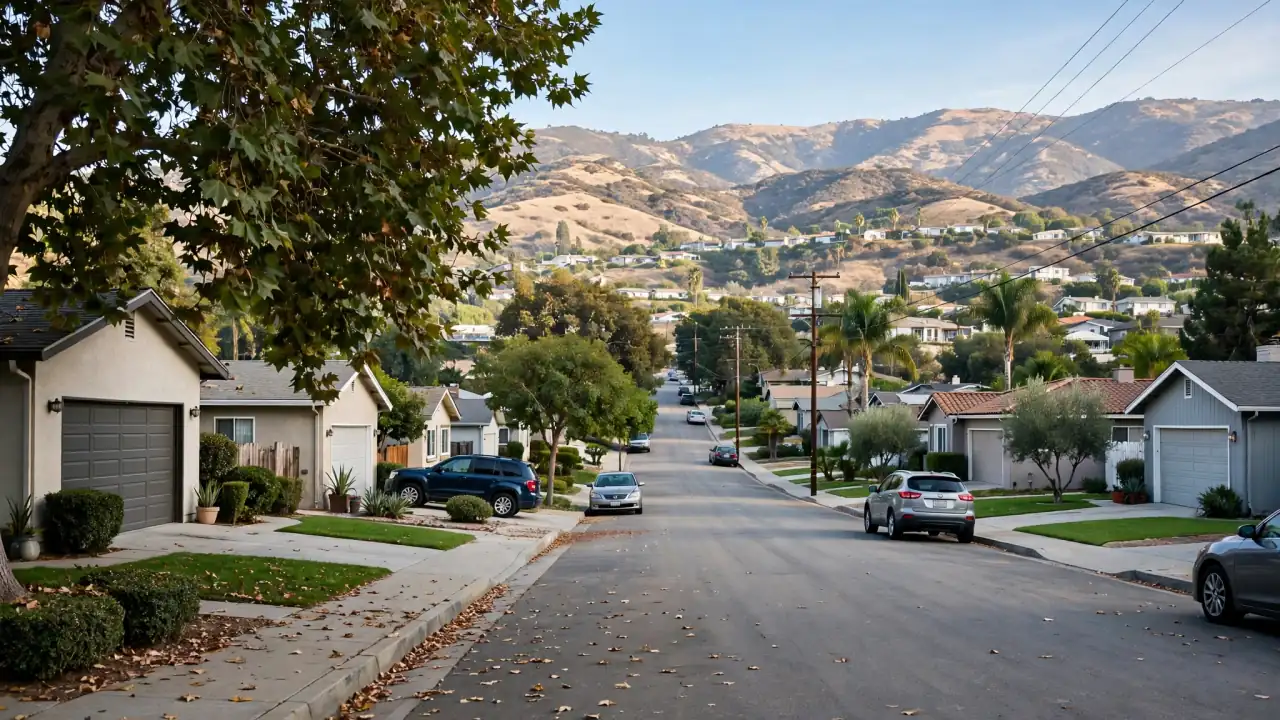
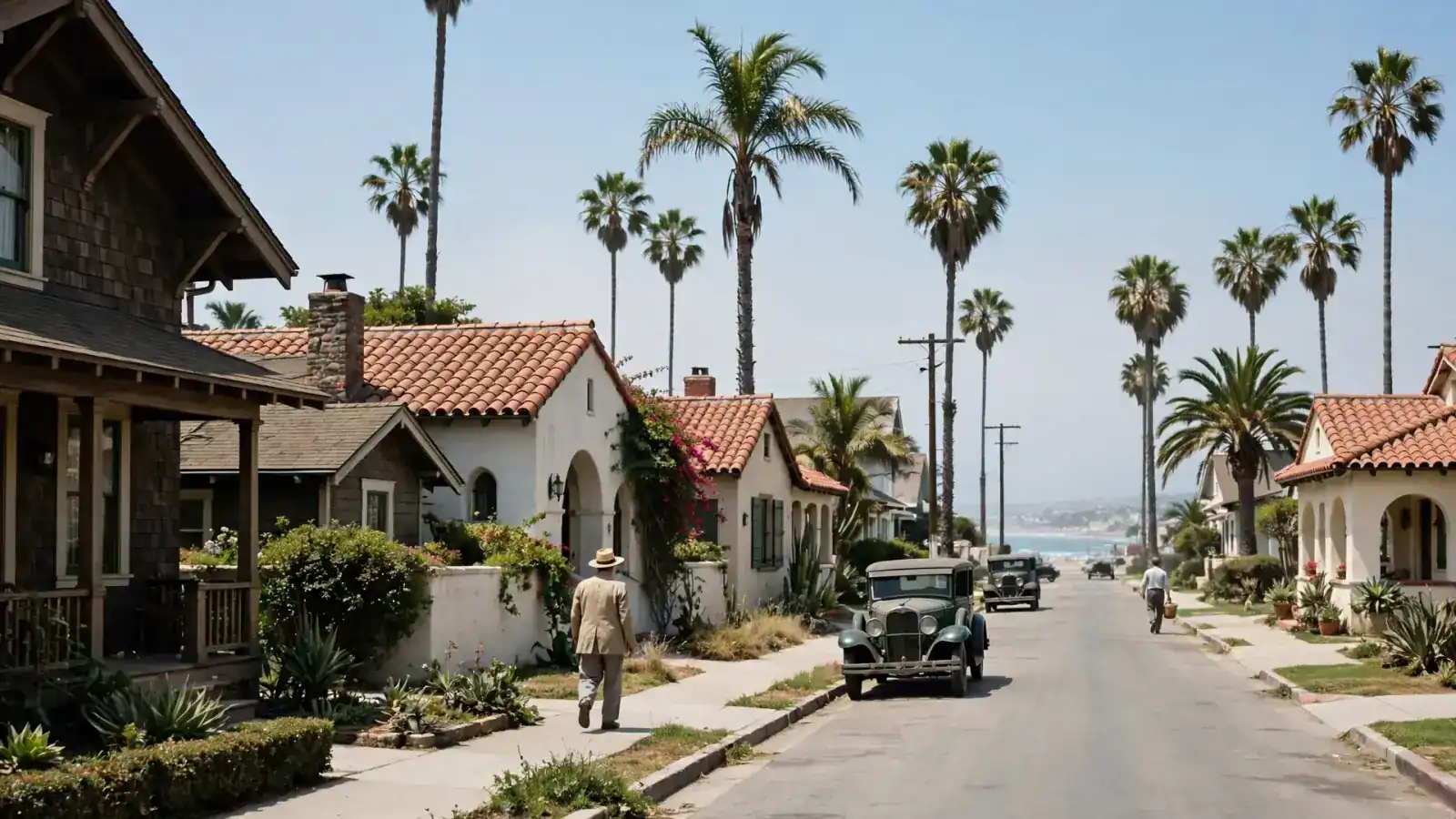
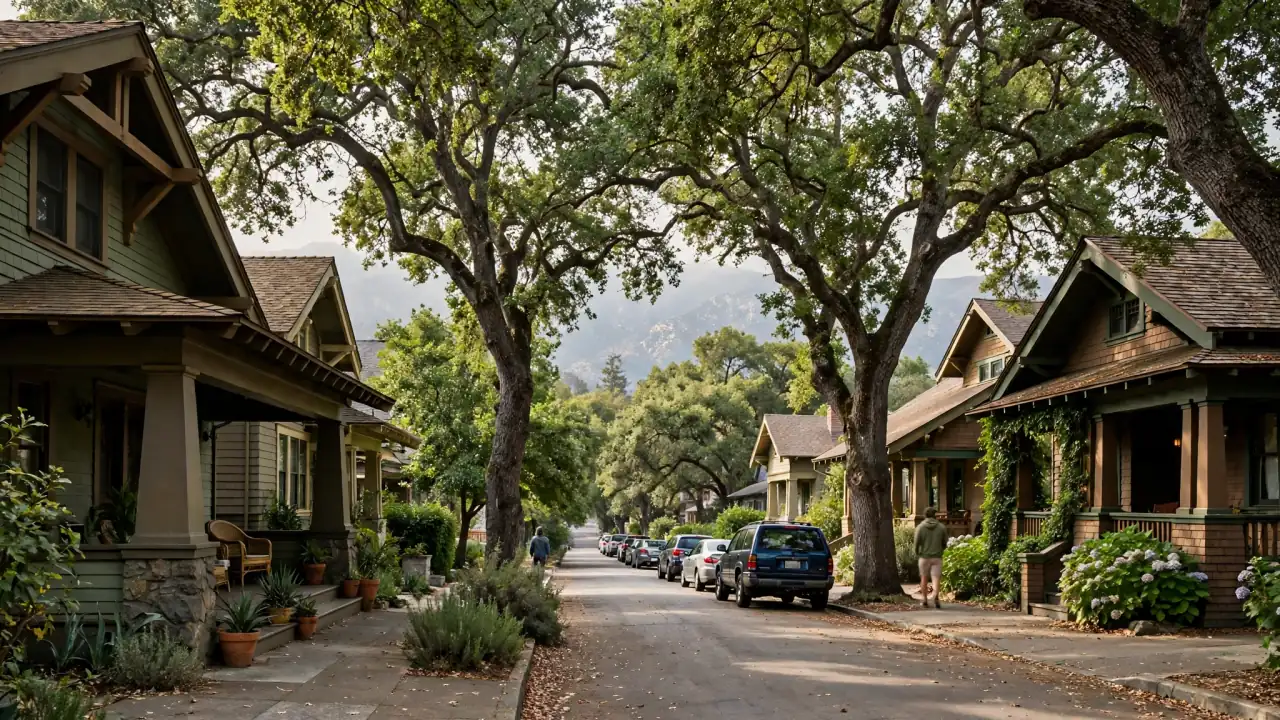
Much of the San Fernando Valley was built out in the decades after World War II, when orchards and farmland gave way to tracts of ranch-style houses. The typical result is a one-story home on a slab or raised foundation with an attached two-car garage, and a gas tank water heater standing in a corner of that garage.
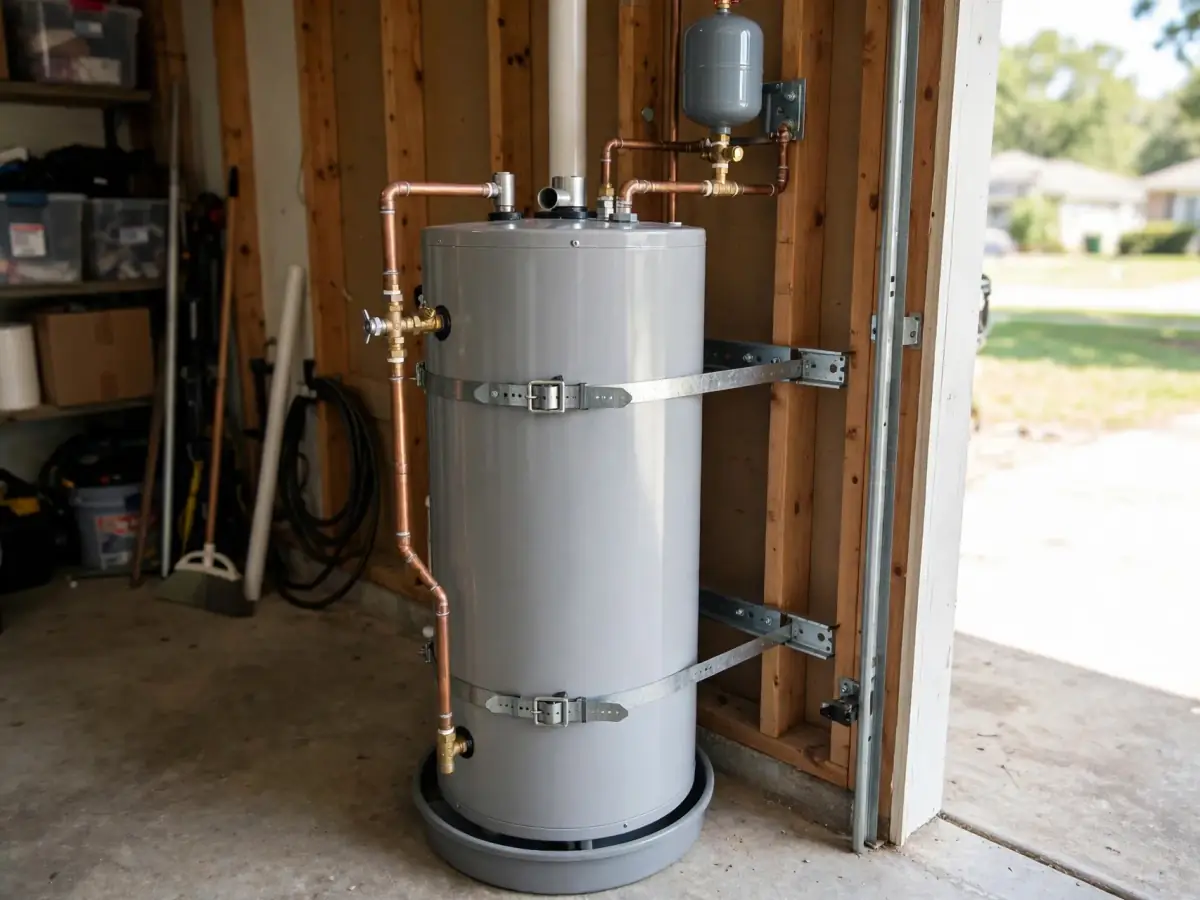
Garage installations are easy to reach, which keeps repairs straightforward. They also come with garage-specific rules: gas heaters must be protected from vehicle impact and from flammable vapors near the floor, and every water heater in California must be braced or strapped against earthquake movement. [2]
In recent years the Valley has also seen a large number of accessory dwelling units and garage conversions. Many of those have their own small electric tank or a tankless unit, sometimes added on to the main house's gas line or electrical panel.
Coverage
Valley communities covered by this service
Calls are routed to independent licensed plumbers who accept work in these parts of the Valley. Coverage is set by ZIP code and can change, so the plumber confirms your address when you call.
- North Hollywood and Valley VillageDense mix of 1940s and 1950s houses, small apartment buildings and newer mid-rise complexes near the NoHo Arts District, with heaters in garages, closets and central boiler rooms.
- Studio City and Sherman OaksFlatland ranch homes south of the river and hillside homes climbing toward Mulholland, plus a large number of condos along Ventura Boulevard.
- ResedaClassic post-war tract homes with attached garages, many with garage conversions and newer accessory dwelling units that added a second water heater.
- Granada HillsLarger 1950s and 1960s ranch homes in the north Valley, often with older garage heaters, long pipe runs to the far bathroom and pool-era additions.
- Sylmar and PacoimaModest single-family homes and newer infill housing at the northern edge of the Valley, where summer heat is fierce and many families share one tank across a large household.
Common calls
What plumbers see most in the Valley
Original or loose strapping in San Fernando Valley
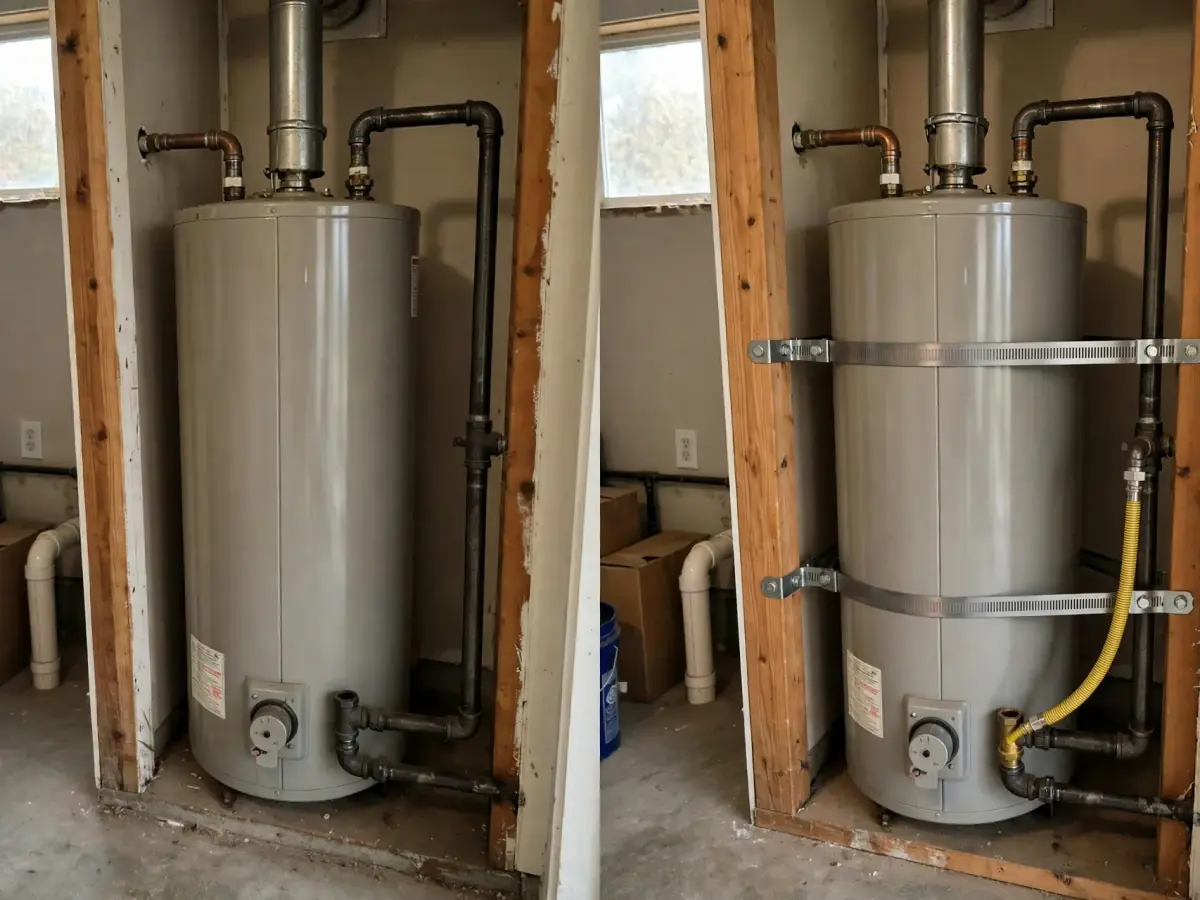
Older installations often have a single strap, plumber's tape or nothing at all. A modern swap uses two straps at the upper and lower thirds of the tank.
Clogged air intakes
Garage dust, leaves and lint get pulled toward the bottom of gas heaters and can clog the flame arrestor, putting the pilot out.
Second heaters for ADUs in San Fernando Valley
Garage conversions and backyard units add another heater, and with it questions about gas line size and electrical capacity.
Tankless retrofits in San Fernando Valley
Owners swapping a garage tank for tankless often need a larger gas line and new venting, which should be checked before the unit is chosen.
Earthquakes
The Northridge earthquake and water heaters
The magnitude 6.7 Northridge earthquake on January 17, 1994 was centered beneath the San [1]Fernando Valley. Unbraced water heaters that toppled, broke their gas connections and started fires were one of the lessons that pushed California to stress water heater bracing, and they remain a reason inspectors look closely at strapping today.
Good strapping is simple: two metal straps around the tank, anchored into wall studs, with flexible gas and water connectors that can move without breaking. Many Valley homes also have a seismic gas shut-off valve at the meter. If one closes during a quake, every gas appliance goes out until it is reset and the pilots are relit.
Summer heat
Heat, garages and hot water in the Valley
The Valley runs much hotter than the coast in summer, and attached garages can get very warm. Heat does not hurt a water heater, but it is hard on the people working on it, and it affects some choices. Heat pump water heaters, for example, actually perform well in a warm garage because they pull heat from the surrounding air. [4]
In winter, the opposite happens: incoming water is colder, the heater works harder, and a tank that was borderline in August may start running out of hot water in January. That seasonal pattern is often the first sign that sediment has reduced a tank's capacity.
Permits
Permits and city boundaries in the Valley
- City of Los AngelesThe communities this page covers, including North Hollywood, Studio City, Sherman Oaks, Reseda, Granada Hills, Sylmar and Pacoima, are inside the City of LA, so replacement permits come from LADBS. [3]
- Separate citiesBurbank, Glendale, San Fernando, Calabasas and Hidden Hills run their own building departments with their own permit process.
Replacement choices
Choosing a replacement for a Valley garage
A garage gives Valley homeowners more options than most of the city. A like-for-like gas tank is the quickest swap. A heat pump water heater suits a warm garage well, because it pulls heat from the surrounding air and pushes cooler, drier air back into the space, and it can noticeably lower the energy used for hot water. A wall-mounted tankless unit frees floor space, which matters to owners turning part of a garage into living space or storage.
The deciding details are usually practical: whether the gas line can feed a tankless unit at full output, whether the electrical panel has room for a heat pump unit's circuit, and whether the household's morning demand fits a given tank's first-hour rating. A contractor who checks those three things before recommending a model saves a lot of trouble later.
Maintenance
Keeping a Valley water heater healthy
Garage heaters live in dusty spaces. Keeping the area around the base swept, and keeping stored boxes, laundry and garden supplies away from the burner's air intake, prevents the clogged flame arrestors that put pilots out. Flushing sediment on the schedule in the manual keeps capacity up, and an anode inspection every few years helps the tank last.
After any noticeable earthquake, it is worth a quick look at the heater: straps still tight, no new leaks at the connections, no gas smell, and the pilot still lit. If the seismic shut-off valve closed, have the gas restored and appliances relit safely.
North Hollywood
North Hollywood and Valley Village: closets, courtyards and new apartments
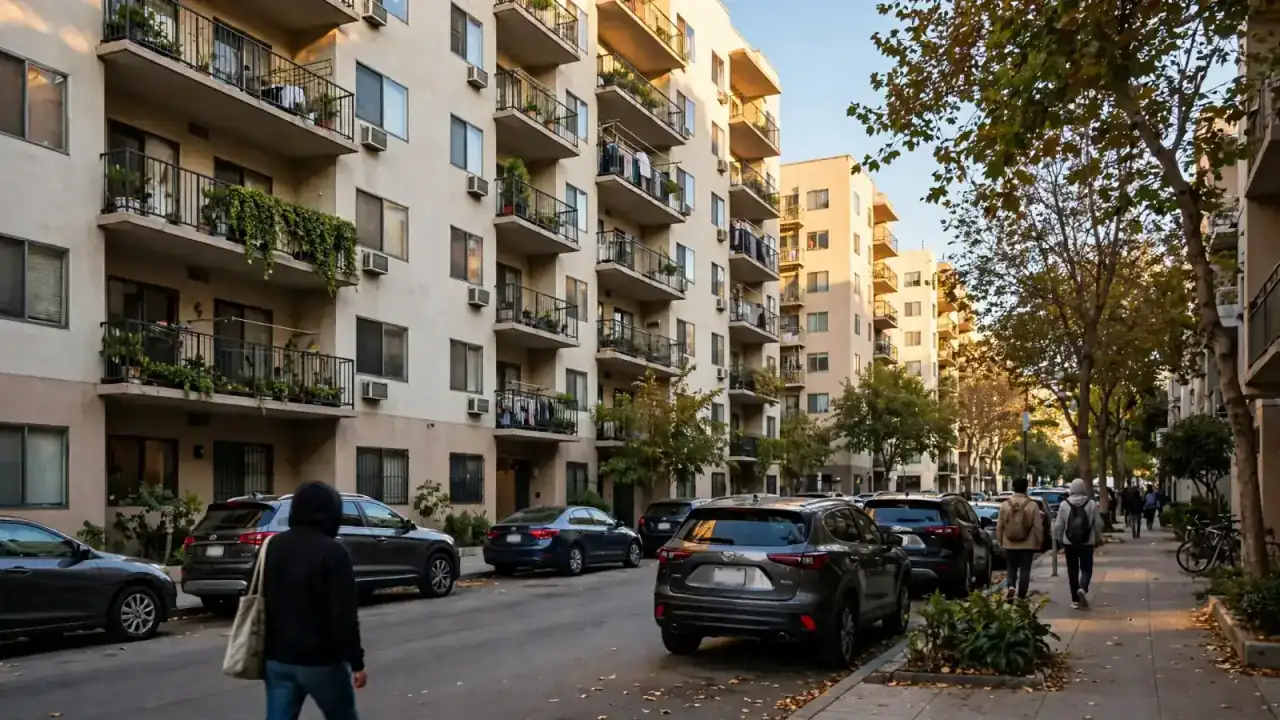
North Hollywood has changed more than most of the Valley. Older single-family streets sit beside 1960s courtyard apartments and newer mid-rise buildings near the Metro station. That means three very different water heater calls: a garage tank in a house, a closet tank in a garden apartment, and a central system or individual unit heaters in a newer building.
In garden apartments, unit heaters are often packed into small closets on balconies or in hallways. Drain pans, relief valve lines that run to a safe spot, and enough combustion air for a gas heater are the items most often missing in older buildings. In newer complexes, residents usually contact the property manager first, because the building's own plumber or maintenance contract may cover the heater.
Studio City and Sherman Oaks
Studio City and Sherman Oaks: flatland homes, hillside homes and condos
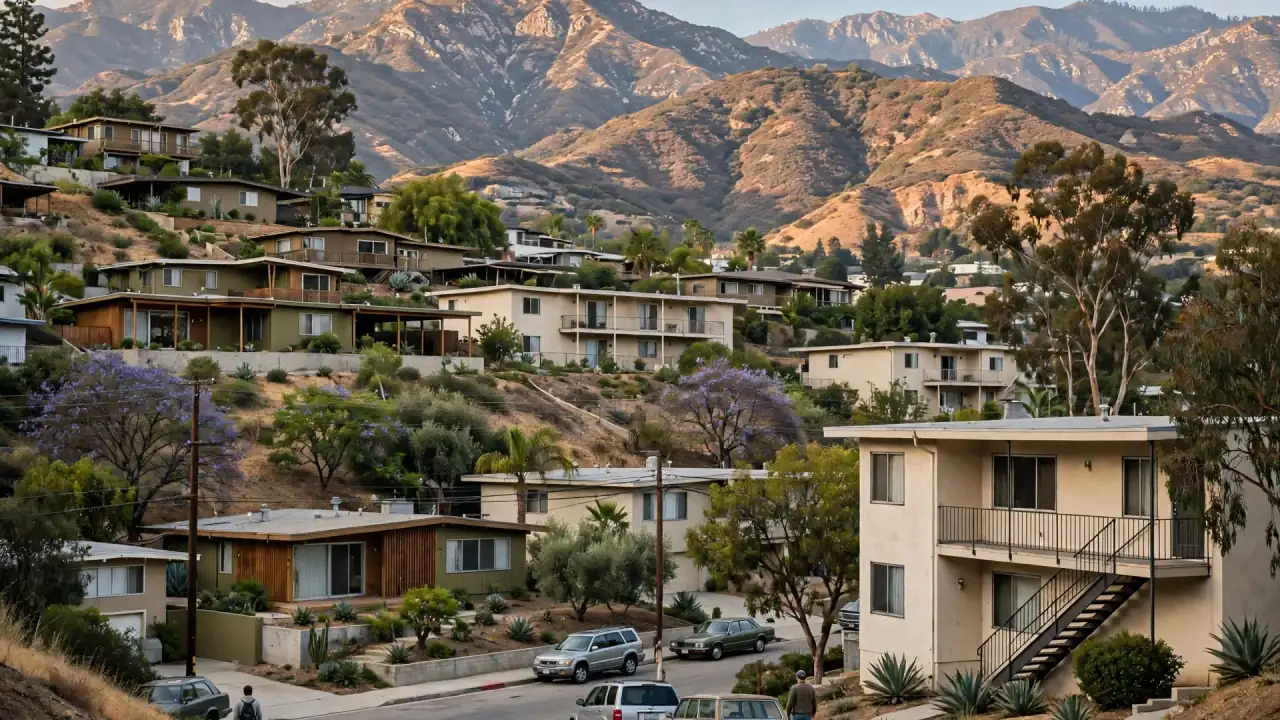
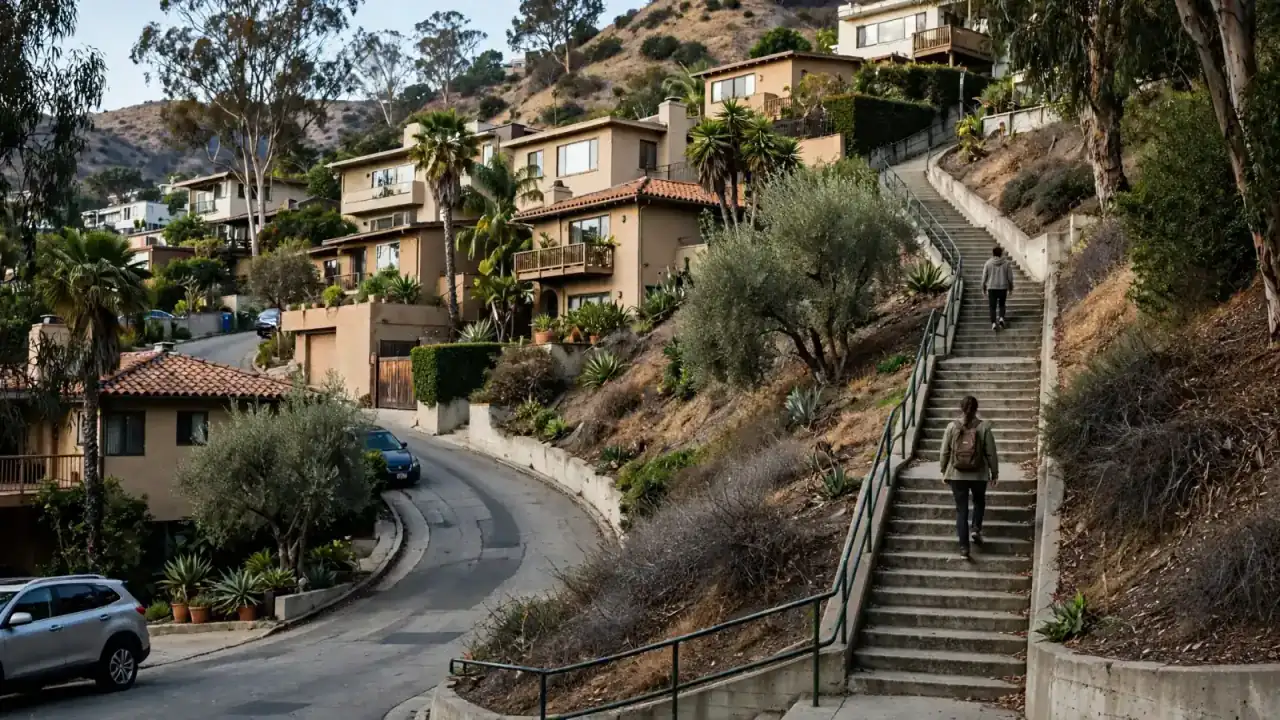
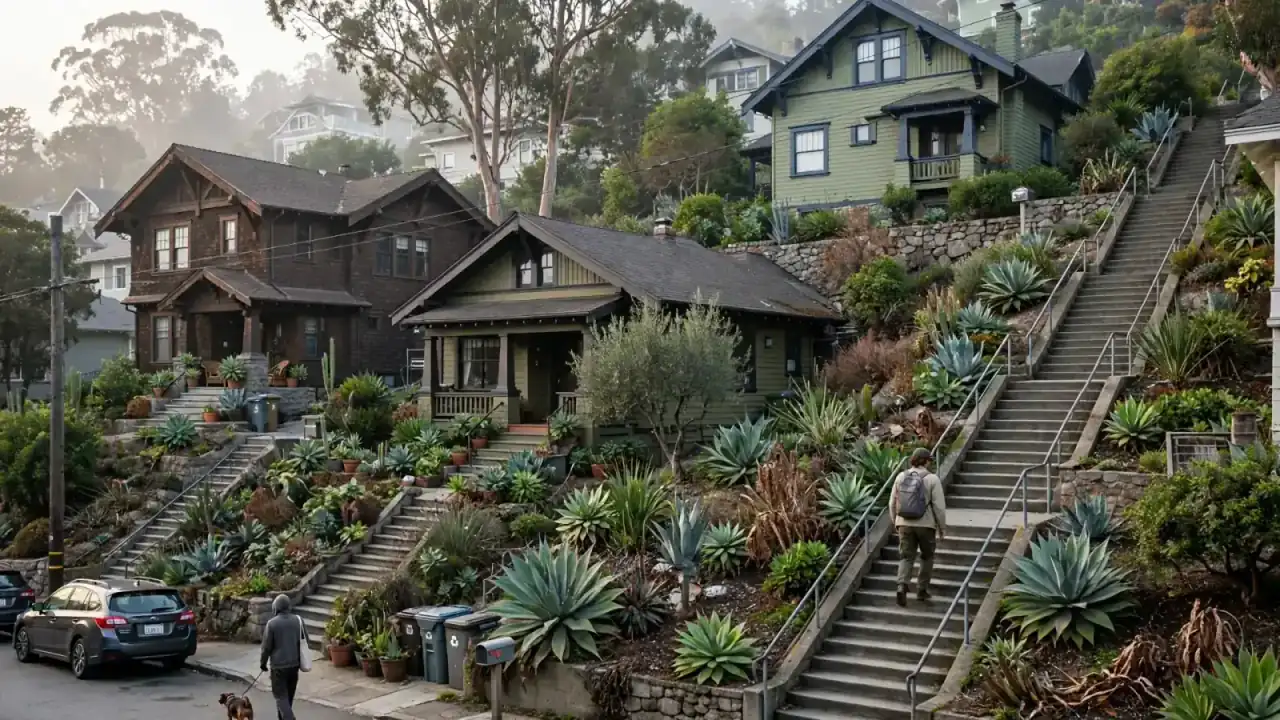
South of Ventura Boulevard, Studio City and Sherman Oaks climb into the hills, and hillside homes there share many of the challenges of the Hollywood Hills: steep driveways, heaters under the house or in a garage below the living space, and leaks that can run downhill into lower floors. A drain pan with a drain line and an automatic leak shut-off are worth considering on any hillside heater.
North of the boulevard, flatland homes are mostly single-story with garage heaters, and the many condominium buildings along the commercial corridor have heaters in unit closets. In a condo, check the association rules before scheduling: some require licensed and insured contractors, set work hours, or ask to be notified before any water is shut off to a riser.
Reseda and Granada Hills
Reseda and Granada Hills: tract homes, conversions and second heaters
Reseda and Granada Hills are full of the post-war ranch homes the Valley is known for. The original heater was almost always in the attached garage, and many have since been replaced several times. Each replacement is a chance for small problems to creep in: a single strap instead of two, a rigid gas line, a vent connector that no longer slopes up toward the flue. A replacement visit is the time to put those right.
Garage conversions and accessory dwelling units have added a second water heater to many lots. ADU heaters are often electric tanks or small tankless units in a closet, and they need the same seismic strapping, relief valve discharge and, in a closet, a drain pan. Make sure you know which heater serves which unit before calling; it saves time for everyone.
In Granada Hills, larger homes often have a long pipe run from the garage to the farthest bathroom. Waiting a long time for hot water at that end of the house is a plumbing layout issue rather than a heater fault, and a recirculation system is the usual fix.
Sylmar and Pacoima
Sylmar and Pacoima: heat, big households and hard-working tanks
At the northern edge of the Valley, Sylmar and Pacoima see some of the hottest summer days in Los Angeles. Garage heaters there sit in hot air for months, which is easy on the heater's energy use but hard on anything stored nearby: paint, fuel and solvents should never be kept close to a gas water heater, and dust and lint near the base clog the flame arrestor on modern gas tanks.
Many homes in these neighborhoods house large or multi-generational families, so one tank can be asked to supply many showers in a row. If hot water runs out quickly, the cause may be sediment, a broken dip tube or a failing element, but it may also be that the tank is simply too small for the household. A plumber can test the parts first and then talk through whether a larger tank, a second heater or a tankless unit would serve the house better. [4]
Sylmar also lived through the 1971 San Fernando earthquake, and like the rest of the Valley it sits in active fault country. Two straps fastened to the framing and a flexible gas connector are the minimum for any heater here. [2]
Quick reference
Common Valley water heater problems and what to do first
| What you notice | Common cause in Valley homes | What to do first |
|---|---|---|
| Pilot out after a hot afternoon or a dusty week | Clogged flame arrestor or poor combustion air in the garage | Clear storage away from the base; call if it will not stay lit |
| Hot water runs out with a full house | Tank too small for the household, sediment, broken dip tube | Note how many showers run back to back; schedule a diagnosis |
| Long wait for hot water at the far bathroom | Long pipe run from the garage | Ask about a recirculation system |
| Second heater in an ADU not keeping up | Undersized electric tank or tankless unit | Check the rating plate and household use |
| Water under a garage heater | Relief valve, fittings, drain valve or the tank | Close the cold-water valve and turn off gas or power |
Outside coverage
If your Valley address is not covered
Coverage in the Valley is set by ZIP code according to which independent plumbers are taking calls, and some Valley neighborhoods are not currently covered by this service. When you call, the first thing confirmed is whether a plumber is available at your address. If not, you will be told so straight away rather than being kept waiting.
Burbank and Glendale, at the eastern edge of the Valley, are separate cities with their own building departments and have their own pages: see Burbank and Glendale.
Valley checklist
A yearly water heater checklist for Valley homes
Ten minutes in the garage once a year catches most of the problems that turn into emergency calls.
Two straps, tight
Confirm both seismic straps are fastened to the studs and snug around the tank.
Base and arrestor clear
Sweep dust and lint away from the bottom of a gas heater and move stored items back.
Flush the sediment
Hard Valley water leaves sediment. A yearly flush keeps the burner or lower element working efficiently.
Read moreLift the relief lever
Lift the lever briefly. If it drips afterward, plan a replacement.
Read moreVent connected
Make sure the vent pipe is still attached at the draft hood and climbs toward the roof.
Know the age
Find the manufacture date on the rating plate so a replacement can be planned, not rushed.
Pools and additions
Room additions, pools and outdoor showers
Over the decades, many Valley houses gained a family room, a primary suite at the back of the lot or an outdoor shower by the pool. Each addition lengthens the hot water run and adds fixtures, but the garage heater often stayed the same size. If hot water became a problem after an addition, that history is worth sharing with the plumber.
Outdoor showers and pool-side bathrooms also put plumbing in the sun, and long exterior runs lose heat.
Tankless in the Valley
Is tankless a good fit for a Valley ranch home?
Tankless heaters are popular in the Valley because they free up garage space and never run out of hot water while they are working. For a ranch house with the heater in an attached garage, an exterior wall is usually close by, which makes venting and mounting simpler than in many other parts of the city.
The two things to check first are the gas line and the water. A whole-house gas tankless unit needs a gas supply large enough to run it alongside the furnace, dryer and stove, and older Valley homes often have a line sized only for a tank heater. Valley water also tends to be hard, so a tankless unit will need regular descaling to stay efficient. Neither is a reason to avoid tankless, but both belong in the quote. [4]
For many households a high-quality tank, properly sized, strapped and maintained, remains the simplest and most economical choice. A plumber can lay out both options side by side.
Outages
Hot water during a Valley power outage
Standing-pilot gas tank heaters keep heating during a power cut, but tankless, heat pump and electronic-ignition gas units need electricity. Factor that in when choosing a replacement for a large household.
FAQ
Questions from Valley homeowners
Does my garage water heater need to be on a stand?
Older gas heaters in garages were installed on stands so the flame sat above floor-level vapors. Many newer flammable-vapor-resistant models can sit on the floor where local code allows, but they still need protection from vehicle impact. The installer and inspector decide based on the model and the space.
Can I put a heat pump water heater in my Valley garage?
Often yes. Garages usually have the space and air volume these units need, and warm garages help their efficiency. You need a suitable electrical circuit and a place to drain condensate.
My ADU has no hot water but the main house does. Is that related?
Usually not, because most ADUs have their own heater. If both are gas and share a line, an undersized line can starve one appliance when the other runs, which a plumber can check.
How do I know if my strapping is correct?
Look for two metal straps wrapped around the tank, one in the upper third and one in the lower third, bolted into the wall framing. Plumber's tape or a single strap is not enough for an inspection.
Do you cover Sherman Oaks and Studio City?
Yes. Both are in the current coverage area. The plumber confirms availability for your exact address when you call.
Who fixes water heaters in North Hollywood?
A licensed plumber who works on water heaters. Call the number on this page; if you rent, tell your landlord or manager first.
My ADU has its own water heater. Is it treated differently?
An ADU water heater needs the same seismic strapping, relief valve discharge and, in a closet, a drain pan as the main house heater. Tell the plumber which heater serves which unit.
Is Granada Hills in your service area?
Yes, Granada Hills is currently covered, along with Reseda, Sylmar and Pacoima. The plumber confirms your exact address when you call.
How often should a Valley water heater be flushed?
Once a year is a sensible starting point. Hard water can mean more frequent flushing; your water supplier's annual report lists hardness.
Why does my Valley garage heater smell like gas on hot days?
Any gas smell needs action: leave, avoid switches and call the gas utility from outside. Heat does not make a sound gas line leak.
Can a Valley garage heater be replaced with a heat pump unit?
Often yes. Warm garages help heat pump units work efficiently, but they need space, a condensate drain and a dedicated electrical circuit, so the garage is checked first.
Do you cover Pacoima?
Yes, Pacoima is in the current coverage area, along with nearby Sylmar.
Do you serve Studio City?
Yes. Studio City is in the current coverage area. The plumber confirms your exact address when you call.