
Key facts: Rusty or smelly hot water
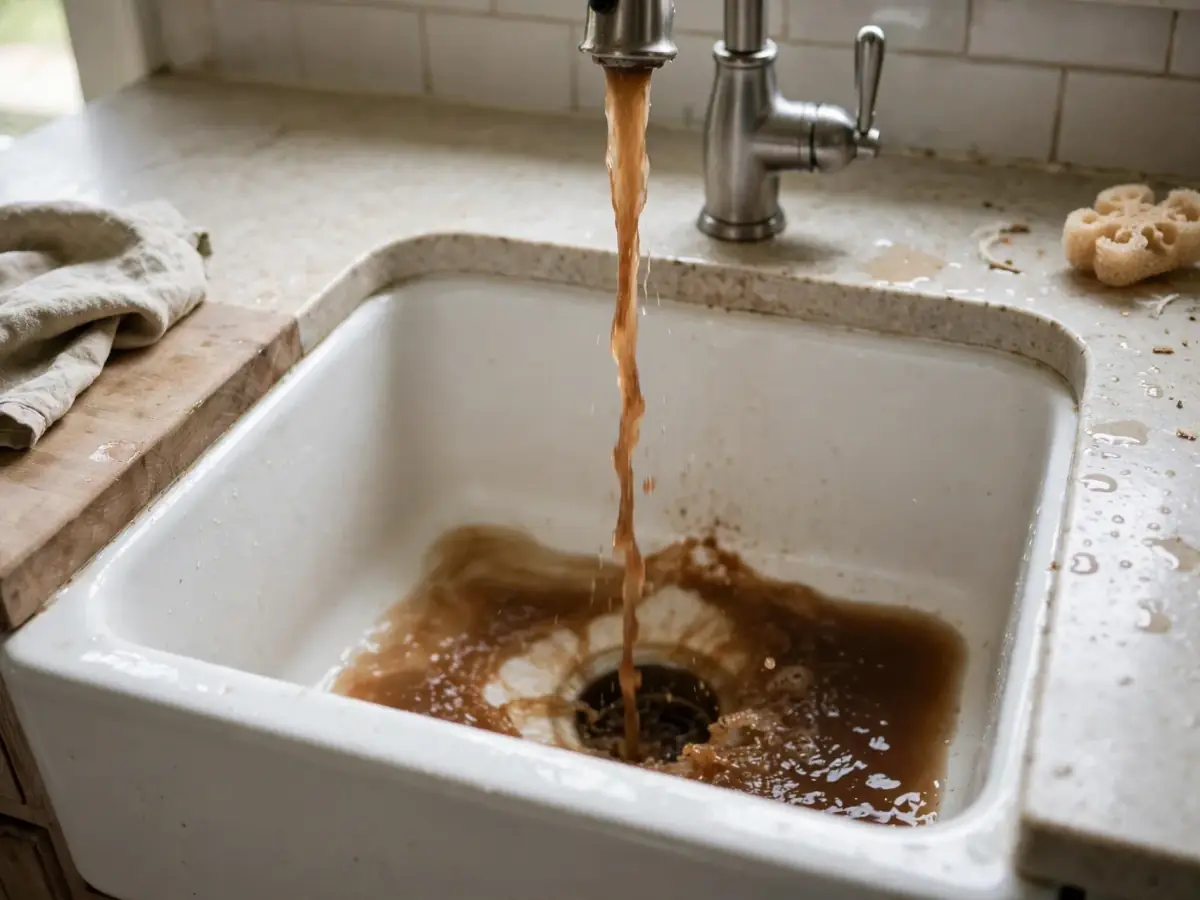
- Rust only in the hot water usually means a spent anode rod or a corroding tank; rust in hot and cold points to the pipes or supply.
- A rotten-egg smell in hot water only comes from bacteria reacting with a magnesium anode, producing hydrogen sulfide.
- Replacing the anode with an aluminum-zinc or powered type usually ends the smell; never just remove it.
- Discoloration and odor are aesthetic water-quality issues covered by EPA secondary standards [3].
Short answer
Rusty or smelly hot water: the short answer
Run a cold tap and a hot tap into white cups. If only the hot water is rusty, the water heater is the likely source, usually a spent anode rod or corrosion inside the tank. [1] If both are discolored, look at the pipes or the water supply: old galvanized steel piping, or a temporary disturbance from work on the water main. [3]
A rotten-egg smell from the hot water only is usually hydrogen sulfide gas, produced when harmless bacteria in the water react with the anode rod. It is common, fixable and normally not a sign that the tank is failing.
Diagnose it
Discoloration and odor: causes and fixes
| What you see or smell | Likely cause | What to do |
|---|---|---|
| Rusty water from hot taps only | Anode rod used up or tank corroding | Have the anode and tank inspected |
| Rusty water from hot and cold taps | Galvanized pipes or a disturbance in the water main | Run cold water for a few minutes; call the plumber if it persists |
| Rotten-egg smell from hot water only | Bacteria reacting with a magnesium anode | A different type of anode and tank disinfection usually fix it |
| Cloudy or milky water that clears in a glass | Air bubbles | Usually harmless |
| Gritty particles in aerators | Sediment or a disintegrating dip tube | Flush the tank; check the dip tube |
| Rust plus water at the base of the tank | Tank failure | Plan a replacement |
Anode rods
The anode rod: the part that protects your tank
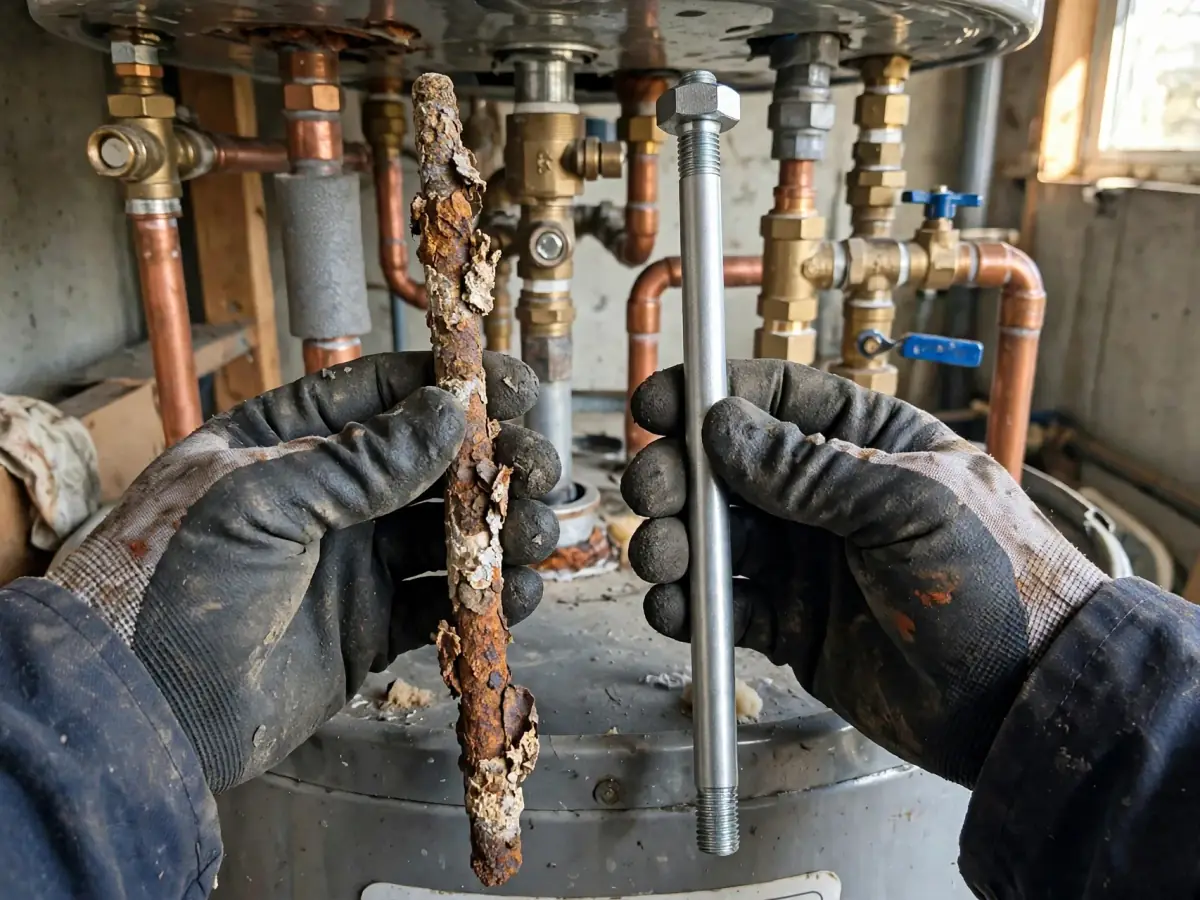
Steel water heater tanks are lined with glass, but no lining is perfect. A metal rod, usually magnesium or aluminum, screws into the top of the tank and corrodes instead of the steel. It sacrifices itself over the years, and once it is used up, the tank starts rusting from the inside.
Checking and replacing the anode is one of the few maintenance tasks that can noticeably extend a tank's life. Harder water and softened water both tend to use rods up faster. [2] A plumber can pull the rod, judge how much is left and fit a replacement, including a combination or powered anode where smell is the problem.
Safe checks
Simple tests you can do
- The two-cup testCompare hot and cold water in white cups to see where the discoloration comes from.
- Run the coldIf both are brown, run a cold tap for several minutes. Discoloration from main work often clears.
- Check the smell sideIf only hot water smells, the heater is involved. If cold smells too, the water supply or a well is.
- Note the ageRust from a tank past its warranty, especially with leaks, usually means replacement.
Diagnosis
How a plumber fixes rusty or smelly hot water
- 1
Compare hot and cold
Compare hot and cold, check fixtures and look at the pipe material.
- 2
Inspect the anode
The rod is removed and checked; it often reveals the tank's condition.
- 3
Flush and treat
The tank is flushed, and for odor it may be disinfected following the manufacturer's guidance.
- 4
Replace parts or tank
A new or different anode is fitted, or a replacement is quoted if the tank is corroded.
Los Angeles
Pipes and water supply in Los Angeles homes
Many older Los Angeles houses still have some galvanized steel water piping, which rusts inside over the decades. In those homes, brown water on both hot and cold sides is often a piping issue rather than a water heater problem, and repiping is the long-term fix.
Utilities sometimes flush mains or repair pipes in the street, which can stir up sediment for a few hours. If discoloration appears suddenly on both hot and cold and clears after running the cold water, that is the most likely cause. LADWP publishes water quality information for its service area.
Smell
Getting rid of a rotten-egg smell
The common fixes for sulfur smell in hot water are replacing a magnesium anode with an aluminum-zinc or powered anode, and disinfecting the tank following the manufacturer's instructions. Raising the temperature briefly can help in some cases, but it raises scalding risk and should only be done with care and guidance.
If the smell comes back quickly, or if cold water smells too, the water supply itself may contain sulfur compounds or bacteria, and testing the water is the next step.
Before the visit
What to tell the plumber
- Whether the problem is on hot only, or hot and cold.
- Whether it is every tap or one fixture.
- Whether it is color, smell, particles, or a combination.
- When it started, and whether there has been street work or a water outage nearby.
- The heater's age, and whether the anode rod has ever been replaced.
Water treatment
Water softeners, filters and your water heater
Treatment equipment changes how a heater wears. Softened water leaves much less scale, which helps heat transfer and reduces sediment, but it is more aggressive toward anode rods, so the rod may need checking more often. Whole-house filters can catch sediment from the street before it reaches the heater.
If you add or remove a softener, mention it at the next service. It is a common reason an anode that lasted years suddenly disappears, and occasionally the reason a sulfur smell appears.
FAQ
Rusty and smelly water questions
Is rusty hot water safe to use?
Rust particles are mainly an aesthetic and staining problem, but they are a warning about the heater's condition. Avoid drinking discolored water, and have the source identified.
Can I remove the anode rod to stop the smell?
No. Removing it leaves the tank unprotected and it will corrode much faster, and doing so may void the warranty. A different anode type is the proper fix.
How often should the anode rod be checked?
Every few years is a common recommendation, sooner in hard or softened water. The manual for your heater may give a specific interval.
Does rusty water mean the tank is about to leak?
Not necessarily, but it means corrosion has started. Combined with age, leaks or rumbling, it usually means planning a replacement.
Why does only my hot water smell like rotten eggs?
Sulfate-reducing bacteria in the water react with the magnesium anode inside the tank and produce hydrogen sulfide gas. The cold water has no anode to react with, so it does not smell. A different anode type usually solves it.
Is discolored hot water covered by the heater warranty?
Warranties typically cover leaks from the tank, not water quality issues. A depleted anode is usually treated as maintenance, though a tank leak caused by corrosion may be covered during the warranty term.
Should I drink water that smells of sulfur?
Hydrogen sulfide is mostly a nuisance at the levels that cause odor, but if cold water smells too, or the smell comes with illness, discoloration or a private well, have the water tested before drinking it.