Key facts: Thermocouple & Pilot Assembly Replacement
- A thermocouple turns the heat of the pilot flame into a small voltage that holds the gas valve open; if the voltage drops, the gas shuts off.
- If the pilot lights while you hold the knob but goes out when you release it, the thermocouple is the most likely cause.
- On flammable-vapor-resistant heaters the thermocouple is part of a sealed pilot assembly that is replaced as one unit.
- Never keep relighting a pilot if you smell gas; leave the house and call your gas utility from outside [2].
How it works
What a thermocouple does inside a gas water heater
A thermocouple is two different metals joined together at one end. When that tip is heated, the junction produces a tiny electrical voltage, measured in millivolts. In a standing-pilot gas water heater, the tip sits directly in the pilot flame and the other end screws into the gas control valve. The voltage energizes a small electromagnet inside the valve, and that magnet is what holds the safety valve open so gas can keep flowing to the pilot and, when the thermostat calls for heat, to the main burner.
This arrangement is a fail-safe. If the pilot blows out, the tip cools within a minute or so, the voltage collapses, the magnet lets go and the valve snaps shut. That is why a gas water heater cannot keep pouring unburned gas into a garage when the flame goes out. It is also why so many no-hot-water calls start with a pilot that refuses to stay lit: the heater is working exactly as designed, protecting the house because it no longer gets a strong enough signal from its sensor.
Some heaters use a thermopile instead, which is essentially a bundle of thermocouples wired together to produce more voltage. Thermopiles are common on gas valves that need a little more power for their controls. They fail in similar ways, are tested with the same meter, and are replaced using the same careful steps.
Warning signs
Signs the thermocouple or pilot assembly is failing
These symptoms usually show up gradually before the [pilot](/guides/pilot-light-keeps-going-out/) quits for good.
Pilot dies when you release the knob
The pilot lights while you hold the control down, then goes out as soon as you let go. The valve is not receiving enough voltage to stay open on its own.
Pilot goes out every few days
A weak thermocouple produces a voltage just above the valve's limit; a small draft, dirt or temperature change pushes it below and the pilot drops out.
Small or flickering pilot flame
A dirty pilot orifice makes a weak flame that does not wrap the thermocouple tip, so even a good sensor cannot heat up properly.
Pilot fine, burner lights late
Delayed ignition or a lazy burner can point to a pilot that is partly blocked, which also starves the thermocouple of heat.
Black or discolored tip
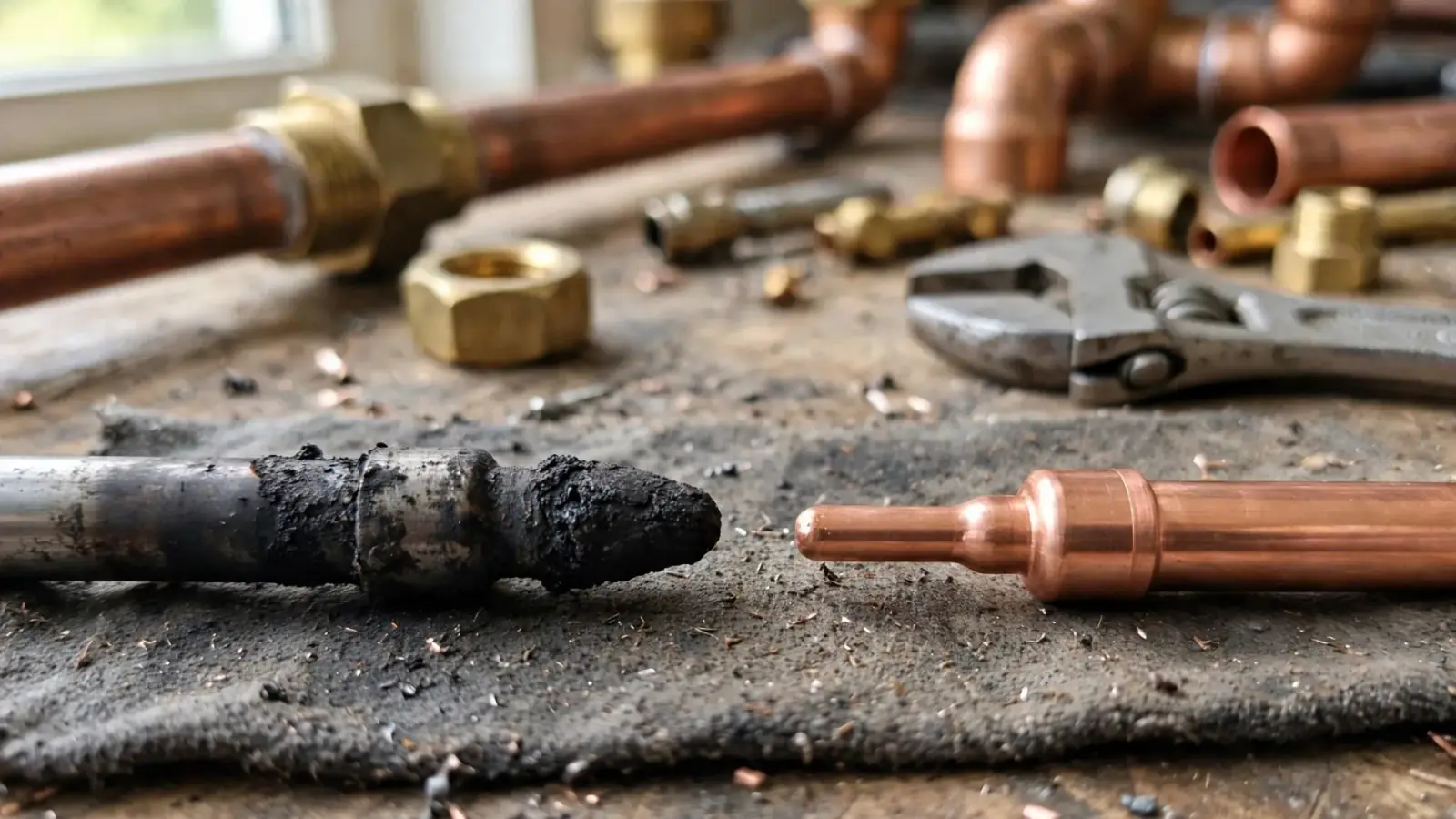
Heavy soot or oxidation on the thermocouple tip reduces its output and is a common sign of age or poor combustion.
Repeated relighting needed
If you have relit the pilot more than once or twice in a month, something is shutting it off, and relighting only hides the cause.
Why they fail
Why thermocouples and pilot assemblies wear out
A thermocouple spends its entire life sitting in a flame. Over the years the metal at the tip oxidizes and its output slowly drops. Many fail simply from age, and they tend to give out in winter, when incoming water is colder, the burner runs longer and the heater works hardest.
Position matters just as much as age. The tip has to sit in the hottest part of the pilot flame. If the bracket is bent during a previous repair, if the pilot tube is knocked, or if the pilot flame itself has become small because of a partly blocked orifice, a perfectly good thermocouple can read too low. That is why a careful technician checks the pilot flame before condemning the sensor.
On flammable vapor ignition resistant (FVIR) heaters, which have been standard on residential gas tank models since the mid-2000s, the pilot, thermocouple and often the igniter are built into a sealed burner assembly. Dust, lint and pet hair drawn toward the air intake under the heater can clog the flame arrestor, starving the flame of air. The pilot then burns poorly, the sensor cools and the heater shuts down. In those cases, replacing the thermocouple alone would not solve the problem; the air supply has to be restored too.
Testing
How a technician tests the thermocouple
A proper diagnosis takes a few minutes and avoids replacing parts that were never the problem.
- 1
Confirm gas and safety
Check for any gas odor, confirm gas is reaching the heater and that no seismic shut-off or excess-flow valve has closed.
- 2
Inspect the pilot flame
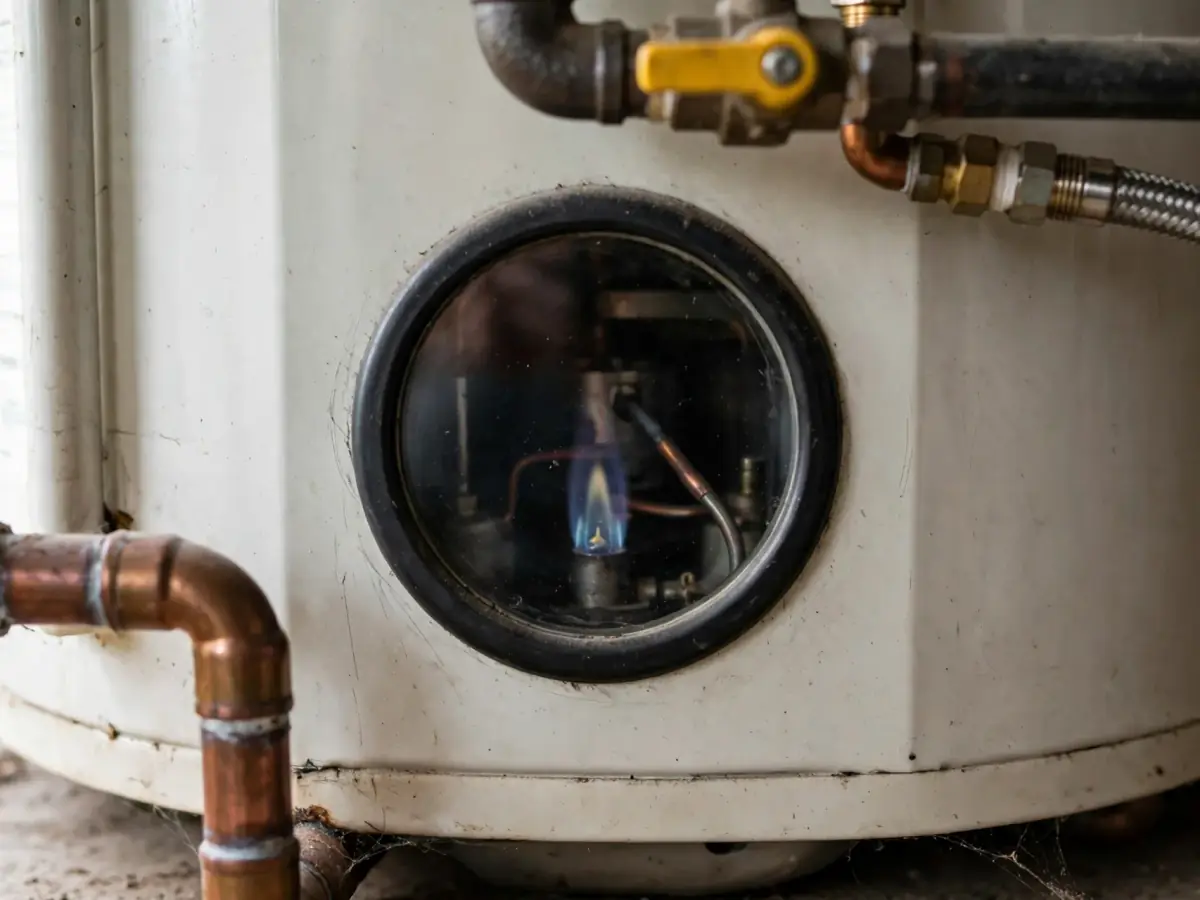
A healthy pilot is steady, mostly blue and wraps the top of the thermocouple. A small, yellow or lifting flame is cleaned or corrected first.
- 3
Measure the output
With the pilot running, a millivolt meter reads the thermocouple or thermopile output and compares it with what the gas valve requires.
- 4
Check the valve side
If the sensor reads well but the valve still drops out, the magnet inside the gas control valve may be the real fault.
Repair or replace
Thermocouple, pilot assembly or gas valve?
Several parts can produce the same symptom. This is how they are told apart.
| Finding | Likely fault | Typical fix |
|---|---|---|
| Low millivolt reading with a good pilot flame | Worn thermocouple | Replace the thermocouple |
| Low reading with a small or yellow pilot | Dirty pilot orifice or poor air supply | Clean the pilot, clear the flame arrestor, retest |
| Good reading but valve will not hold | Gas control valve magnet | Gas valve replacement, weighed against the heater's age |
| Sealed FVIR burner with pilot problems | Integrated pilot assembly | Replace the complete pilot assembly |
| Pilot goes out only on windy days | Downdraft or venting issue | Correct venting or the vent cap; thermocouple may be fine |
The job
How a thermocouple or pilot assembly is replaced
- 1
Shut off and cool
The gas control is turned off and the gas supply valve closed. The burner area is allowed to cool so parts can be handled safely.
- 2
Remove the old part
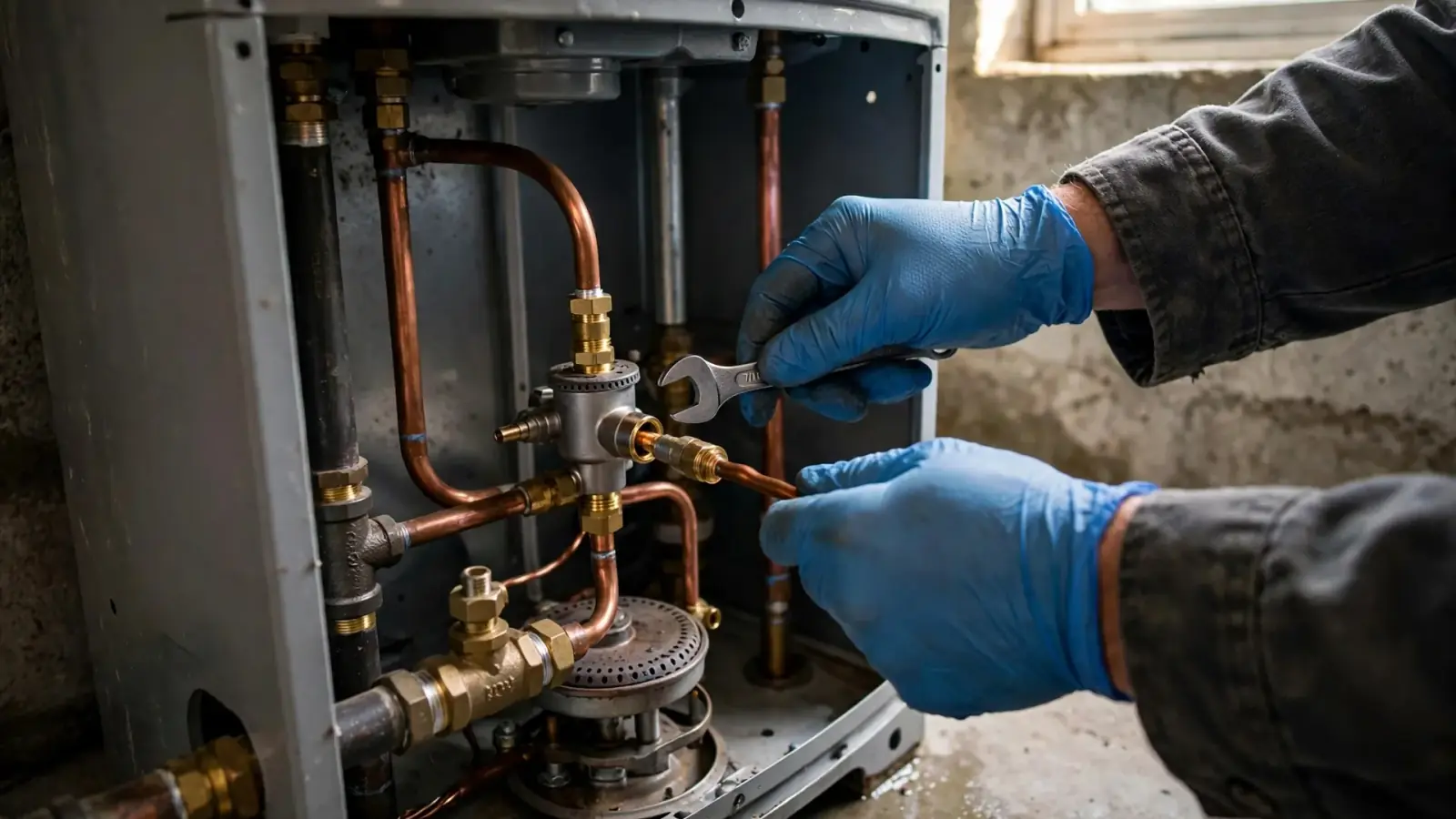
The thermocouple nut is released from the valve. On FVIR heaters, the sealed burner door and complete burner assembly are removed together.
- 3
Fit the new part
The new thermocouple or assembly is installed in exactly the right position, connections are snug but not overtightened, and the door gasket is checked.
- 4
Relight and verify
The pilot is relit following the label, the output is measured again, the burner is run through a full cycle and connections are checked for leaks.
Do it yourself?
Pilot problems: what you can safely do yourself
- Relight onceFollowing the lighting instructions on the heater's label, relighting the pilot one time is a normal homeowner task, as long as there is no gas odor.
- Keep the area clearMove stored boxes, laundry and anything flammable away from the bottom of the heater so air can reach the burner.
- Note what happensWatch whether the pilot goes out immediately, after minutes, or after the burner fires. That observation saves diagnosis time.
- Stop at the burner doorDo not open sealed FVIR combustion chambers, bend pilot tubes or swap gas valve parts. A poor seal or misplaced sensor creates a safety risk.
Los Angeles
Pilot problems in Los Angeles garages and closets
Most Los Angeles single-family homes have gas tank heaters in garages, where dust from driveways, leaves blown in from the street and lint from nearby laundry machines collect around the base of the heater. That makes clogged air intakes one of the most frequent causes of pilot outages here, especially on heaters installed after flammable-vapor-resistant designs became standard.
Earthquakes are the other local factor. Many homes have a seismic gas shut-off valve at the meter, and a strong tremor can close it, putting out every pilot in the house at once. If the pilot went out right after shaking, check other gas appliances first. Restoring gas and relighting pilots after a seismic shut-off is a job for your gas utility or a plumber [2].
Gas heaters must also vent their exhaust properly. If a pilot keeps going out and you notice soot, a smell of exhaust or condensation near the top of the heater, the venting needs attention, and a working carbon monoxide alarm nearby is essential [3].
Age matters
Is a thermocouple repair worth it on an older heater?
The calculation changes only when the same visit reveals bigger problems: rust at the base of the tank, water seeping from the shell, a gas control valve that is also failing, or heavy sediment that makes the burner run long and hot. [1]
The age of a heater is encoded in the serial number on its rating plate, and a plumber can decode it on the spot. Seeing both makes the decision straightforward rather than rushed.
If the heater is relatively young and the thermocouple is the only fault, the repair restores normal operation and nothing else needs to change. Keeping the burner area clean afterwards is the best way to make sure the new part lasts.
Prevention
Keeping the pilot reliable
- Keep a clear space around the base of the heater and vacuum dust and lint from the air intake area periodically.
- Have the burner and flame arrestor inspected during routine maintenance, especially in dusty garages.
- Flush sediment as the manual recommends; a heater that runs shorter cycles is easier on its pilot and burner.
- Make sure vent connectors are secure and the vent cap is intact so drafts do not blow the pilot out.
- Install and test carbon monoxide alarms near gas appliances.
Related problems
When it is not the thermocouple
If the pilot stays lit but the main burner never comes on, the thermocouple is not the problem; the thermostat portion of the gas control valve or a blocked burner orifice is more likely. If the pilot will not light at all, gas supply, a closed valve, a tripped seismic shut-off or a failed piezo igniter are the usual suspects.
Newer heaters with electronic ignition use a hot-surface igniter and a flame sensor instead of a standing pilot. They often display a status light or blink code that narrows the cause. The diagnosis logic is the same: confirm gas, confirm air, confirm venting, then test the sensor and igniter before replacing anything.
Sensor types
Thermocouple, thermopile and flame sensor compared
Gas water heaters use one of three ways to prove the flame is lit. Knowing which one your heater has explains which part a technician will test.
| Device | Where it is used | How it fails | What replacement involves |
|---|---|---|---|
| Thermocouple | Standing-pilot tank heaters, older and open-burner models | Output slowly drops with age and oxidation until the valve will not hold | A single sensor screwed into the gas valve, or part of a sealed pilot assembly on FVIR heaters |
| Thermopile | Gas valves that need more power for their controls | Same gradual drop in output; sometimes a loose connection at the valve | Usually supplied as part of the pilot assembly for that model |
| Flame sensor | Electronic-ignition and power-vent heaters, tankless units | Coated with residue so it cannot read the flame; heater locks out with a code | Cleaning often restores it; replacement is a small part on most models |
| Hot-surface igniter | Electronic-ignition heaters | Cracks or weakens and stops glowing hot enough to light the gas | Replaced as a separate part; often checked together with the flame sensor |
The visit
What to expect when the plumber arrives
A typical visit for a pilot that will not stay lit starts with questions: how old the heater is, when the problem started, whether it happens right away or after a while, and whether anything changed recently, such as a storm, an earthquake, new storage in the garage or other work on the gas line. Answering these saves time and often points to the cause before any tools come out.
The plumber then looks at the installation as a whole: the gas connector and shut-off, the vent connection at the top of the heater, the clearance around the base and the condition of the burner door. With the pilot lit, the flame is checked visually and the sensor output is measured. Only then is a part recommended. If the right pilot assembly for your model is on the truck, the repair is usually finished the same visit; if it has to be ordered, the heater may stay off until it arrives.
Before leaving, the heater should run through a complete heating cycle while the plumber checks that the burner lights smoothly, the flame is blue, the exhaust draws up the vent and there are no gas leaks at the fittings that were disturbed. Ask for the old part back if you would like to see the wear for yourself.
Safety
Gas safety around a pilot that keeps failing
A pilot that goes out is not in itself dangerous, because the thermocouple shuts the gas off. The risks come from what people do next and from the underlying cause. Repeatedly relighting a heater that has a venting problem, or taping a pilot knob down to keep it lit, defeats the safety design and can expose a household to carbon monoxide or unburned gas [3].
If you ever smell gas near the heater, do not try to relight it, do not operate switches, and leave the building before calling your gas utility or emergency services [2]. If you see soot, scorch marks around the burner door or a yellow, lazy flame, turn the heater off and have it inspected. These are signs of incomplete combustion rather than a simple worn sensor.
Sensor types
Thermocouple vs thermopile vs flame sensor
Not every gas water heater uses a thermocouple. A thermocouple is a single sensor that produces a very small voltage when heated, enough to hold the gas valve open. A thermopile is a group of thermocouples wired together to produce a larger voltage, which can power an electronic gas control without household electricity. Heaters with powered ignition use a flame sensor instead, which works with a control board.
Each type fails differently and is tested differently. A plumber identifies the type from the model number and the parts on the burner assembly, measures its output with a meter, and replaces it only if the reading confirms it is weak. On sealed FVIR heaters, the sensor is often part of a pilot assembly that is replaced as one unit.
Whichever type your heater has, a weak or dirty pilot flame can make a good sensor look bad. Cleaning the pilot and checking the flame comes first.
FAQ
Thermocouple replacement questions
How do I know if my water heater thermocouple is bad?
The classic sign is a pilot that lights while you hold the knob but goes out when you release it. A plumber confirms it by measuring the thermocouple's millivolt output with the pilot running.
How long does a thermocouple last?
Many last for years, often close to the life of the heater, but age, soot and a poorly positioned pilot flame shorten their life. They frequently fail during colder months when the heater works hardest.
Can I replace a water heater thermocouple myself?
On older open-burner heaters some homeowners do, but most modern gas heaters have a sealed flammable-vapor-resistant burner where the pilot assembly must be replaced as a unit and resealed correctly. That work belongs to a professional.
Why does my pilot keep going out even after a new thermocouple?
The pilot flame may be too small, the air screen may be clogged, the venting may cause downdrafts, or the gas valve's magnet may be failing. A meter reading separates these causes.
Is a thermocouple the same as a flame sensor?
A thermocouple and a flame sensor do a similar job. A thermocouple produces voltage from heat in standing-pilot heaters, while a flame sensor in electronic-ignition heaters confirms the flame electronically; both let the valve shut off gas when there is no flame.
Is it safe to keep relighting the pilot?
Relighting once using the label instructions is fine if there is no gas smell. If it keeps going out, stop relighting and have it checked, because something is shutting it off for a reason.
Will a new thermocouple fix a heater that makes no hot water at all?
Only if the pilot is the problem. If the pilot stays lit and the burner still does not fire, the gas control valve or burner needs attention instead.
How long does a thermocouple replacement take?
On an accessible garage heater, the repair itself usually takes well under two hours, including testing. Sealed burner assemblies take longer, and a part that has to be ordered can add a return visit.
Does a new thermocouple make the heater more efficient?
Not directly. It restores reliable operation. Efficiency depends more on the burner, the tank insulation, sediment and the temperature setting, which a plumber can check at the same visit.
Does my heater have a thermocouple or a thermopile?
It depends on the model. Heaters with an electronic gas control usually use a thermopile. The model number on the rating plate tells the plumber which part fits.
Why does my new thermocouple keep failing?
A poor pilot flame, bad connection at the gas valve or draft problem can make a new sensor fail. The plumber checks those too.