
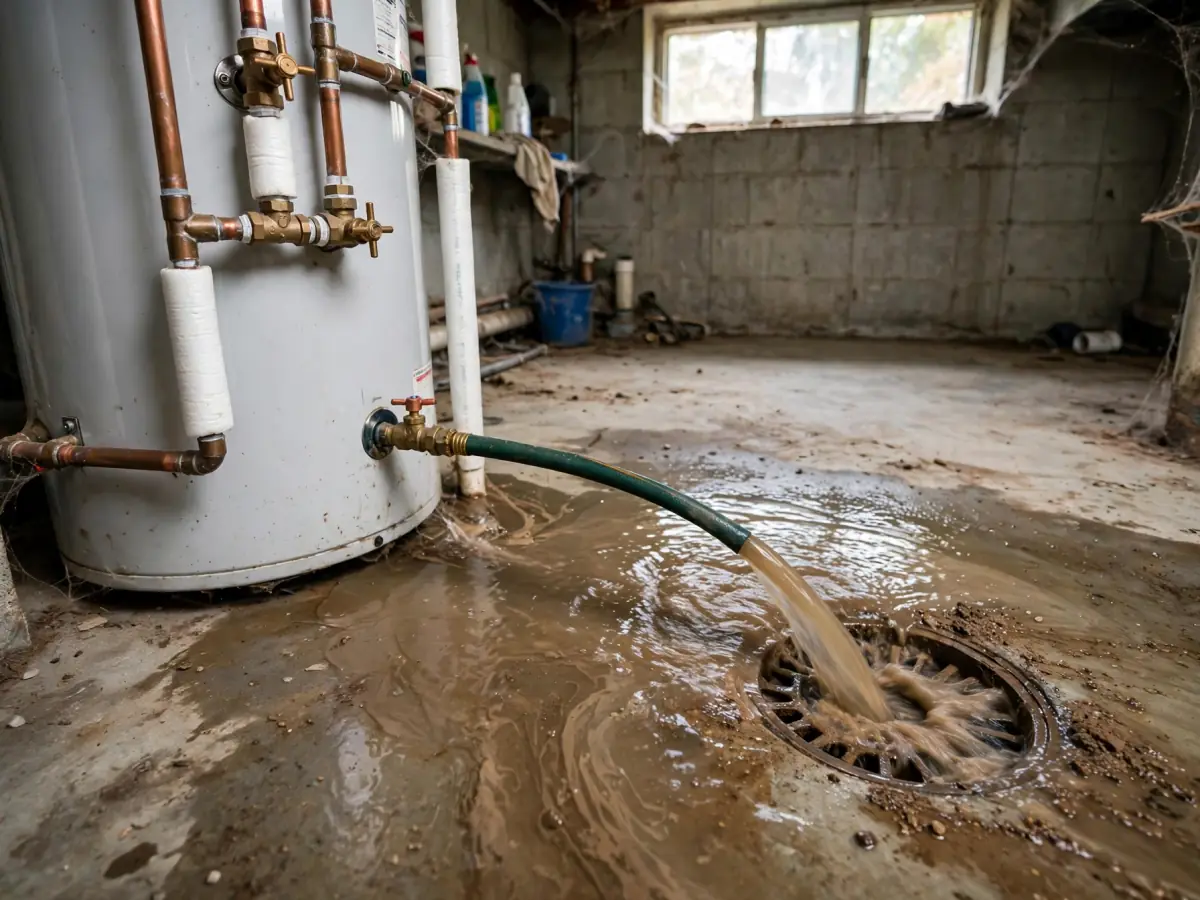
Key facts: Water heater making noise
- Popping and rumbling are almost always sediment: water trapped under mineral buildup boils in bursts.
- Sediment makes gas burners run longer and can bury and burn out electric lower elements [1].
- Harder water builds sediment faster, and hardness varies across Los Angeles [2].
- Ticking is usually harmless pipe expansion; whistling points to a partly closed or restricted valve.
Short answer
Water heater noises: the short answer
Popping and rumbling are almost always sediment: minerals from the water settle on the bottom of the tank, water gets trapped underneath the crust, and it boils in small bursts as the burner or element heats it. [1] Sizzling usually means water is dripping onto a hot burner or scale is coating an electric element. Ticking is generally harmless pipe expansion, and whistling or screeching points at a valve.
Most noises are not dangerous in themselves, but they are signs of wear. Sediment wastes energy, overheats the tank bottom and shortens the heater's life.
Diagnose it
What you are hearing, what it likely means, what to do
| Sound | Likely cause | What to do |
|---|---|---|
| Popping or rumbling while heating | Sediment layer on the tank bottom | Flush the tank; consider replacement if it is old and heavily scaled |
| Sizzling or hissing (gas) | Water dripping onto the burner, often condensation or a leak | Look for a leak above the burner; call if water is getting in |
| Sizzling (electric) | Scale on a heating element | Flush; the element may need replacing |
| Ticking or tapping | Pipes expanding and contracting, or heat-trap nipples | Usually harmless |
| Whistling or screeching | Partly closed valve or a restricted relief valve | Check the supply valve is fully open; call about the relief valve |
| Banging in the pipes after a tap closes | Water hammer | A plumber can add arrestors or adjust pressure |
Sediment
Why sediment builds up, and why it matters
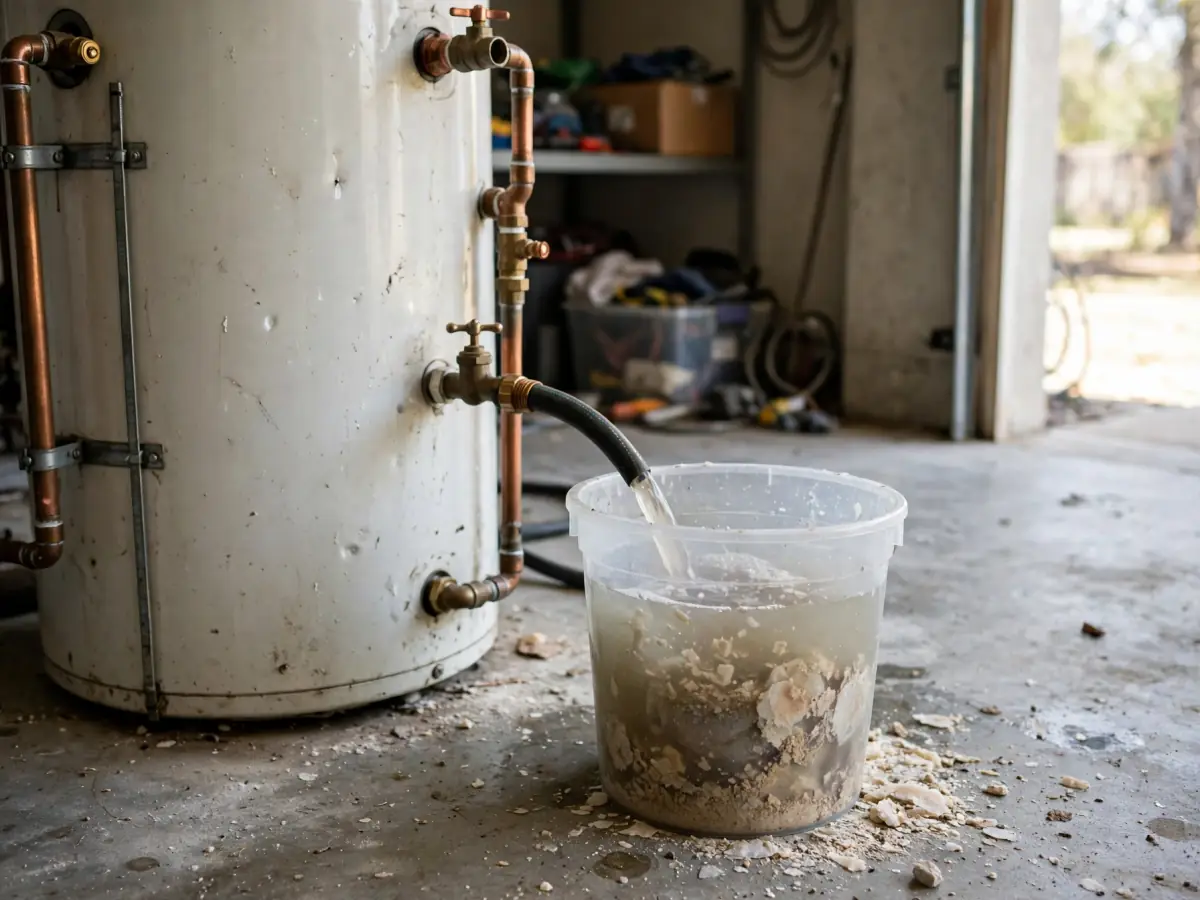
Every gallon that enters the tank carries dissolved minerals. Heating makes some of them come out of solution, and they settle as a gritty layer on the bottom. Harder water produces more, which is why two houses in different parts of Los Angeles, supplied by differently blended water, can see very different rates of buildup. [2]
On a gas heater, that layer sits between the flame and the water. The burner has to run longer, the steel at the bottom gets hotter than it should, and the tank wears faster. On an electric heater, the lower element can end up buried in sediment and burn out.
Safe checks
Narrowing down the noise yourself
- When does it happen?Noise only while the burner or element is running points to sediment. Noise when a tap closes points to the pipes.
- Is the cold valve fully open?A half-closed supply valve can whistle. Open it fully.
- Any water near the burner?Look under the heater and around the burner door for drips.
- How old is it?On a tank past roughly ten years with loud rumbling, a flush may stir up more than it removes.
The fix
How a sediment flush is done
- 1
Turn it off
Set the gas control to Pilot or Off, or switch off the electric breaker, and let the water cool.
- 2
Drain
Connect a hose to the drain valve, run it to a drain or outside, open a hot tap and open the drain valve.
- 3
Stir and rinse
Briefly open the cold supply in bursts to stir sediment, until the water runs clear.
- 4
Refill first
Close the drain, refill until hot taps run without air, then restore gas or power.
Repair or replace
When noise means it is time for a new heater
On a younger tank, a flush often quiets things down and restores capacity. On an older tank that has never been flushed, the sediment can be hard enough that it will not come out, and an old drain valve may clog or start leaking once it is opened. A plumber can judge this before you try it.
If loud rumbling comes with rust in the hot water, a leak at the base or a tank well past its warranty, replacement is usually the better value. A new heater, flushed periodically from the start, should stay much quieter.
Tankless and pipes
Noises that are not the tank
Not every sound comes from the heater. Water hammer, the loud bang when a washing machine or faucet valve closes quickly, comes from water in the pipes stopping suddenly. Arrestors near the fixtures or a lower house pressure can fix it. Ticking in the walls as hot water flows is usually pipe expansion against framing and is mostly harmless.
Tankless heaters make their own sounds: a fan spinning up, a click as the gas valve opens, and sometimes a high-pitched whine from scale or a failing fan bearing. A new or louder sound from a tankless unit is worth mentioning at its next service.
Before the visit
Details that help the plumber
- What the sound is like, and whether you can record it on your phone.
- When it happens: while heating, when a tap opens or closes, or all the time.
- Whether it is gas or electric, tank or tankless, and roughly how old it is.
- Whether the tank has ever been flushed.
- Any other changes, such as less hot water, rusty water or leaks.
Hard water
Hard water, sediment and the Los Angeles mix
How quickly sediment builds depends on how hard your water is and how much hot water you use. Los Angeles water comes from a blend of sources, and LADWP's water quality reports show that hardness differs across the service area and over time. Two neighbors with the same heater can therefore need different flushing intervals.
Homes with harder water benefit most from regular flushing and from checking the anode more often. Some owners add a softener or a scale-reducing treatment, which slows sediment but has its own effects on anode life.
FAQ
Water heater noise questions
Is a popping water heater dangerous?
The popping itself is not an immediate danger, but it means sediment is overheating the tank bottom and shortening the heater's life. Banging combined with a relief valve releasing water is more serious; turn the heater off and call.
How often should a tank be flushed?
Follow the manufacturer's manual. Many recommend yearly flushing, and homes with harder water may benefit from more frequent service.
Why does my tankless heater make noise?
Tankless units have a combustion fan and pumps that hum, and scale in the heat exchanger can cause a kettling sound. Descaling usually helps.
Can a water softener stop the noise?
Softened water produces much less scale, which slows sediment buildup. It does not remove sediment already in the tank, and softened water can wear anode rods faster.
Why did the noise start right after the water was shut off for street work?
Pressure changes and stirred-up sediment from the main can loosen deposits or send debris into the tank. Running cold water for a few minutes, then flushing the heater if noise continues, usually settles it.
Does a noisy heater use more energy?
Usually yes. Sediment insulates the water from the burner or buries the lower element, so the heater runs longer to deliver the same hot water.