Key facts: No hot water
- Gas heaters: a pilot that won't stay lit usually means a worn thermocouple or a clogged air screen.
- Electric heaters: check the double-pole breaker and press the red reset once; repeated trips mean overheating.
- If only one faucet runs cold, the problem is that fixture's valve, not the water heater.
- Tankless units show error codes that point to gas supply, venting, flow or scale [3].
Short answer
No hot water: the short answer
On a gas tank heater, no hot water usually means the pilot is out, the thermocouple has failed, the gas supply is off, or the gas control valve has stopped working. On an electric tank, the usual suspects are a tripped breaker, a tripped high-limit reset, or a failed upper heating element or thermostat. [1] Tankless units normally show an error code that narrows the cause. [3]
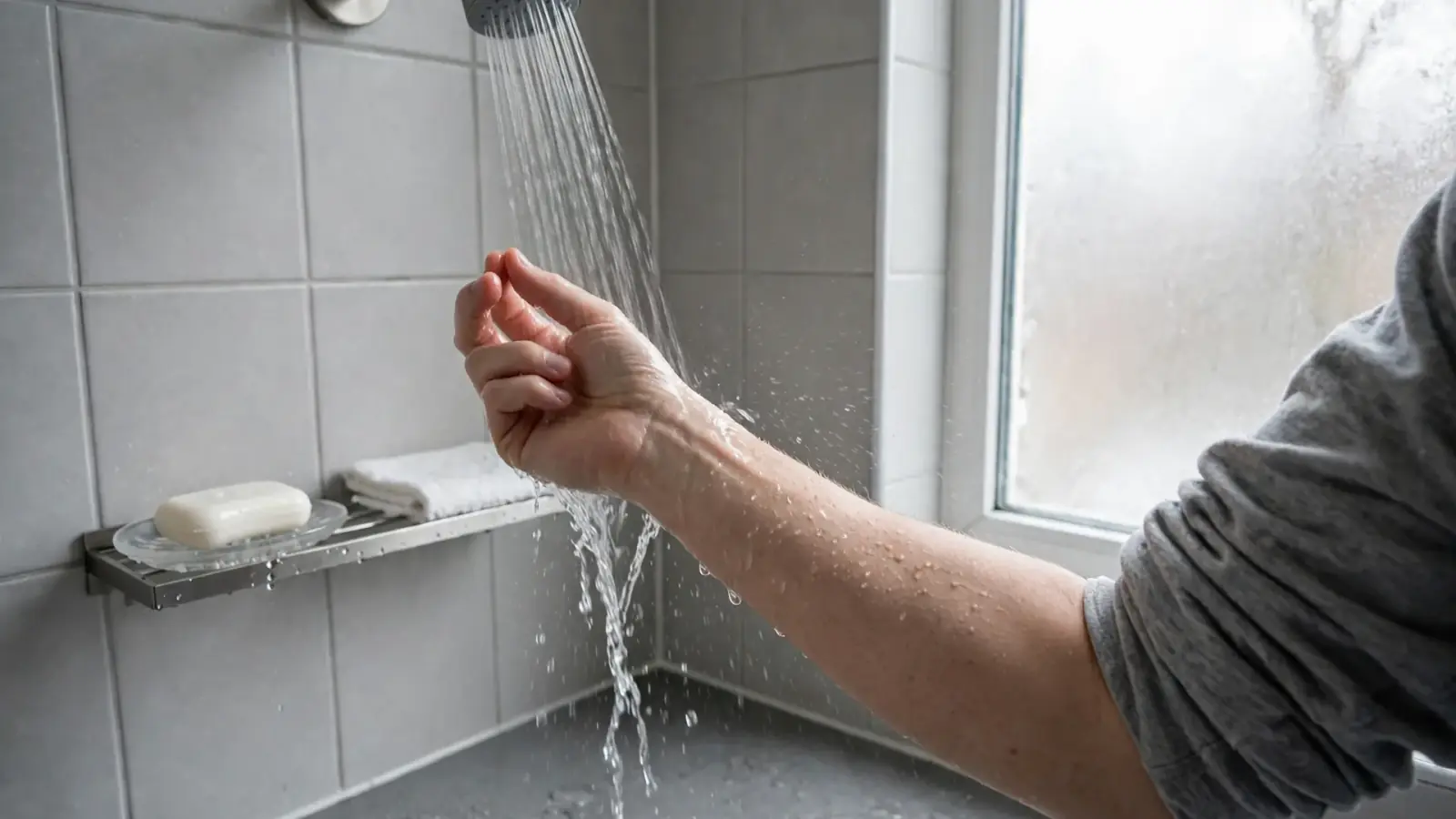
First check whether the problem is the whole house or one fixture. If one faucet runs cold but others are hot, the fault is in that fixture's mixing valve or cartridge, not the water heater.
Diagnose it
No hot water: symptoms, causes and next steps
| What you see | Likely cause | What to do |
|---|---|---|
| Gas heater, pilot out | Thermocouple, pilot tube, flame arrestor or gas supply | Relight per the label once; if it will not stay lit, call |
| Gas heater, pilot lit, burner never fires | Gas control valve thermostat or a blocked burner | Call a plumber |
| Electric heater, no heat at all | Tripped breaker, tripped reset, upper element or thermostat | Check the breaker and press the reset once; call if it repeats |
| Electric heater, hot water runs out fast | Lower element or thermostat | Call for an element test |
| Tankless shows a code | Gas supply, venting, scale or a sensor | Note the code and model and call |
| Only one fixture is cold | Shower valve cartridge or anti-scald limit | Not the heater; a plumber can service the valve |
Safe checks
Checks you can make in five minutes
- Gas: is gas reaching the house?Try the stove. If nothing lights, the problem is the gas supply, a closed valve or a tripped seismic shut-off, not the heater.
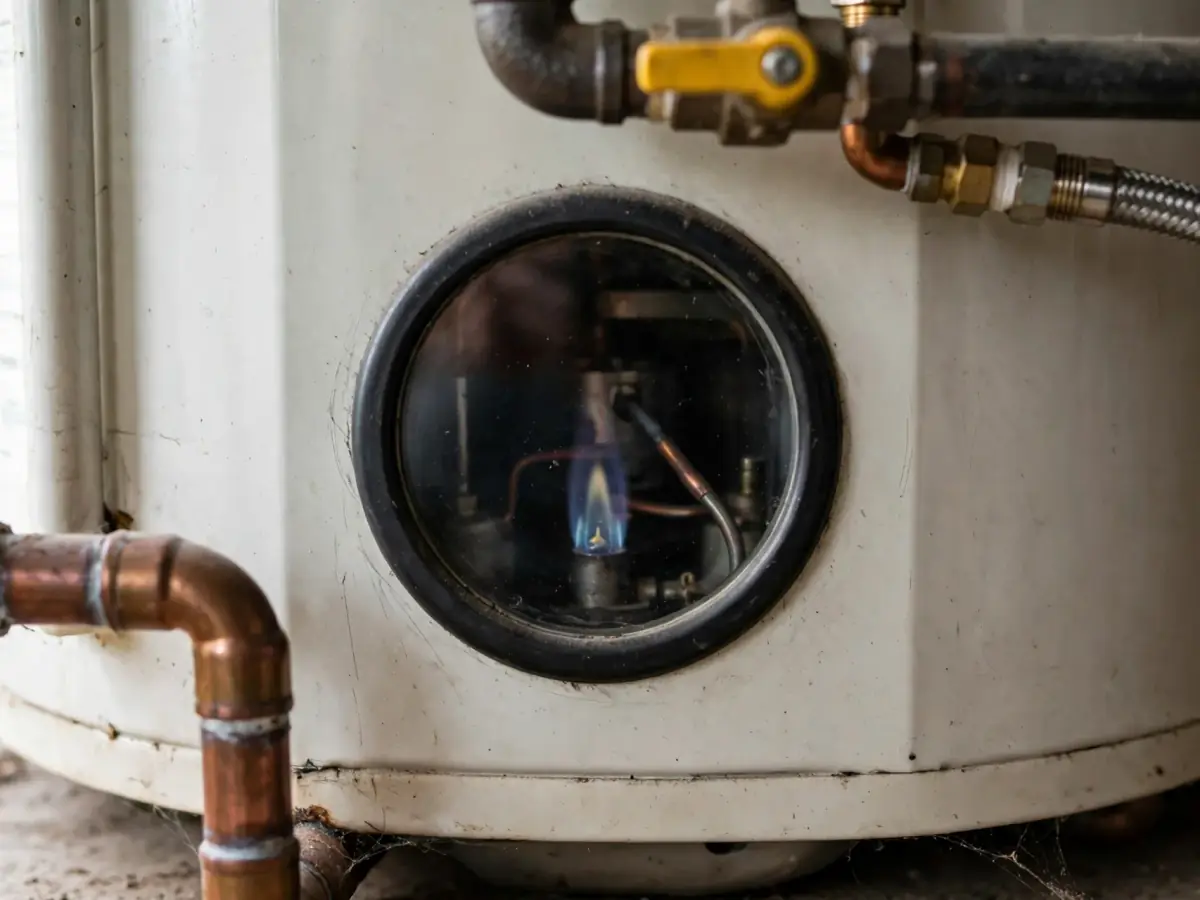
- Gas: look through the sight glassIs there a small blue pilot flame? If not, follow the lighting instructions on the heater's label one time.
- Electric: the breakerWater heaters use a double-pole breaker. Reset it once if it has tripped.
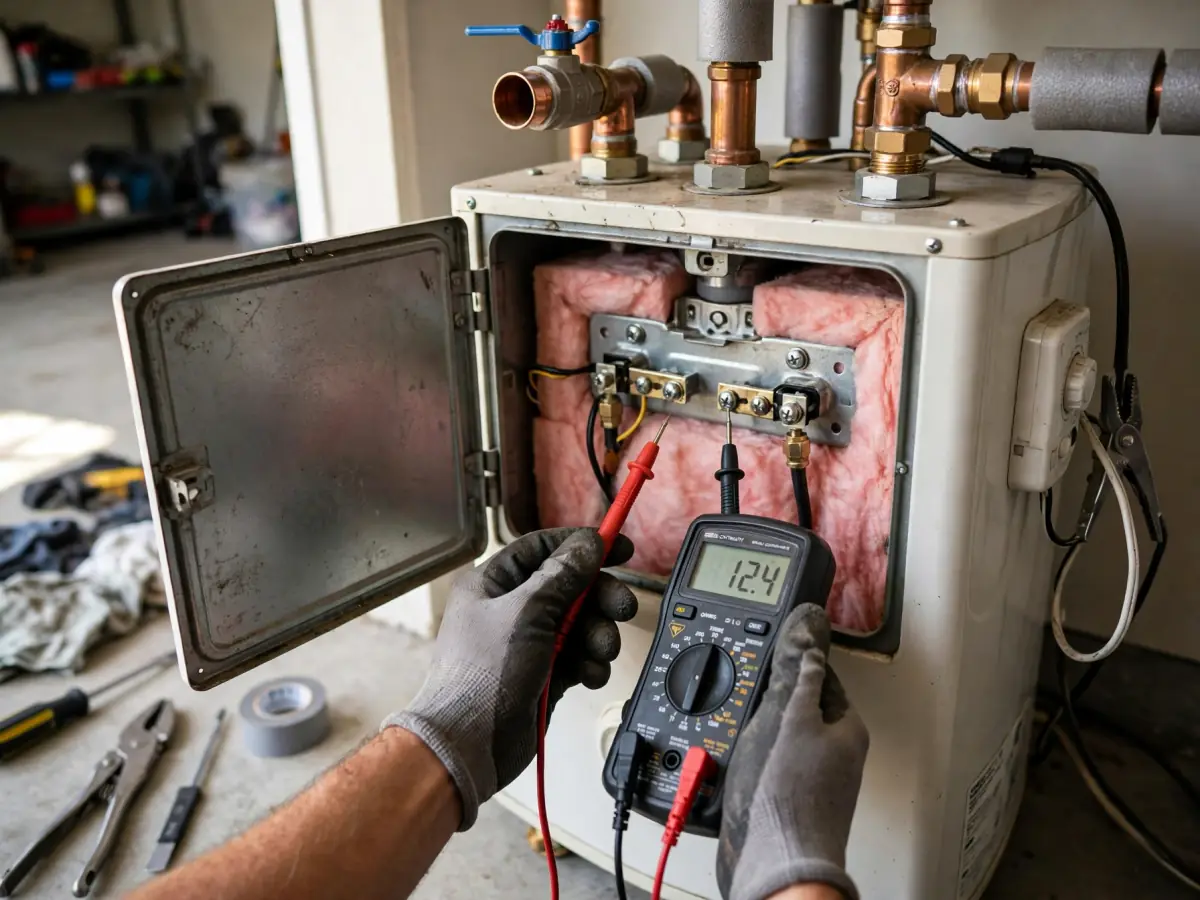
- Electric: the reset buttonWith the power off, remove the upper access panel and press the red reset. Restore power and wait an hour.
- Tankless: the basicsConfirm the gas valve under the unit is open and the unit has power, and write down any code.
Gas heaters
Gas heaters: the pilot and the thermocouple
A standing pilot depends on a thermocouple or thermopile sitting in its flame. That sensor tells the gas valve it is safe to keep gas flowing. When it weakens with age, the pilot lights while you hold the knob and goes out as soon as you let go.
On gas heaters built with flammable vapor ignition resistant (FVIR) chambers, lint, dust and pet hair can clog the screen under the burner. The burner then runs short of air and the pilot goes out. In garages and laundry rooms this is one of the most frequent reasons a reasonably new gas heater stops working.
Electric heaters
Electric heaters: elements, thermostats and the reset
Electric tanks heat in sequence: the upper element first, then the lower. A failed upper element or thermostat leaves you with no hot water at all, while a failed lower element gives a short burst of hot water that runs out quickly.
If the reset button trips again soon after you press it, the water is overheating. A thermostat stuck in the on position or an element shorted to the tank is the usual cause, and the heater should be inspected rather than reset over and over.
Diagnosis
How a plumber restores the hot water
- 1
Confirm the supply
Gas pressure or 240-volt power is confirmed at the heater before parts are tested.
- 2
Test, don't guess
Thermocouples, elements and thermostats are measured with a meter to find the failed part.
- 3
Check the cause
Clogged air screens, overheating and sediment are addressed so the new part does not fail early.
- 4
Run a full cycle
The heater runs until it satisfies, with a check of the temperature at a tap.
Prevention
Keeping it from happening again
- Keep storage, laundry lint and dust away from the bottom of gas heaters so the air intake stays clear.
- Flush sediment periodically; it insulates gas burners and buries electric lower elements.
- Descale tankless units on the schedule in their manual.
- Know where your gas shut-off and seismic valve are, and how to reset them or who to call.
Tankless
Tankless units: when the code points to gas or water flow
A tankless heater that shows an ignition or flame code with no hot water usually has a gas supply problem, a closed valve, or an issue with venting or the flame sensor. A flow-related code, or a unit that never fires at a single faucet, points to a clogged inlet filter or a fixture that runs below the unit's minimum flow.
Because tankless units shut themselves off to protect the heat exchanger, scale buildup can also cause no-hot-water episodes, especially in harder water. Descaling and cleaning the inlet filter often restores normal operation.
One faucet
No hot water at one faucet only, such as the kitchen sink
If the showers and other taps run hot but one faucet, often the kitchen sink, stays cold, the water heater is not the problem. The cause is at or near that fixture: a clogged aerator or cartridge, a stuck or worn mixing cartridge in a single-handle faucet, a closed or partly closed hot-water shutoff valve under the sink, or a faulty anti-scald device.
Check that both supply valves under the sink are fully open, then unscrew and rinse the aerator. If the hot side still runs cold or weak, the faucet cartridge usually needs cleaning or replacement, which is a fixture repair rather than a water heater repair. If several fixtures on one side of the house lose hot water, ask about the pipes and any recirculation pump instead.
FAQ
No hot water questions
How long should it take to get hot water back after relighting the pilot?
A typical gas tank takes roughly 30 to 60 minutes to heat a full tank, depending on its size and burner. If the burner never comes on after the pilot is lit, the gas control is likely at fault.
Why do I have hot water in the morning but not in the evening?
The household is using more than the tank can recover. Sediment, a failed lower element or a broken dip tube can reduce capacity, or the tank may simply be too small for current use.
My hot water stopped after an earthquake. What happened?
Many homes have a seismic gas shut-off valve that closes during strong shaking. [2] All gas appliances lose fuel until the valve is reset and pilots are relit, which your gas utility or a plumber can do safely.
Why is my hot water only lukewarm?
Common causes are a thermostat set too low, a failed lower element on electric tanks, a broken dip tube mixing cold water into the outlet, or a shower valve with its anti-scald limit set low. If every tap is lukewarm, the heater is the likely source.
Can sediment cause no hot water at all?
On electric tanks it can, by burying the lower element until it overheats and fails. On gas tanks heavy sediment usually reduces capacity rather than stopping hot water completely, but it can make the burner run so long that the tank bottom overheats.