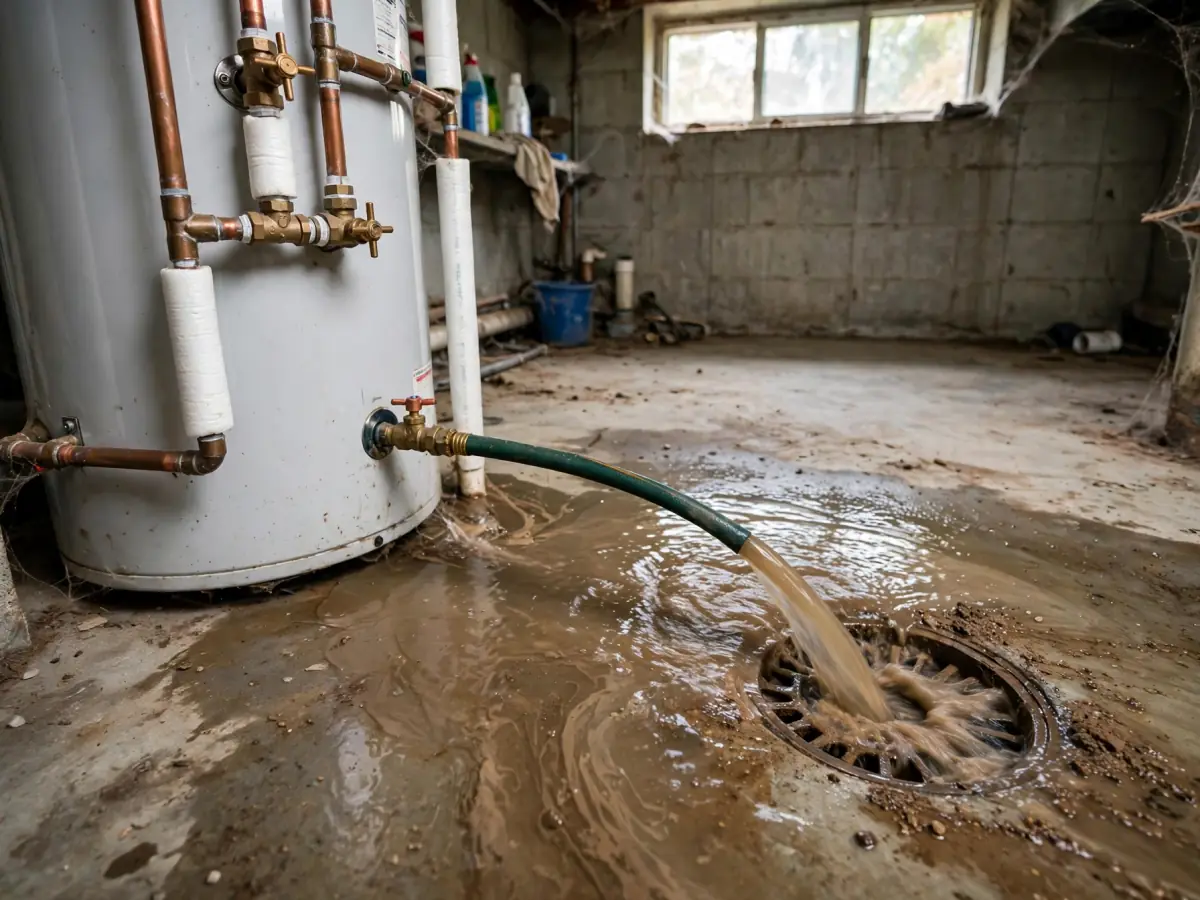
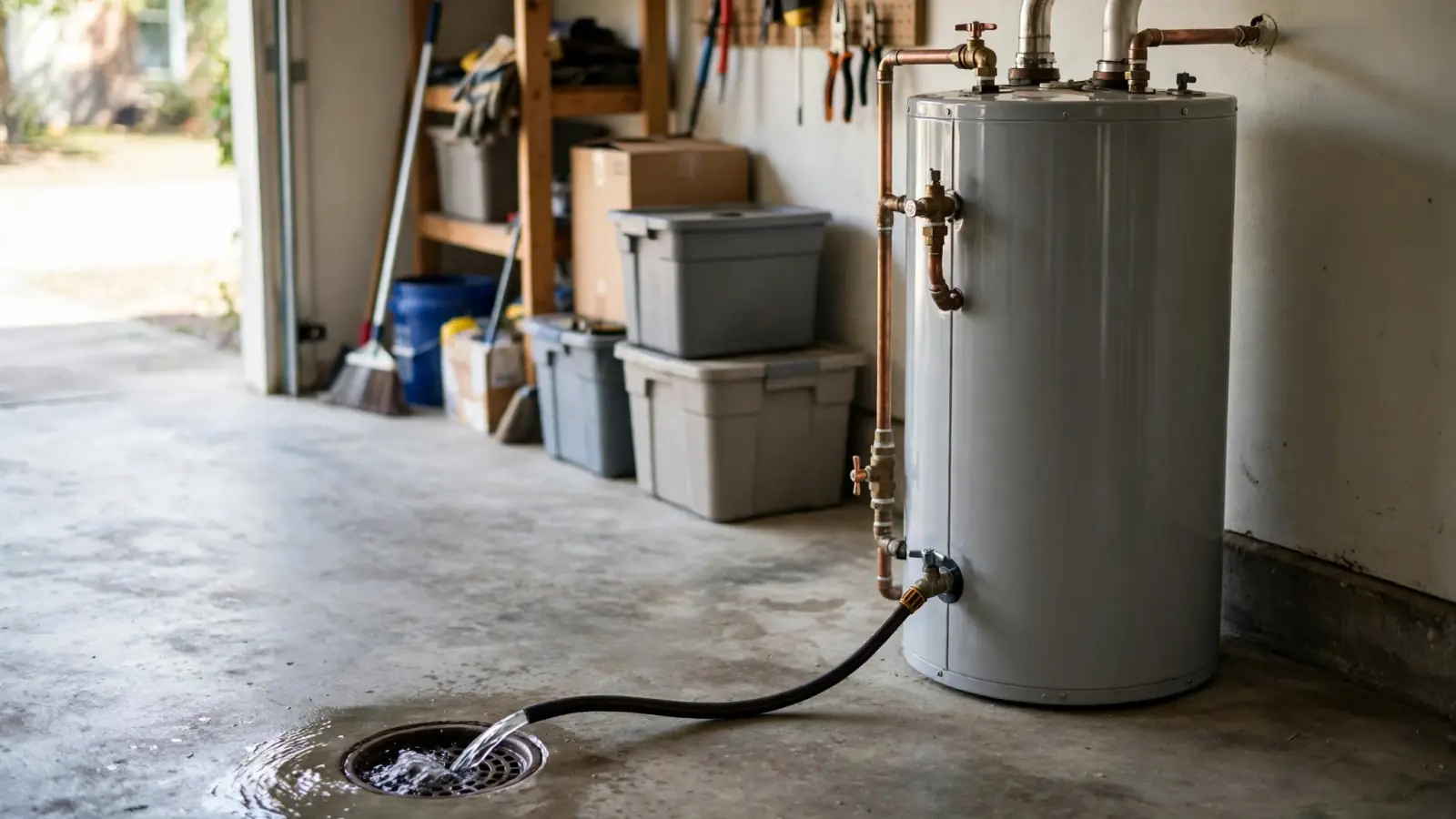
Key facts: Water Heater Flush & Maintenance
- Minerals settle at the bottom of a tank as sediment, which makes gas burners run longer and can bury electric elements [1].
- A flush drains water through the drain valve while fresh water stirs the sediment out.
- Harder water builds sediment faster, and hardness varies across Los Angeles [2].
- On a very old tank that has never been flushed, a plumber should judge whether flushing is safe before the drain valve is opened.
Why it matters
What sediment does to a water heater
Every gallon of water that enters a tank carries dissolved minerals, mainly calcium and magnesium. Heating water makes some of those minerals come out of solution, and they settle to the bottom of the tank as a gritty layer. Over months and years, that layer can grow several inches deep and harden into a crust.
On a gas heater, the burner sits directly under the tank bottom, so sediment acts as insulation between the flame and the water. [1] The burner has to run longer to deliver the same hot water, the steel at the bottom runs hotter than it should, and water trapped under the crust flashes into steam in small bursts, which is the popping and rumbling people hear. That extra heat and stress shortens the life of the tank.
On an electric heater, the lower element sits low in the tank. As sediment builds up, it can bury the element, which then overheats and burns out early. In both types, sediment takes up space that should hold hot water, so the tank behaves as though it were smaller than its rating. Flushing removes the loose material and slows the whole process down.
Warning signs
Signs your water heater needs a flush
Popping while heating
Water trapped under a sediment layer boils in bursts while the heater runs. It is the most common sign.
Less hot water than before
Sediment takes up tank volume and insulates the water from the heat source, so hot water runs out sooner.
Longer recovery
The heater takes longer to reheat after a shower or a load of laundry.
Gritty bits in aerators
Particles clogging faucet aerators or showerheads often come from the tank.
Repeated element failures
On electric heaters, a lower element that keeps burning out is often buried in sediment.
Never been flushed
If the tank is a few years old and has never been flushed, it is worth having it assessed.
The job
How a professional flush is done
The steps are simple, but the order matters for safety and to protect the heater.
- 1
Turn off heat
A gas heater is set to Pilot or Off; an electric heater's breaker is switched off so the elements cannot dry-fire.
- 2
Cool and drain
The water is allowed to cool, a hose is run to a drain or outdoors, a hot tap is opened and the drain valve is opened.
- 3
Stir the sediment out
The cold supply is opened in short bursts to stir the sediment and push it out, until the water runs clear.
- 4
Refill and restart
The drain is closed, the tank refilled until hot taps run without air, and only then is gas or power restored.
Full service
What a maintenance visit should include
A flush is the centerpiece, but a good visit checks the rest of the heater while it is cool and drained.
- Relief valve testThe temperature and pressure relief valve is operated to confirm it opens and reseats, and the discharge pipe is checked for a safe route.
- Anode inspectionOn tank heaters, the anode rod is checked every few years and replaced before it is used up.
- Burner or element checkGas burners and flame arrestors are cleaned of dust; electric elements and terminals are inspected.
- Venting and combustionOn gas heaters, the vent connection, draft and flame color are checked.
- Connections and strapsWater and gas connectors are checked for corrosion, and seismic straps for tightness.
- Temperature settingThe setting is confirmed at a safe, efficient level, around 120°F for most homes [3].
How often
How often to flush and service
Follow your heater's manual first. These are common starting points, adjusted by what the first flush reveals.
| Item | Typical interval | Do it sooner if |
|---|---|---|
| Tank flush | Yearly is a common recommendation | Water is hard, the tank pops, or the first flush shows heavy sediment |
| Relief valve test | Yearly | The valve has been weeping or the heater overheated |
| Anode check | Every few years | The water is softened or the rod wore quickly last time |
| Tankless descaling | Per the manual, often yearly | Hard water or heavy use; overheat codes appear |
| Tankless inlet filter | At each service | Flow drops or the unit will not fire at low flow |
Tankless
Descaling a tankless water heater
Tankless heaters do not collect sediment at the bottom of a tank, but they suffer from the same minerals in a different way. [4] Water passes through narrow channels in a compact heat exchanger, and scale coats those channels. As it builds up, heat transfer drops, the unit runs hotter internally and many models eventually show an overheat or heat exchanger code.
Descaling is done through the isolation valves installed under the unit. With the gas or power off, a small pump circulates a descaling solution through the heat exchanger for a set period, then the system is flushed with fresh water. The inlet water filter is cleaned at the same time. Manufacturers publish intervals in the manual and generally shorten them for harder water, so a visit is best scheduled by the manual and the local water report rather than guesswork.
Old tanks
Should an old, never-flushed tank be flushed?
This is a genuine judgment call. On a tank that is many years old and has never been flushed, the sediment may be packed hard. Flushing can stir up more than it removes, clog the drain valve or cause an old plastic drain valve to leak once it is opened. In some cases, the sediment was also covering weak spots in the bottom of the tank.
A plumber can look at the age, the condition of the drain valve and what comes out in the first few gallons before deciding how far to go. Sometimes a gentle partial flush, or replacing a brittle drain valve with a full-port brass one first, is the right approach.
Drain valves
Drain valve types and why they matter for flushing
The small valve at the bottom of the tank decides how well a flush works.
| Drain valve | Pros | Cons |
|---|---|---|
| Plastic (factory standard on many tanks) | Ask the plumber on the visit | Small opening clogs with sediment; can crack or leak after years of heat |
| Brass boiler drain | Durable, less likely to crack | Still a small opening that clogs with heavy sediment |
| Full-port brass ball valve | Large opening lets sediment pour out; easy to open and close | Ask the plumber on the visit |
Upgrading to a full-port valve at the first flush makes every later flush faster and more effective.
Safety
Safety during a flush
The main risks during a flush are scalding water and running heat with an empty tank. Water at the bottom of a tank can be much hotter than the dial suggests, so the heater should be turned off and, ideally, allowed to cool before the drain valve is opened. The hose should be secured where it discharges so it cannot whip around, and kept away from plants, pets and people.
Electric heaters must never have their power turned back on until the tank is completely full and air has been purged through a hot tap; otherwise the elements can burn out in seconds. Gas heaters should be relit only after refilling, and the burner checked to make sure it lights cleanly. Where the relief valve is tested, a bucket catches the discharge and the valve must reseat fully afterwards; if it keeps dripping, it needs replacing.
Do it yourself?
Flushing it yourself: what to know
- Possible for many homeownersOn a younger, accessible tank with a working drain valve, a flush following the manual is a reasonable homeowner task.
- Heat off first, power on lastTurn the gas to Pilot or Off, or the electric breaker off, before draining, and restore it only after the tank is full.
- Mind the hot waterLet the tank cool or use extreme care; the first water out can scald.
- Call a pro for old tanksOld, never-flushed tanks, stuck valves and tankless descaling are best handled by a professional.
The visit
What to expect during a maintenance visit
A typical tank maintenance visit takes an hour or two. Expect the plumber to turn the heater off, let it cool where possible, run a hose to a drain and flush until the water runs clear. While the tank is cool, they test the relief valve, look at the anode if it is due, and check the connections, straps and venting. You should get a short summary of what came out, the condition of the anode and anything that needs attention later.
After the tank is refilled and the heater restarted, it will take some time to come back up to temperature. Plan the visit for a time when nobody needs a shower for an hour or two afterwards.
Los Angeles
Sediment and water quality in Los Angeles
Los Angeles water comes from a blend of sources, and the mix varies by neighborhood and over time. That is why two homes a few miles apart can see very different amounts of sediment in their heaters. LADWP publishes water quality information for its service area, including hardness, which is a good guide to how often your heater needs attention [2].
Street work and main flushing can also send a burst of sediment into home plumbing. If your heater suddenly starts rumbling after nearby water main work, or you see grit in faucet aerators, a flush is often the quickest fix. In homes with water softeners, sediment builds more slowly, but the anode rod tends to wear faster, so both should be part of routine checks.
Many Los Angeles heaters are in garages without a floor drain, so a flush usually means running a hose down the driveway to the street or to a landscaped area that can absorb the water. Check local rules about where drained water can go, and avoid sending sediment-laden water into storm drains where possible.
Limits
What maintenance cannot fix
Maintenance slows wear; it does not reverse damage. A tank leaking from its shell, a burner area with heavy rust, or hot water that is consistently rusty on an old heater are signs the tank itself is failing, and flushing will not change that. In those cases, the most useful thing a maintenance visit can do is confirm the condition and give you time to plan a replacement before it fails completely.
Likewise, if a heater is simply too small for the household, regular flushing will help it perform at its best but will not create more hot water. A plumber can compare the tank's first-hour rating with how your household actually uses hot water and tell you whether an upgrade, a different type of heater or simply staggering showers would solve the problem.
Timing
When to schedule maintenance
Many homeowners find it easiest to tie water heater maintenance to a fixed reminder, such as the start of autumn, before winter makes incoming water colder and the heater works hardest. A heater that goes into winter clean and tested is less likely to fail on the coldest morning of the year.
It is also worth scheduling a check after anything that disturbs the water supply or the heater: nearby water main work, a strong earthquake, a softener installation, or a long period with the house empty. Each can change how the heater behaves, and a quick visit confirms that everything is working as it should.
Benefits
What regular maintenance buys you
Regular maintenance does not make a water heater last forever, but it changes how it ages. A tank that is flushed periodically keeps more of its rated capacity, runs quieter and recovers faster. Gas burners run shorter cycles, and electric lower elements are less likely to burn out. The relief valve is proven to work, and a worn anode is caught before rust sets in.
Maintenance also gives you warning. A visit that turns up a weeping fitting, a rusting base or a rod that has disappeared lets you plan a replacement on your schedule rather than discovering a failure on a cold morning or through a stain in the ceiling below.
Related problems
Problems a maintenance visit often finds
Routine visits regularly uncover small faults that would otherwise grow. A relief valve that does not reseat after testing, a drain valve that weeps once opened, green corrosion on the copper connections at the top of the tank, or a single loose seismic strap are all common finds. On gas heaters, lint packed into the flame arrestor is one of the most frequent, and clearing it prevents a future pilot outage.
On tankless units, the inlet filter is often partly clogged, which explains reduced flow or a unit that will not fire at a low-flow faucet.
What it shows
What a flush tells you about your heater
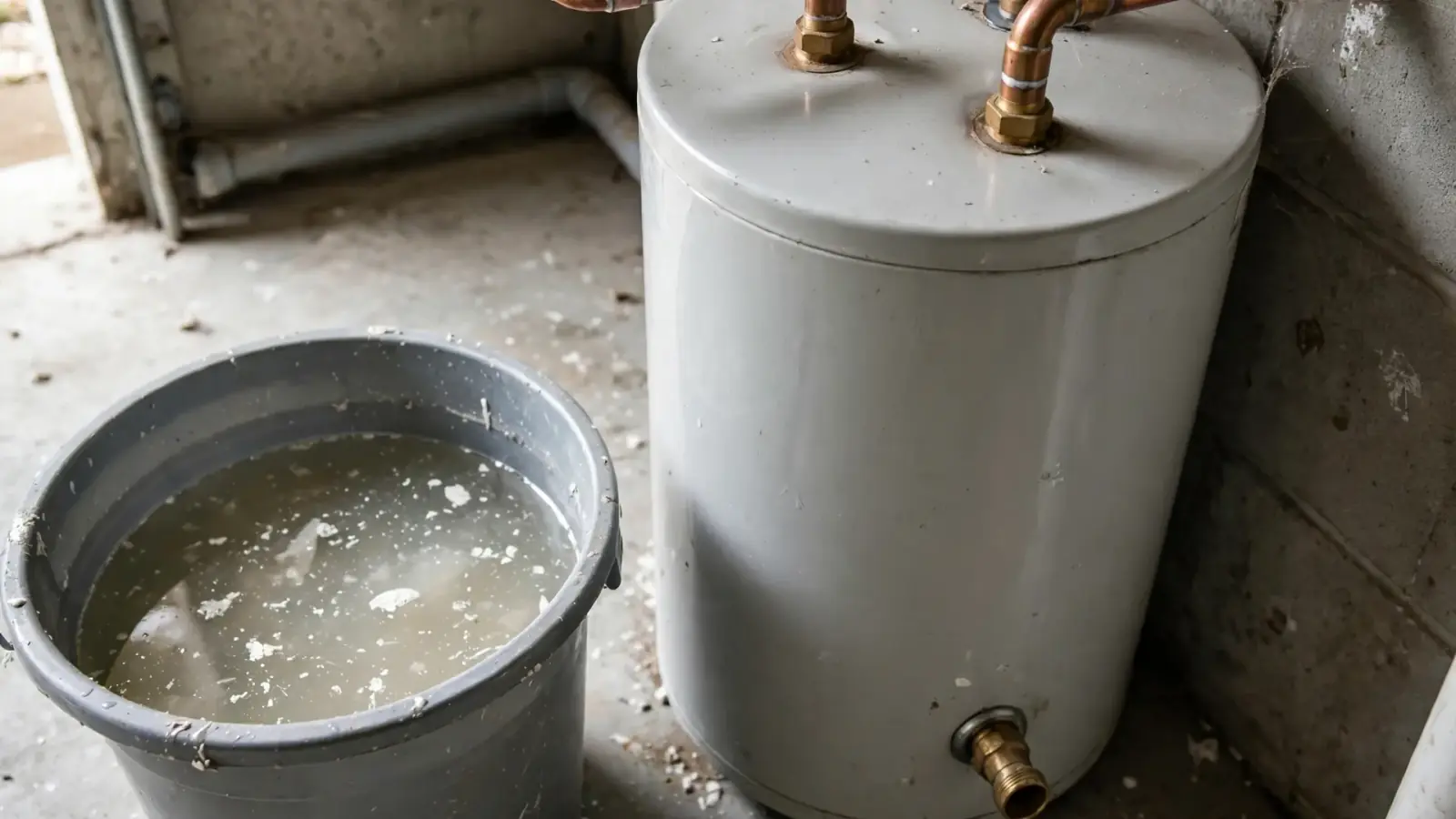
The water that comes out during a flush says a lot about the tank. Clear water after a short time means little sediment. Cloudy water with sand-like grains that clears after several minutes is typical of a tank that needed the service. Water that stays rusty, or grains that look like flakes of metal, can point to corrosion inside the tank or a worn anode.
If the drain valve clogs repeatedly, the sediment may have hardened into a layer that a simple flush cannot remove. On an older tank, that is a sign to start planning for a replacement. A plumber can also check the anode rod during the same visit, since the two services fit together naturally.
FAQ
Flush and maintenance questions
How often should I flush my water heater?
Yearly is a common recommendation, but your heater's manual and your water hardness matter most. If the first flush brings out a lot of sediment, more frequent flushing is worthwhile.
Will flushing stop the popping noise?
Often it reduces or stops it on younger tanks. On old tanks with hardened sediment, the noise may continue because the crust will not flush out.
Can flushing damage my water heater?
On most heaters it is beneficial. On very old, never-flushed tanks, stirring up sediment can clog or crack an old drain valve, so a plumber should judge those first.
Do tankless water heaters need flushing?
Tankless water heaters need descaling rather than flushing: a descaling solution is pumped through the heat exchanger to dissolve scale, following the interval in the manual.
How long does a water heater flush take?
Usually an hour or two including draining, rinsing and refilling. Heavy sediment or a slow drain valve can add time.
Should I turn off the water heater before flushing?
Yes. Set a gas heater to Pilot or Off and switch off an electric heater's breaker before draining, and restore heat only after the tank is full again.
Does maintenance affect my warranty?
Some manufacturers expect regular maintenance, especially on tankless units. Keeping service records helps if you ever need to make a claim.
What comes out when you flush a water heater?
Cloudy water, white or tan mineral flakes and grit, and sometimes bits of anode material. Clear water at the end means the loose sediment is out.
Is a water heater flush the same as draining it?
Draining simply empties the tank. A flush also uses incoming water to stir and push sediment out, which removes much more of it.
Why is my water heater drain valve clogged?
Sediment packs into the small opening of standard drain valves. Opening and closing the cold supply in bursts can help clear it, and replacing it with a full-port valve prevents the problem in future.
Can I flush my water heater without turning off the water?
Some methods flush with the supply on, but most guidance and professionals turn the heat off, drain, then use the cold supply in bursts to stir sediment, which is more controlled and safer.
Will flushing improve my energy bills?
Removing sediment helps the burner or elements transfer heat to the water more efficiently, so the heater runs less.
Is it normal for water to look cloudy after a flush?
Yes, briefly. Air and fine particles can make water cloudy right after refilling. It should clear after running hot taps for a short while.
What else should be checked when the tank is flushed?
The relief valve, the anode rod if it is due, the water and gas connections, the seismic straps and, on gas heaters, the burner, flame arrestor and venting.
Can a flush fix a leaking water heater?
No. If water is leaking from the tank itself, flushing will not stop it. A leak from the drain valve, however, can often be fixed by replacing that valve.
Does a new water heater need flushing?
Not right away, but starting a routine within the first year or two keeps sediment from ever building up, and it lets you see how quickly your water produces sediment.
Can I flush my water heater myself?
Many homeowners can, following the manual. Turn off the gas or power first, let the water cool, and be careful with an old drain valve that may not reseal.
How long does a flush take?
Typically one to two hours, depending on how much sediment comes out and how fast the tank drains.