Key facts: Relief Valve (T&P) Replacement
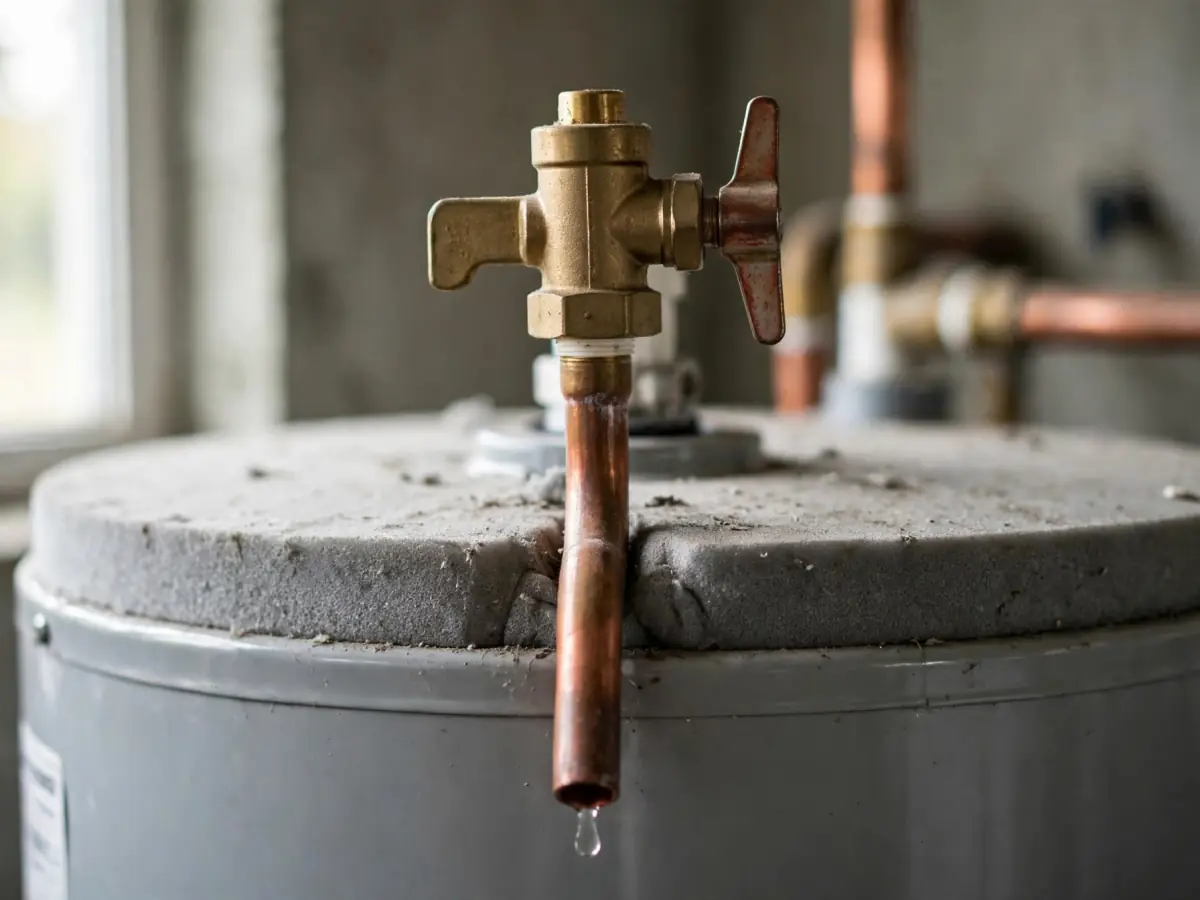
- A T&P relief valve opens automatically if tank pressure or water temperature rises too high, releasing water through its discharge pipe.
- A valve that drips can be worn, or it can be correctly reacting to high pressure, thermal expansion or overheating.
- Replacing a valve that is opening for a real reason only hides the problem; pressure and temperature must be checked first.
- The discharge pipe must stay open and run to a safe location; it must never be capped or plugged.
How it works
What a temperature and pressure relief valve does
Every tank water heater has a temperature and pressure relief valve, usually shortened to T&P valve. It is threaded into the top or upper side of the tank, with a sensing probe that reaches into the hottest water near the top, and a discharge pipe that runs down toward the floor or to an outside location.
The valve is held shut by a spring. It opens on its own in two situations: if the pressure inside the tank rises above its rated limit, or if the water temperature reaches a dangerous level. When it opens, it releases water and steam through the discharge pipe, which lowers the pressure and pulls in cooler water. Without this valve, a heater whose controls failed could keep heating until the tank ruptured.
Because it is a pure safety device, the T&P valve should do nothing almost all of its life. That is exactly why it is easy to forget. Mineral deposits, corrosion and simple age can make a valve stick shut, which defeats it, or weep constantly, which wastes water and damages floors. Both are reasons to test it regularly and replace it when it no longer behaves correctly.
Warning signs
Signs the relief valve needs attention
Constant drip from the pipe
A steady drip or trickle from the discharge pipe means the valve is opening or not sealing. The cause must be found before replacing it.
Bursts of water after heating
Water released when the heater finishes a cycle often points to thermal expansion in a closed plumbing system.
Hissing or steam
Steam or very hot water from the pipe can mean the water is overheating. Turn the heater off and keep clear.
Never been tested
A valve that has not been operated for years may be stuck with mineral deposits and unable to open when needed.
Corrosion or crust
White crust, rust or green corrosion around the valve body or lever suggests it has been weeping and may not seal.
Missing or improper pipe
A discharge pipe that is missing, undersized, threaded at the end or ending in a closet is unsafe and should be corrected.
Why it opens
Why a relief valve drips: the real causes
The most important thing to understand about a dripping relief valve is that it might be working perfectly. If the pressure in the house is too high, or if heated water has nowhere to expand, the valve will open as designed. Replacing it in that situation just installs a new valve that will soon drip for the same reason.
Thermal expansion is the most common hidden cause. Water expands as it heats. In older plumbing systems, the extra volume could push back into the city main. Many homes now have a pressure-reducing valve or a check valve at the meter, which stops water flowing backwards. The plumbing becomes a closed system, and every heating cycle pushes pressure up until something gives: usually the relief valve. A properly sized thermal expansion tank absorbs that extra volume and is the standard fix.
High static pressure is the second cause. If the incoming water pressure is very high, or a pressure-reducing valve has failed, the whole house is under strain and the relief valve may weep. Overheating is the third, and the most serious: a stuck gas valve thermostat or electric thermostat can let water reach dangerous temperatures. Finally, the valve itself can simply wear out, with mineral deposits on the seat preventing a tight seal.
Testing
How a plumber finds the cause
A pressure gauge and a thermometer tell most of the story in a few minutes.
- 1
Read the house pressure
A gauge on a hose bib or the heater drain shows household water pressure and whether a pressure-reducing valve is working.
- 2
Watch pressure during heating
A gauge with a tell-tale needle records pressure rising as the heater runs, which reveals thermal expansion in a closed system.
- 3
Check temperature
Water temperature at a tap and the heater's control settings are checked to rule out overheating.
- 4
Test the valve
The lever is lifted briefly to confirm the valve opens freely and reseats fully when released.
Diagnose it
Relief valve symptoms and fixes
| What happens | Likely cause | Right fix |
|---|---|---|
| Water released after each heating cycle | Thermal expansion in a closed system | Install or replace a thermal expansion tank |
| Constant weep, pressure normal | Worn or mineral-fouled valve seat | Replace the T&P valve |
| Weeping and high house pressure | Failed or missing pressure-reducing valve | Install or adjust the pressure-reducing valve |
| Hot water or steam discharging | Overheating from a failed thermostat or gas valve | Turn off the heater; repair the control |
| Valve will not open when tested | Valve stuck from deposits or age | Replace the valve immediately |
The job
How a relief valve is replaced
- 1
Turn off and depressurize
The heater is turned off, the cold supply closed and pressure relieved through a hot tap.
- 2
Drain below the valve
A few gallons are drained so the water level is below the valve opening.
- 3
Swap the valve
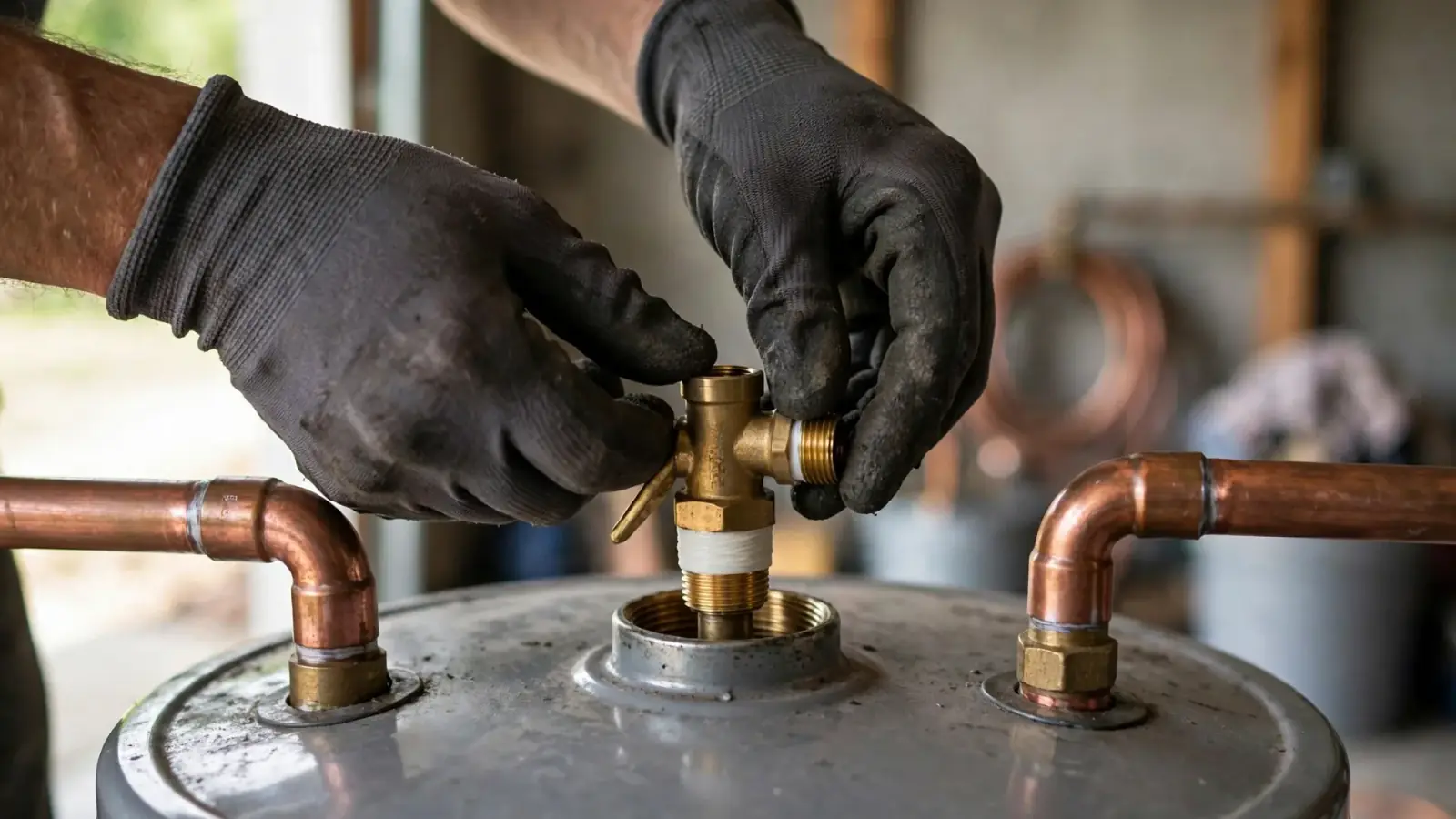
The discharge pipe is disconnected, the old valve removed and a new valve with the correct pressure and temperature rating installed with sealant.
- 4
Correct the pipe and test
The discharge pipe is reconnected or corrected, the tank refilled and the new valve checked for leaks and correct operation.
Discharge pipe
Discharge pipe rules that matter
A good valve with a bad discharge pipe is still unsafe. These are the common requirements under California's plumbing code and manufacturer instructions.
- Full size, no reductionsThe pipe must be at least the size of the valve outlet for its whole length so it can carry full flow.
- Approved materialIt must be a material rated for hot water, such as copper or approved plastic rated for the temperature.
- Runs to a safe placeIt ends where discharge will not scald anyone or damage the building, typically near the floor, a drain or outdoors.
- No valve, cap or thread at the endNothing may block the pipe, and the outlet end is not threaded so it cannot be capped.
- Drains by gravityThe pipe slopes down so water does not sit in it; traps or uphill runs can interfere with discharge.
Ratings
Valve ratings: why the right valve matters
Relief valves are not interchangeable. Each one is rated for a set-pressure, a temperature at which it opens, and a heat-input capacity measured in BTUs per hour. The valve must be able to discharge at least as much energy as the heater can put into the water, otherwise it could open but still not relieve fast enough. A large gas heater needs a valve rated for its full input.
The valve's pressure rating also has to suit the tank's working pressure, which is printed on the heater's rating plate. The probe length matters too: it must reach into the hottest water near the top of the tank so the temperature function responds correctly. For these reasons, a professional matches the replacement to the heater's specifications rather than grabbing any valve with the right thread.
Valve specs
What is printed on a relief valve tag
| Rating | What it means | Why it matters |
|---|---|---|
| Set pressure | The pressure at which the valve begins to open | Must not exceed the tank's rated working pressure |
| Temperature setting | The water temperature at which it opens | Protects against overheating if controls fail |
| BTU/hr capacity | How much heat energy it can discharge | Must be at least the heater's input rating |
| Probe length | How far the sensor reaches into the tank | Needs to sit in the hottest water near the top |
Do it yourself?
What homeowners can do
- Watch the timingNote whether the drip happens all the time or after the heater runs. That clue points to wear or to expansion.
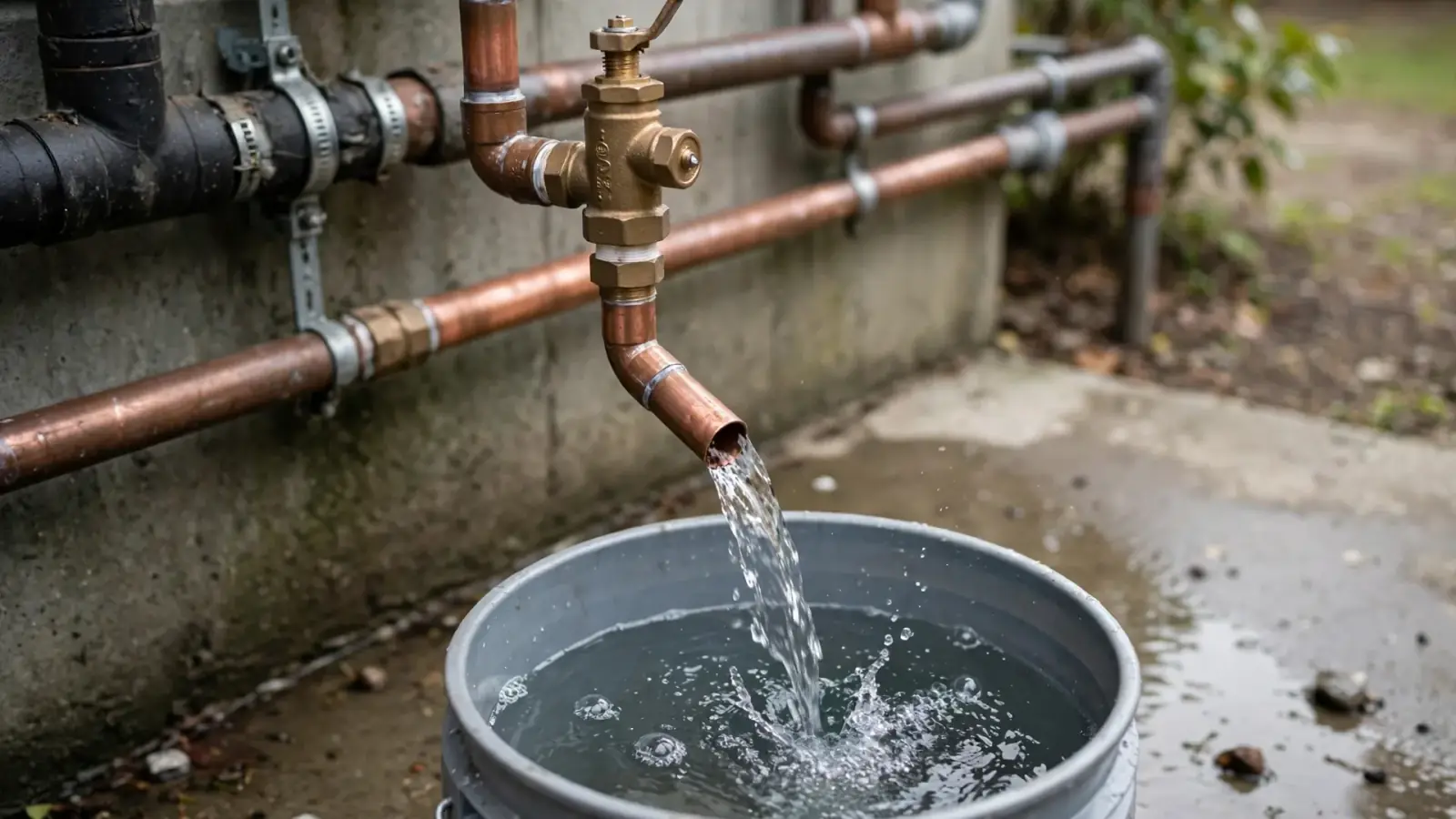
- Test carefully, if you chooseFollowing the manual, lift the lever briefly with a bucket under the pipe and stand clear. If it does not reseat, call for service.
- Check the pipeMake sure the discharge pipe is present, unobstructed and ends somewhere safe.
- Never plug itCapping, plugging or removing the valve or its pipe removes the tank's protection and is dangerous.
Pressure
Understanding household water pressure
Water pressure in a home is measured in pounds per square inch. Plumbing codes generally limit pressure delivered inside a building, and when the street supply is higher, a pressure-reducing valve near the main shut-off lowers it. These valves wear over time; when they fail, pressure in the house can creep up to full street pressure without anyone noticing until something leaks.
A simple gauge on an outdoor faucet shows the static pressure. If it reads high, the relief valve is only one of many fixtures at risk. Correcting the pressure protects the heater, the relief valve and everything else connected to the plumbing, and is often the real long-term fix for a valve that keeps weeping.
The visit
What to expect at a relief valve visit
Expect the plumber to start with measurements rather than parts. A pressure gauge goes on an outdoor faucet or the heater drain to read static pressure, and often a gauge with a tell-tale needle is left on while the heater runs to capture the peak pressure. The water temperature and the heater's control setting are checked at the same time.
If the readings are normal and the valve weeps or will not reseat, the valve is replaced and the discharge pipe checked. If pressure climbs during heating, you will hear about thermal expansion and an expansion tank. If static pressure is high, the pressure-reducing valve at the main line will be part of the conversation. Either way, you should leave with a valve that stays dry and an explanation of why it was dripping.
Los Angeles
Relief valves in Los Angeles installations
Many Los Angeles homes, particularly on hillsides and lower-elevation streets, have relatively high incoming water pressure, and pressure-reducing valves are common. As those valves age, they can fail and let full street pressure into the house, which shows up first as a weeping relief valve and banging pipes. Checking the house pressure is part of any relief valve call here.
Discharge pipe routing is a frequent problem in older installations: pipes that end inside a closet, run uphill, or were cut short during a past repair. When a heater is replaced in the City of Los Angeles, the permit inspection looks at the relief valve and its discharge, along with the seismic strapping California requires [1]. If yours looks improvised, it is worth correcting even before the heater is replaced [2].
Safety
Why the relief valve is so important
A water heater stores a large volume of very hot water under pressure. If the controls fail and nothing relieves that pressure, the water can superheat and the tank can fail violently. The relief valve exists so that never happens. A valve that is stuck shut, or a discharge pipe that has been capped to stop a drip, turns a routine control failure into a serious hazard.
If you ever see steam or very hot water coming from the discharge pipe, turn the heater off, keep people away from the pipe and call for service. Do not try to tighten, cap or remove the valve while the tank is hot and pressurized.
Repair or replace
Valve repair or a new heater?
What can change the picture is what the visit reveals.
Likewise, years of weeping can corrode the fittings at the top of the tank. If the threads around the valve opening are badly corroded or the tank shows rust at the top, a plumber may recommend planning a replacement rather than disturbing those fittings repeatedly.
Prevention
Keeping the relief valve reliable
- Test the valve as the heater's manual recommends, often yearly, with a bucket under the pipe.
- Replace the valve if it does not reseat after testing or shows crust and corrosion.
- Install an expansion tank where the plumbing is a closed system.
- Have household water pressure checked, especially if pipes bang or fixtures leak.
- Keep the heater's temperature at a moderate setting.
Related problems
Problems that travel with a dripping relief valve
High pressure and thermal expansion rarely affect only the water heater. The same pressure spikes that open the relief valve also strain toilet fill valves, faucet cartridges, washing machine hoses and the water connectors at the top of the heater. Running toilets, dripping faucets and burst appliance hoses can all share a root cause with the weeping valve.
That is why the fix is usually about the system, not just the valve. An expansion tank, a working pressure-reducing valve and a correctly set water heater temperature together protect the whole plumbing system as well as the tank.
Testing
Testing a relief valve safely
Many manufacturers recommend lifting the relief valve's test lever periodically to make sure it opens and closes. Before you do, make sure the discharge pipe is in place and runs to a safe location, because the water that comes out is scalding. Lift the lever briefly, let it snap back, and watch the end of the discharge pipe.
If the valve does not open, or keeps dripping after you release it, the valve needs replacing. On older valves that have never been tested, mineral buildup can keep the valve from reseating after a test, so be ready to close the cold-water supply and call a plumber if it will not stop.
FAQ
Relief valve questions
Why is my water heater relief valve dripping?
Either the valve is worn and not sealing, or it is opening because of high pressure, thermal expansion or overheating. Measuring pressure and temperature tells which, so the right fix is made.
Is a dripping relief valve dangerous?
The drip itself is not dangerous, but it can signal a pressure or temperature problem and it damages floors over time. Steam or very hot water from the pipe is urgent: turn the heater off and call.
Can I cap the relief valve pipe to stop the leak?
No. Capping or plugging the discharge pipe removes the tank's protection against overpressure and is dangerous. Fix the cause instead.
How often should a T&P valve be tested?
Many manufacturers recommend testing it periodically, often once a year, by lifting the lever briefly. If it does not reseat completely, replace it.
How long does a relief valve last?
Many last for years, but mineral deposits and corrosion shorten their life. A valve that has been weeping or has crust around it should be replaced.
What is thermal expansion?
Water expands when heated. In a closed plumbing system, that extra volume has nowhere to go, so pressure spikes until the relief valve opens. An expansion tank absorbs it.
Does a new relief valve need a permit?
Replacing the valve on an existing heater is a repair. Replacing the heater itself requires a permit in the City of Los Angeles, and the inspection includes the relief valve and discharge.
Where should the relief valve discharge pipe end?
The relief valve discharge pipe should run full size and downhill to a safe location, typically close to the floor, a drain or outdoors, with nothing blocking or capping the end.
My relief valve went off once and stopped. Should I worry?
A single discharge after a pressure spike can happen, but it is worth checking pressure and temperature so it does not become a regular event or hide a failing control.
Can I use any relief valve on my water heater?
No. The valve's pressure setting, temperature setting, BTU capacity and probe length must suit your heater. The correct specifications are on the rating plate and the valve tag.
Why does water come out only when someone showers?
Usually it is not the shower but the heater refilling and reheating afterwards. Pressure builds as the new water heats, which points to thermal expansion in a closed system.
Will an expansion tank stop my relief valve from dripping?
If thermal expansion is the cause, yes, a correctly sized and pre-charged expansion tank usually stops it. If the valve itself is worn, it also needs replacing.
Do tankless water heaters have relief valves?
Yes. Tankless units also require a pressure relief valve, usually installed on the hot water outlet or included in the service valve kit, with its own discharge line.
Should the relief valve be replaced when I replace the water heater?
A new heater comes with its own new relief valve. The installer should connect a correct discharge pipe to it rather than reusing an undersized or badly routed one.
Can I cap a dripping relief valve line?
Never. Capping or plugging the relief valve discharge line removes the heater's last protection against excess pressure and temperature. Have the valve and the system pressure checked instead.
Where should the relief valve pipe end?
At an approved location such as outdoors near the ground or an indirect drain, never inside a closet or capped.