Key facts: Gas Control Valve Replacement
- The gas control valve combines the gas safety shut-off, the pilot supply and the thermostat that decides when the burner runs.
- If the pilot stays lit but the burner never fires, or the water gets far too hot, the valve is a prime suspect.
- Gas pressure and the thermocouple are tested before the valve is condemned, because they cause similar symptoms.
How it works
What the gas control valve does
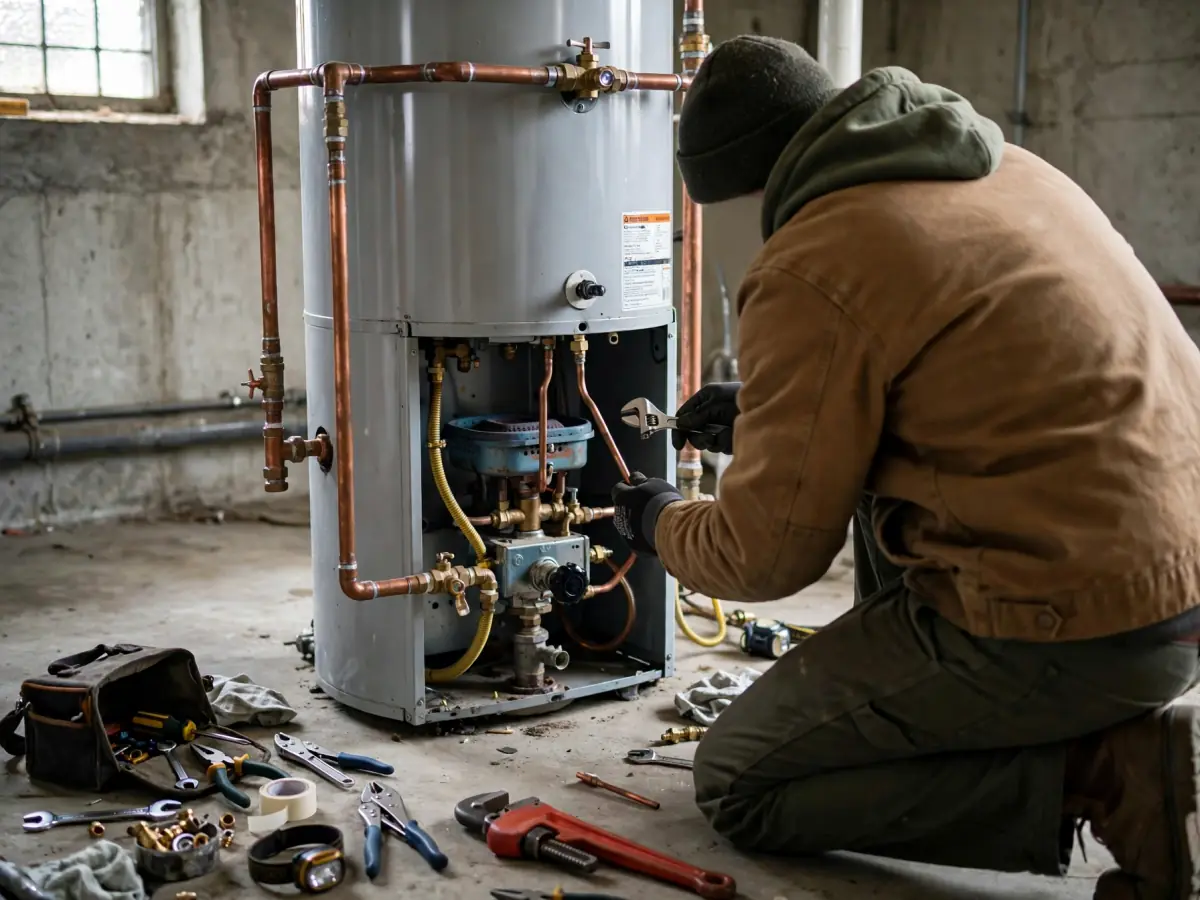
On a standard gas tank water heater, the gas control valve is the box on the front of the tank with the temperature dial and the On, Off and Pilot knob. Gas from the house supply enters one side of it, and two outlets leave the other: a small tube that feeds the pilot and a larger one that feeds the main burner. A probe from the back of the valve reaches into the tank and senses the water temperature.
Inside, the valve does three jobs. First, it is a safety valve: it only lets gas through while the thermocouple or thermopile reports that the pilot is lit. Second, it supplies a steady trickle of gas to keep the pilot burning. Third, it is the thermostat: when the water drops below the set temperature, it opens the main gas port and the burner fires; when the water reaches the setting, it closes it again. Many valves also include a high-limit device that shuts everything down if the water ever gets dangerously hot.
Because so much depends on this one component, its failure can show up as no hot water, lukewarm water, scalding water, a pilot that will not hold, or a burner that cycles erratically. That overlap with other faults is exactly why a valve is tested, not guessed.
Warning signs
Symptoms of a failing gas control valve
Each of these can have other causes, so they are clues to investigate rather than proof.
Pilot lit, burner never fires
The pilot burns steadily but the main burner never comes on even with cold water in the tank. The thermostat side of the valve may not be opening.
Water much too hot
Water far hotter than the dial setting, or a relief valve that starts discharging, can mean the thermostat is stuck open. Turn the heater down or off and have it checked.
Pilot will not hold with a good sensor
If the thermocouple tests strong but the pilot still drops out, the magnet inside the valve that holds the safety seat open may have failed.
Temperature dial does nothing
Turning the dial up or down makes no difference to how often or how long the burner runs.
Gas smell at the valve
Any gas odor near the valve or its connections is a reason to leave and call the gas utility from outside, not to troubleshoot. [3]
Status light codes
Many modern valves have an LED that blinks a fault code. The pattern, read against the manual, narrows the cause before parts are changed.
Why they fail
Why gas control valves fail
Gas valves are reliable, but they live in a hot, sometimes dusty spot and cycle thousands of times a year. The internal electromagnet that holds the safety seat open can weaken, the thermostat mechanism can stick, and on electronic valves the circuit board or its temperature sensor can fail. Debris in the gas supply occasionally lodges in a port, especially after work on the gas line.
Some failures are caused from outside the valve. Sediment at the bottom of a tank makes the burner run much longer than it should, which keeps the valve and the probe in constant use. [1] A heater that has overheated because of a stuck thermostat may also have damaged its high-limit device. Water leaking from above onto the valve, from a weeping relief valve or a corroded fitting, can ruin the electronics on newer models.
Valves are matched to the heater. Size, gas type, pilot style, probe length and electrical connections all vary between manufacturers and even between model years. The correct replacement is the one listed for that specific heater, not a universal substitute, because the valve is part of the appliance's safety certification.
Testing
How a plumber confirms the valve is the problem
- 1
Check the gas supply
Confirm the supply valve is open, other gas appliances work, and no seismic shut-off or excess-flow device has closed.
- 2
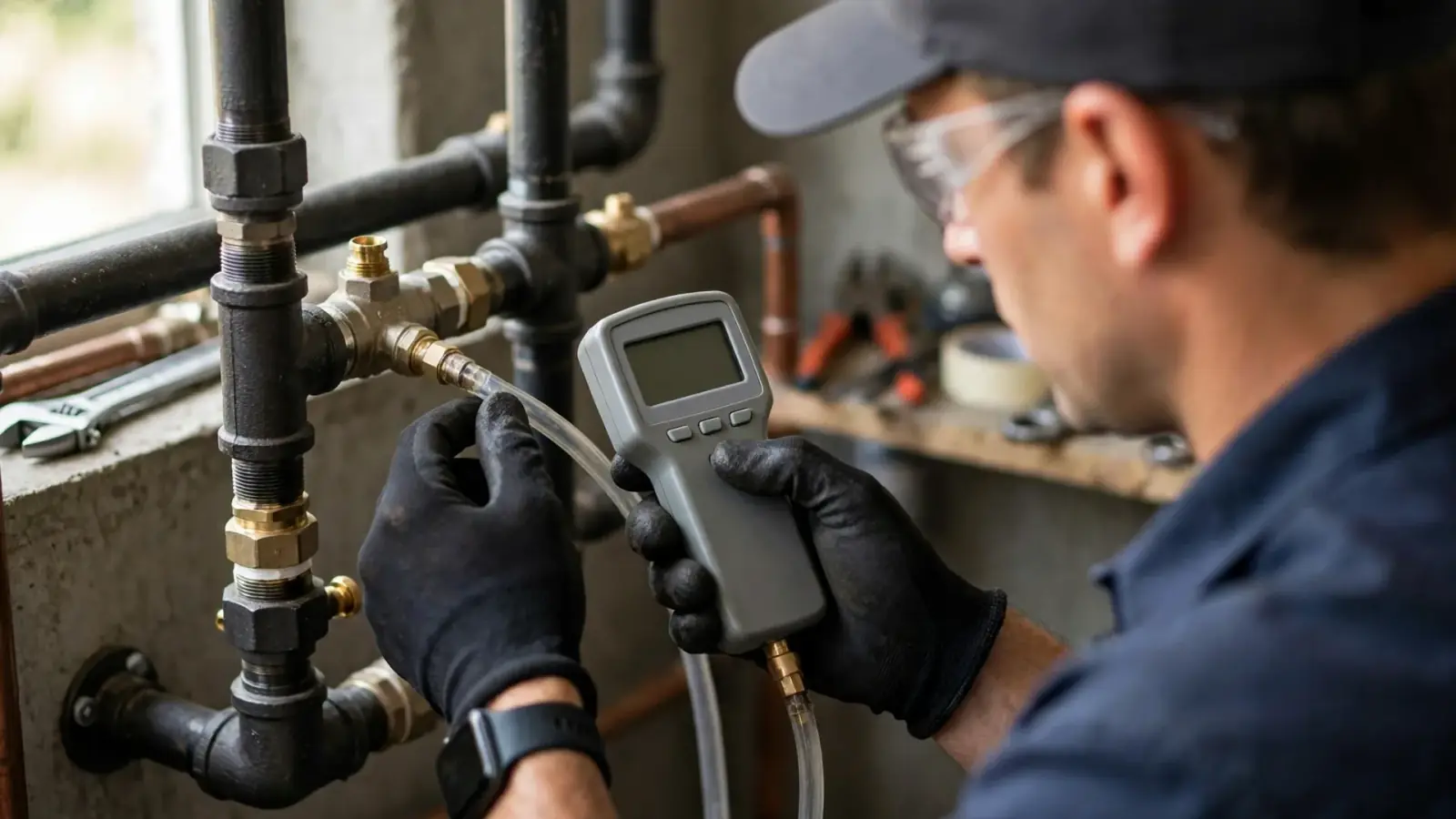
Measure gas pressure
A manometer reads the incoming and manifold pressure to make sure the burner is receiving the gas it needs.
- 3
Test the flame sensor
The thermocouple or thermopile output is measured. A weak sensor is replaced before the valve is blamed.
- 4
Read the valve
On electronic valves the status code is checked; on mechanical valves the response to a call for heat is observed and compared with the setting.
Diagnose it
Gas valve fault or something else?
| Symptom | Could be the valve if… | Could also be… |
|---|---|---|
| Burner will not fire | Gas pressure and pilot are good but the main port never opens | Closed supply valve, blocked burner orifice, clogged air intake |
| Pilot will not stay lit | The thermocouple reads well within range | Worn thermocouple, dirty pilot, downdraft from the vent |
| Water too hot | The dial setting is normal and the burner keeps running | Dial set too high, failed high-limit device |
| Water lukewarm | The burner shuts off well before the setting is reached | Sediment, broken dip tube, undersized tank for the household |
| Fault code on the valve | The code points to the valve or its sensor | Codes for flame or venting often point elsewhere |
The job
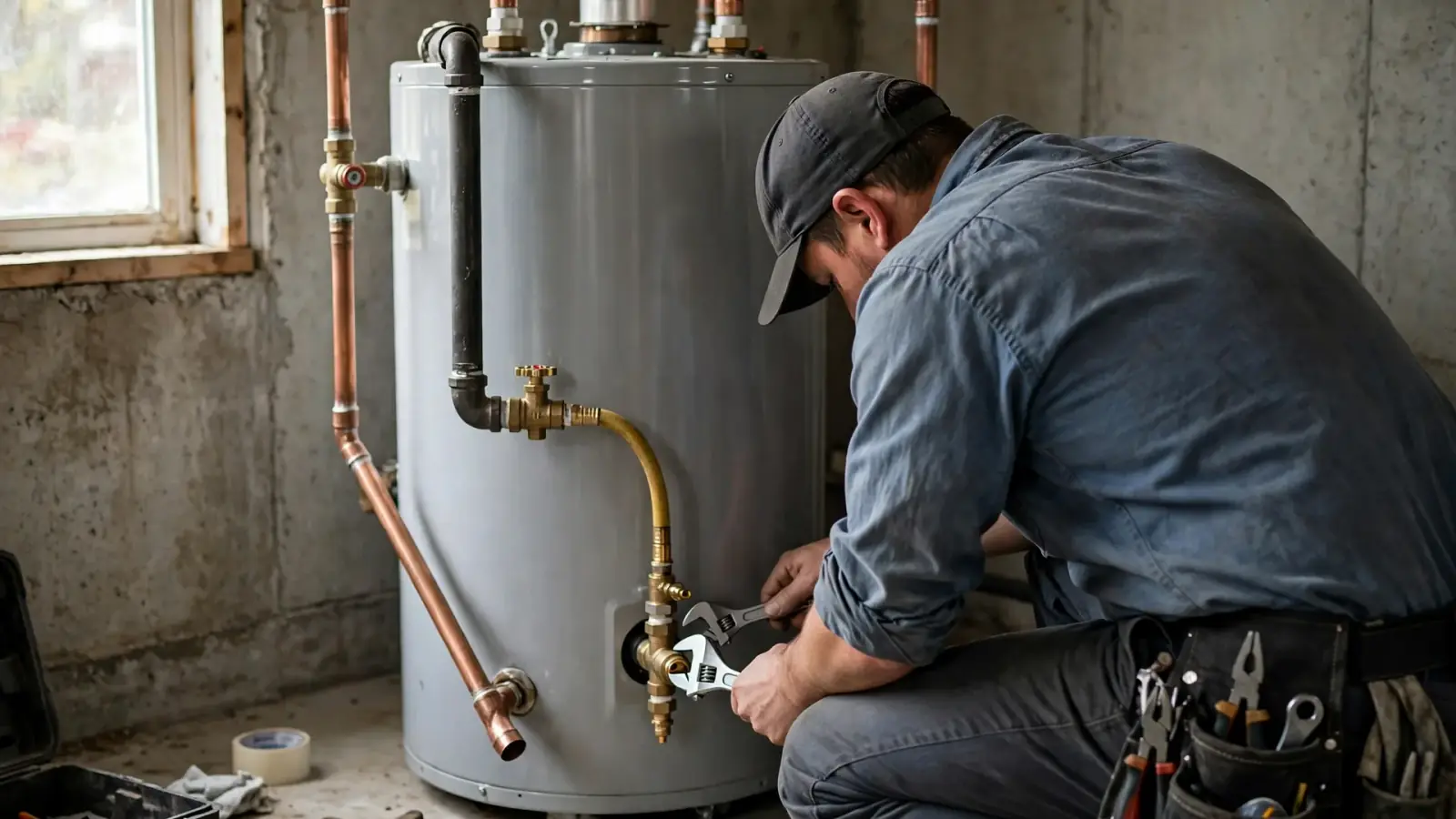
How a gas control valve is replaced
Replacing the valve is a gas-fitting job and is normally done by a licensed professional.
- 1
Isolate and drain
Gas is shut off and the tank is drained below the valve opening, because the valve threads into the tank wall.
- 2
Remove the old valve
The pilot, burner and sensor connections are released and the old valve is unthreaded from the tank.
- 3
Install the matched valve
The correct model-specific valve is threaded in with approved sealant, and all tubes and connections are refitted.
- 4
Refill, light and test
The tank is refilled before lighting, connections are leak-tested, gas pressure is confirmed and the heater runs a full cycle to the set temperature.
Repair or replace
When a new valve is not the best value
Of all the common water heater repairs, the gas control valve is the one most likely to tip the decision toward replacement. On a heater that is only a few years old, a new valve is usually the right choice: the tank has many years left and the repair restores it fully.
Add what you know about the tank: its age from the serial number, whether there is rust at the base, whether the water ever comes out discolored, and how much sediment came out when the tank was drained. If two or more of those point toward an aging tank, replacement is usually the better long-term decision.
If you decide to replace the heater, that is also the moment to reconsider the type. Some households move to a larger tank, a tankless unit or a heat pump water heater. Those options change the gas, electrical and venting requirements, so they are worth discussing before the old heater fails completely.
Valve types
Mechanical and electronic gas valves compared
Which kind of valve your heater has changes how it is diagnosed and what a replacement involves.
| Feature | Mechanical valve | Electronic valve |
|---|---|---|
| How it senses temperature | A liquid-filled probe that expands and contracts | An electronic temperature sensor read by a circuit board |
| How faults show up | The burner simply fails to fire or will not stop | A status light blinks a fault code |
| Power | Thermocouple only | Thermopile in the pilot or a plug-in power supply |
| Typical heaters | Older and basic atmospheric tank heaters | Newer, higher-efficiency and power-vent heaters |
| Replacement | Model-matched valve threaded into the tank | Model-matched valve, sometimes with a new sensor or harness |
The visit
What to expect during a gas valve visit
The visit usually starts with the plumber asking what the heater has been doing and checking the obvious things that are easy to miss in a hurry: the gas supply valve, the knob position, the dial setting and whether other gas appliances in the house work. They will then look at the installation around the heater, including the gas connector, the vent at the top and the relief valve line.
With the heater running, gas pressure is measured and the pilot and sensor are checked. If you approve the valve, the tank is drained, the valve swapped, the tank refilled and the heater brought back to temperature while every gas connection that was disturbed is leak-tested.
Clear access to the heater and to a floor drain or outdoor area for the drain hose helps the work go faster.
Safety
Overheating, relief valves and scalding
A gas valve that fails in the 'off' position is an inconvenience. One that fails 'on', letting the burner run past the set temperature, is a safety issue. Water can reach scalding temperatures, and pressure rises as the water heats. The temperature and pressure relief valve on top of the tank is designed to open and discharge water before the tank is endangered, which is why a sudden drip or gush from the relief pipe together with very hot water calls for turning the heater off and getting it checked quickly.
Never plug or cap a relief valve discharge pipe to stop it dripping. The drip is the warning. Keep children and anyone with reduced sensation away from very hot taps until the cause is fixed, and once the valve is repaired, confirm the delivered temperature at a faucet with a thermometer.
Do it yourself?
Gas valve checks a homeowner can make
- Dial settingMake sure the temperature dial has not been turned to Vacation or the lowest setting; the U.S. Consumer Product Safety Commission recommends 120°F for most homes [2].
- Knob positionConfirm the control knob is set to On rather than Pilot after relighting.
- Other gas appliancesIf the stove does not light either, the problem is the gas supply, not the heater's valve.
- Leave the valve aloneDo not remove, open or repair a gas valve. It is a certified safety component and must be replaced as a unit by a qualified professional.
Los Angeles
Gas valve replacements in Los Angeles homes
Most gas water heaters in Los Angeles are supplied by the regional gas utility, and many homes have seismic gas shut-off valves or excess-flow devices that can make a heater look dead after an earthquake or a sudden pressure change.
Heaters in garages are the norm in single-family neighborhoods, but condos and older homes often have gas heaters in closets with long vent runs. In those locations, combustion air and venting have to be confirmed whenever the valve is replaced, because a valve that lets the burner run longer than before can reveal a venting problem that was hidden. Carbon monoxide alarms should be installed and tested near any gas appliance [4].
Valve replacement does not usually require a permit on its own in the City of Los Angeles, but replacing the entire heater does.
Prevention
Helping a gas valve last
- Flush sediment as the manufacturer recommends so the burner runs normal-length cycles.
- Keep the temperature setting moderate rather than at maximum.
- Fix drips from the relief valve or fittings above the valve promptly so water does not reach it.
- Keep the area around the heater clean and dry, and the air intake clear of lint and dust.
- Have the heater checked after any earthquake that closes the seismic gas shut-off.
Electronic valves
Electronic and power-vent valves
Newer and higher-efficiency gas water heaters often use electronic gas valves with a microprocessor, a temperature sensor instead of a liquid-filled probe, and a status light that communicates through blink patterns. Some are powered by a thermopile in the pilot flame; others plug into an outlet, especially on power-vent heaters that use a blower to push exhaust out through plastic venting.
These valves give better temperature control and clearer diagnostics, but they add parts that can fail on their own, such as the sensor, the board or the blower's pressure switch. A blink code that points to the venting or the pressure switch, for example, means the valve itself may be perfectly healthy. Reading the code against the manufacturer's chart is always the first step.
Because electronic valves are specific to their heater series, availability can vary. A plumber who works on your brand regularly is more likely to carry the right valve or know how quickly it can be sourced.
Newer models
Gas control valves and newer heaters
Gas water heaters made in recent years increasingly use electronic gas controls with a thermopile or a powered igniter instead of a standing pilot and thermocouple. These controls often have a status light that flashes a diagnostic pattern when something is wrong. The pattern, decoded with the manufacturer's chart on the heater's label, points the plumber toward the sensor, the thermopile, the flame or the valve itself.
Because electronic controls monitor more conditions, they also shut the heater down for reasons that would not have stopped an older model, such as a slightly weak thermopile or a temperature sensor out of range. Some of these faults are fixed by cleaning or replacing a sensor; others need a new control.
Electronic controls are matched to specific heater models. A plumber needs the exact model number from the rating plate to get the correct replacement, and an incorrect control should never be fitted.
When the valve is replaced, the plumber relights or restarts the heater, checks every gas connection for leaks, confirms the burner flame and draft, and sets the temperature. Ask them to show you the new control's settings and what its status light means, so you can describe any future problem clearly.
FAQ
Gas control valve questions
How do I know if my water heater gas valve is bad?
Typical signs are a pilot that stays lit while the burner never fires, water far hotter than the setting, or a pilot that will not hold even though the thermocouple tests good. A plumber confirms it by checking gas pressure and the sensor first.
Can a gas control valve be repaired?
No. It is a sealed, certified safety component. When it fails it is replaced with the correct model-specific valve rather than opened or rebuilt.
Is it worth replacing the gas valve on an old water heater?
On a young heater with a sound tank, usually yes. On an old tank showing rust or leaks, replacing the whole heater is often the better choice.
Why is my water suddenly too hot?
A thermostat stuck in the on position can let the burner run past the setting. Turn the heater down or off, watch for a discharging relief valve, and have the valve tested promptly.
How long does a gas valve replacement take?
Usually a few hours on site, most of it draining, refilling and testing. If the valve must be ordered, the heater may be out of service until it arrives.
Does replacing the valve require a permit?
Replacing the whole heater requires a permit in the City of Los Angeles. Replacing a component like the valve generally does not, but ask your contractor about local requirements.
What does the blinking light on my gas valve mean?
It is a status or fault code. The number of flashes corresponds to a condition listed in the heater's manual, such as a pilot or sensor problem, which helps narrow the cause.
Can I use a universal gas valve?
The safe choice is the replacement valve listed for your heater model, because the valve is part of the appliance's certified safety system.
Should I replace the thermocouple when the gas valve is replaced?
Replacing an aging thermocouple at the same time avoids a second visit if the old sensor fails soon after the new valve goes in.
Can low gas pressure damage the valve?
Low supply pressure does not usually damage the valve, but it makes the burner perform poorly and can trigger lockouts that look like a valve fault. That is why pressure is measured before any valve is replaced.
Why does the burner light and then shut off quickly?
Short burner cycles can come from a weak flame sensor, a venting or draft problem, a blocked burner, or a valve that is failing. Watching when it shuts off, and reading any status code, separates these causes.
Will a new valve change my hot water temperature?
A new gas control valve should hold the set temperature more accurately. After replacement, check the water at a tap and adjust the dial; the CPSC recommends 120°F to reduce scald risk.
What does a flashing light on my gas valve mean?
Electronic gas controls flash a diagnostic pattern when they detect a fault. Count the flashes and check the chart on the heater's label, then tell the plumber what you saw.
Can I replace a gas control valve myself?
No. It involves gas connections, the burner assembly and leak testing, and must be done by a qualified professional using the exact part for your model.
Does a gas valve replacement need the tank drained?
Usually yes. The gas control valve threads into the tank below the water line, so the plumber drains the tank partway before removing it, then refills completely before relighting.
Why did my gas valve fail?
Common causes include age, sediment affecting the temperature sensor, debris in the gas supply and, on electronic controls, a weak thermopile or sensor fault.
Does a new gas valve need a permit?
A like-for-like valve replacement is usually treated as a repair. Your plumber can confirm whether a permit applies.
Will a new gas valve fix a heater that keeps shutting off?
Only if the valve is the fault. Testing the thermocouple or thermopile, pilot and draft comes first, since those often cause shutdowns.