
Key facts: Heat Pump Water Heater Installation
- Heat pump water heaters move heat from the air into the water and can use far less electricity than standard electric tanks [1].
- They need space and air volume around the unit, a place to drain condensate, and a suitable electrical circuit.
- Warm garages and utility rooms suit them well; the unit cools and dehumidifies the space it sits in.
- Incentive programs for heat pump water heaters exist in California at various times; check current offers before buying [3].
How it works
How a heat pump water heater works
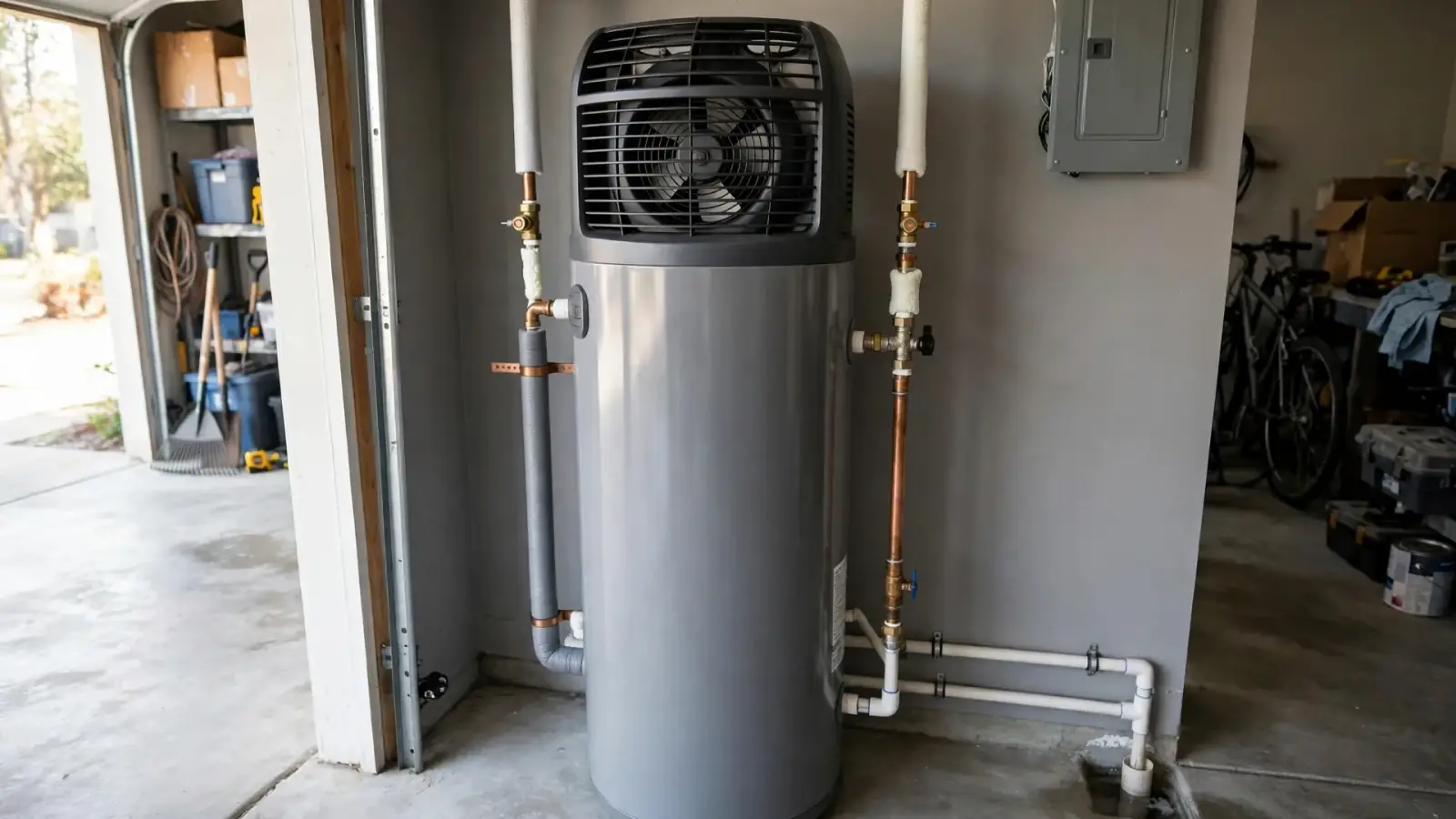
A heat pump water heater, sometimes called a hybrid water heater, combines a storage tank with a small heat pump mounted on top. A fan draws room air across a cold coil filled with refrigerant. The refrigerant absorbs heat from the air, a compressor raises its temperature, and a condenser wrapped around or inside the tank transfers that heat into the water. It works on the same principle as a refrigerator, just in reverse.
Because it moves heat rather than creating it, a heat pump water heater can deliver the same hot water as a standard electric tank while using a fraction of the electricity [1]. Most models also include conventional electric elements as backup. When demand is very high, such as several showers in a row, or when the surrounding air is too cold, the controls can switch on the elements to keep up.
The heat has to come from somewhere, and that has side effects. The unit blows out cooler, drier air and produces condensate water that must be drained. It also makes some noise from the fan and compressor, similar to a window air conditioner or a refrigerator. These are the reasons location planning matters so much.
Good fit?
Signs a heat pump water heater is a good fit
Electric tank today
Replacing a standard electric tank is the simplest switch, because a suitable circuit and electric connection usually already exist.
Garage or large utility room
These spaces usually have the air volume the unit needs and tolerate the cooler exhaust air.
Warm location
Heat pumps work best when the surrounding air is warm; many Los Angeles garages are ideal.
Drain nearby
A floor drain, laundry standpipe or outside wall nearby makes condensate drainage easy.
Planning ahead
Switching before the old heater fails leaves time to arrange electrical work and incentives.
Requirements
What a heat pump water heater needs
Each manufacturer's installation manual sets the exact requirements. These are the categories every installation must address.
| Requirement | Why it matters | Common solutions |
|---|---|---|
| Air volume | The unit draws heat from the room; too small a space gets cold and slows heating | Garage or large room, louvered door, or ducted intake and exhaust |
| Clearance | The fan and filter need access and airflow | Space above and around the unit as the manual specifies |
| Condensate drain | The cooling coil produces water that must go somewhere | Gravity drain to a floor drain or outdoors, or a condensate pump |
| Electrical circuit | Most full-size units need a dedicated circuit | Reuse an electric tank circuit, or add a new circuit from the panel |
| Height | Units are often taller than the tank they replace | Measure the ceiling and doorway before ordering |
| Noise tolerance | Fan and compressor sound like an appliance | Avoid installing next to bedrooms or quiet living spaces |
Gas to electric
Switching from gas to a heat pump
Many Los Angeles homes have gas tank heaters, and switching to a heat pump is a bigger project than a like-for-like swap. The gas line to the heater has to be capped safely, the old vent may be removed or sealed, and an electrical circuit has to be provided where there was none. In some homes, the electrical panel has spare capacity and a circuit can be added simply; in others, the panel is already full or the service is small, and an electrician may need to assess it.
Manufacturers have introduced lower-power heat pump water heaters designed to plug into a standard 120-volt outlet, aimed specifically at homes switching from gas without major electrical upgrades. They have their own sizing and performance trade-offs, so they are worth discussing with an installer if the panel is the main obstacle.
Because the heat pump also needs air volume and a drain, the old gas heater's location is not always the right one. A closet that suited a gas heater may be too small for a heat pump without a louvered door or ducting. A good installer looks at the whole picture before recommending a model.
Planning
How the site assessment works
- 1
Measure the space
Room volume, ceiling height, doorway width and clearances are measured against the manufacturer's requirements.
- 2
Check electrical
The existing circuit or panel capacity is checked to see whether a dedicated circuit is available or needs adding.
- 3
Plan the drain
A route for the condensate drain is chosen, by gravity where possible or with a pump where not.
- 4
Size the tank
Household hot water use is matched to the unit's capacity and first-hour rating, considering heat-pump-only and hybrid modes.
The job
What installation involves
- 1
Permit and removal
The permit is arranged, the old heater drained and removed, and any gas line capped and vent sealed if converting.
- 2
Set and connect
The new unit is set level on a suitable surface, strapped against earthquakes and connected to the water lines with an expansion tank where required.
- 3
Electrical and drain
The dedicated circuit is connected and the condensate line run to its drain.
- 4
Commission
The tank is filled before power, the operating mode is set, and the unit is run to confirm heating, drainage and airflow.
Operating modes
Understanding the operating modes
| Mode | How it heats | When to use it |
|---|---|---|
| Heat pump only | Uses only the heat pump; slowest recovery, lowest energy use | Smaller households and steady, predictable use |
| Hybrid or energy saver | Heat pump first, elements when demand is high | Most households; the usual default |
| High demand | Uses elements more readily for faster recovery | Guests or periods of heavy use |
| Electric only | Behaves like a standard electric tank | Temporarily, if the heat pump needs service or the space is very cold |
| Vacation | Keeps water at a low temperature | Extended time away from home |
Sizing
Sizing a heat pump water heater
Sizing works a little differently from a standard tank. In heat-pump-only mode, recovery is slower, so a heat pump unit is often chosen one size larger than the tank it replaces. A household that managed with a 40- or 50-gallon electric tank may be better served by a 50- or 65-gallon heat pump model, especially if several showers happen back to back in the morning.
The first-hour rating on the unit's label is the most useful number. It estimates how much hot water the heater can deliver in an hour starting with a full tank, in its standard mode. Comparing that number with the household's peak hour of use, rather than relying on gallons alone, avoids running out of hot water and leaning on the backup elements more than necessary.
Ducting
Ducting when the space is too small
When a closet or small room cannot provide enough air on its own, many models allow ducted intake, exhaust or both. Ducting the cold exhaust air outdoors, or into a space where it is useful, prevents the room from getting too cold. Ducting the intake from a larger or warmer space gives the heat pump better air to work with.
A louvered or vented door that lets the closet share air with the next room is often the simpler first option where the manual allows it.
Incentives
Rebates and incentives
California has supported heat pump water heaters through a series of programs, and utilities have offered rebates at various times. Because the amounts, eligibility rules and participating contractors change often, this page does not list figures. The reliable approach is to check the current programs before you buy, since some require pre-approval or a participating installer, and the equipment usually must meet efficiency criteria such as ENERGY STAR certification [2][3].
Ask your installer whether they participate in current programs and whether they handle the paperwork. Keep the model number, the invoice and installation photos, which most programs require as proof.
Do it yourself?
What you can prepare
- Measure your spaceNote the room size, ceiling height and doorway width where the heater would go.
- Look at your panelPhotograph the electrical panel and its label so an installer can judge capacity before visiting.
- Find a drain routeIdentify the nearest floor drain, laundry standpipe or exterior wall.
- Leave the work to prosGas capping, electrical circuits, refrigerant-based equipment and permits belong with licensed professionals.
Los Angeles
Heat pump water heaters in Los Angeles
Los Angeles has a favorable climate for heat pump water heaters. Garages and utility rooms in much of the city stay mild through the year and warm in summer, especially inland and in the San Fernando Valley, which helps the heat pump run efficiently. The cool, dry air the unit exhausts can even make a hot garage more comfortable.
Many homes still have gas heaters in small closets, and many condos have electric tanks in tight utility spaces. Those locations need a careful look at air volume and drainage. Replacement in the City of Los Angeles requires a permit through the Department of Building and Safety, and the installation must include the seismic strapping California requires for every water heater [4].
Timing
Switch on your schedule, not in an emergency
The biggest obstacle to a heat pump water heater is usually timing. When an old tank fails suddenly, the household needs hot water that day, and a like-for-like replacement is the fastest option. A heat pump installation may need an electrical circuit, a new drain route or incentive pre-approval, none of which is ideal under pressure.
If your current heater is several years old, or you already know you want to switch, ask for a site assessment now. You will learn what the space needs, have time to arrange any electrical work and apply for incentives, and be ready to install when you choose rather than when the old heater forces the decision.
Planning ahead also lets you compare options calmly. Sometimes the assessment shows a heat pump fits easily; sometimes it shows that a different location, a plug-in model or another type of heater makes more sense for the house.
Maintenance
Looking after a heat pump water heater
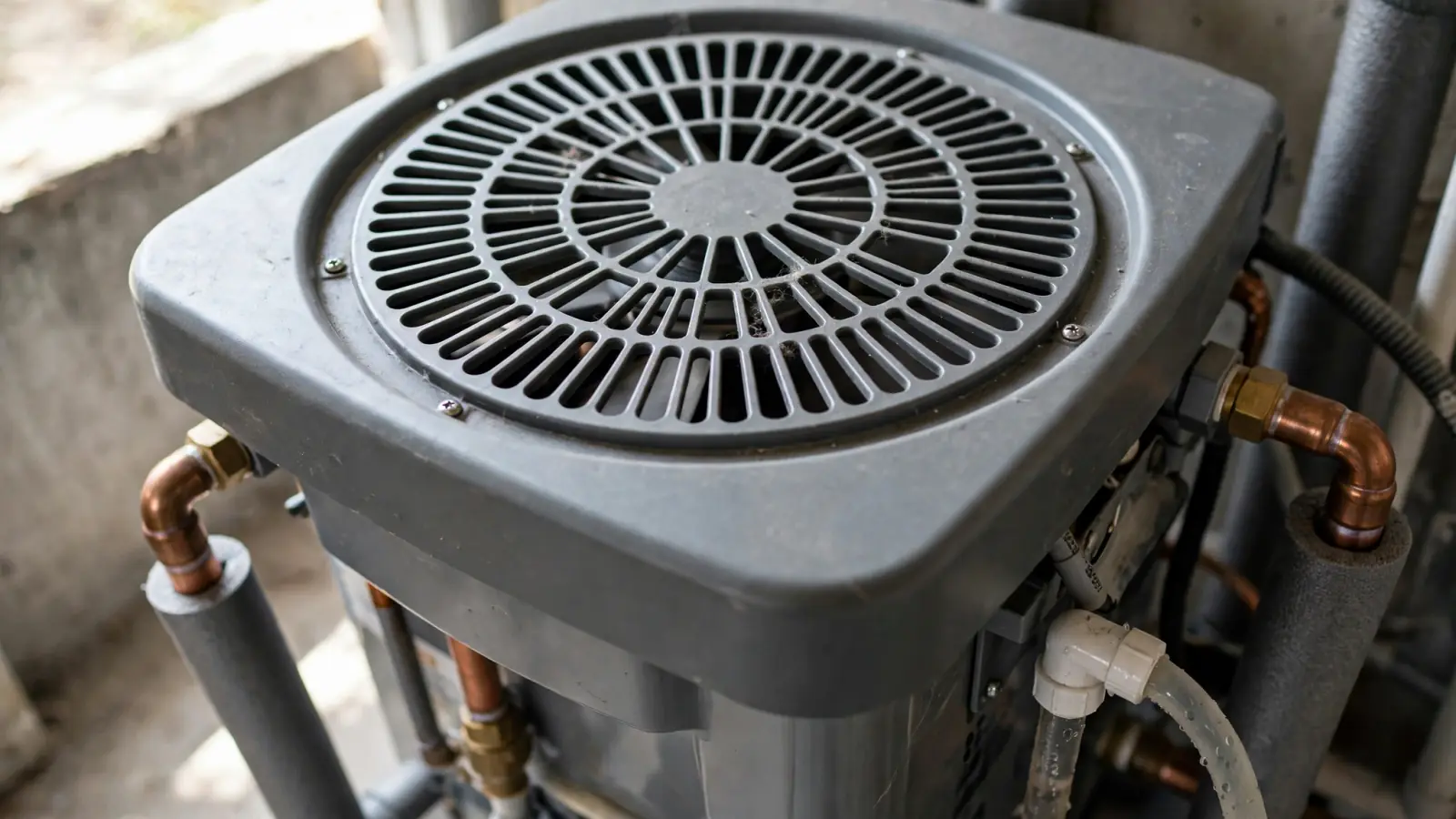
Heat pump water heaters need a little more routine attention than standard tanks, but nothing complicated. The air filter on the intake should be cleaned regularly, as the manual describes, because a clogged filter reduces airflow and efficiency. The condensate drain should be checked so it does not clog and back up.
The tank side still needs the same care as any tank heater: periodic flushing of sediment, a relief valve test and an anode rod check. Many units display alerts for a dirty filter or a drain problem, which makes it easy to stay ahead of issues.
Troubleshooting
Common heat pump water heater issues
| What you notice | Likely cause | Typical fix |
|---|---|---|
| Hot water runs out more than expected | Heat-pump-only mode during heavy use, or undersized tank | Switch to hybrid mode or review sizing |
| Filter or airflow alert | Clogged intake filter | Clean the filter as the manual describes |
| Water around the unit | Blocked or disconnected condensate line | Clear the drain line or condensate pump |
| Unusual compressor noise | Fan or compressor issue | Service by a qualified technician |
| Heats slowly in winter | Cold surrounding air | Hybrid mode, ducting or a warmer location |
The visit
What to expect from assessment to install
Most heat pump projects start with a site visit. The installer measures the space, looks at the electrical panel, checks where condensate can drain and asks about how your household uses hot water.
On installation day, the old heater is drained and removed, the new unit set, strapped and connected, and the electrical and drain work completed. The installer should show you how to change operating modes and clean the filter, and leave the manual and warranty information for your records and for any rebate paperwork.
Safety
Safety and the electrical side
A heat pump water heater combines plumbing, electrical work and a sealed refrigerant system, so installation and repairs belong with qualified professionals. Electrical work must be sized correctly for the unit's rating, and the refrigerant circuit should only be opened by technicians certified to handle refrigerants.
As with any tank heater, the temperature and pressure relief valve must discharge to a safe location, and the tank must be completely full before power is applied, because the backup elements can burn out if energized dry.
Compared
Heat pump, gas tank or tankless?
Each type has a place. A gas tank is usually the simplest like-for-like replacement where gas is already installed. A gas tankless unit offers continuous hot water and saves space but often needs a larger gas line and new venting. A heat pump water heater offers the lowest operating energy for an electric heater and fits California's direction on building electrification, but needs space, airflow, a drain and a suitable circuit.
The right choice depends on the house, the household's hot water use, the existing gas and electrical capacity, and how long you plan to stay. An installer who works with all three types can lay the options side by side for your specific home.
Living with one
Noise, cool air and living with a heat pump
A heat pump water heater has a compressor and fan, much like a small air conditioner, so it makes a steady hum while it runs. In a garage this is rarely noticed; in a closet next to a bedroom it can be. The unit also exhausts cool, dry air, which can be welcome in a hot Los Angeles garage in summer.
Most models offer several modes: a heat pump-only mode for the best efficiency, a hybrid mode that uses the backup electric elements when demand is high, and sometimes a vacation mode. Hybrid mode is the usual default because it balances efficiency with recovery speed.
The air filter on the intake needs cleaning from time to time, and the condensate drain should be checked so it keeps flowing. Both are simple tasks, and the manual explains them.
Alarms
Why is my water heater beeping?
A beeping water heater is almost always one with electronics: a heat pump water heater, a tankless unit, or a heater fitted with a leak detector. Traditional gas and electric tanks have no speaker and do not beep. Heat pump models use an audible alarm, usually with a code on the display, to report conditions such as a clogged air filter, a blocked condensate drain, a sensor fault or a problem that has switched the unit to its backup elements.
Read the code on the display and look it up in the owner's manual for your model; it names the condition and often the fix. Cleaning the intake filter and clearing the condensate line solve many alarms. If the alarm returns, or the code points to the compressor, refrigerant or a sensor, have the unit inspected. A separate leak detector that beeps means water has reached its sensor: close the cold-water valve and find the source.
FAQ
Heat pump water heater questions
How does a heat pump water heater save energy?
A heat pump water heater moves heat from the surrounding air into the water instead of generating heat with an element, so it uses much less electricity for the same hot water.
Can a heat pump water heater go in a closet?
Only if the closet meets the manufacturer's air volume requirements, often with a louvered door or ducting. Many closets are too small without changes.
Are heat pump water heaters noisy?
Heat pump water heaters make a fan and compressor sound similar to a refrigerator or small air conditioner. Placing one away from bedrooms avoids most complaints.
Do I need a new electrical circuit?
Full-size models usually need a dedicated circuit. Replacing an electric tank often reuses its circuit; switching from gas usually means adding one. Some newer models plug into a standard outlet.
Where does the condensate go?
Through a drain line to a floor drain, laundry standpipe or outside, by gravity or with a small condensate pump.
Will a heat pump water heater make my garage cold?
A heat pump water heater exhausts cooler, drier air, so a garage can cool by a few degrees. In warm Los Angeles garages that is often welcome.
Do heat pump water heaters work when it is cold?
Heat pump water heaters work best in mild to warm air. In a cold space they lean on their backup electric elements, which uses more energy; most Los Angeles garages stay warm enough.
Is there a rebate for heat pump water heaters in California?
Programs have been available at various times through utilities and the state. Check current offers and eligibility before buying, since some require pre-approval.
How long does installation take?
A straightforward swap for an electric tank can be done in a day. Gas conversions, new circuits or relocations can take longer.
What size heat pump water heater do I need?
Often one size larger than your current tank, because heat-pump-only recovery is slower. The first-hour rating compared with your household's busiest hour is the best guide.
Can I install a heat pump water heater in an apartment or condo?
Sometimes, if the space has enough air volume or can be ducted, a drain is available and the building's electrical capacity and association rules allow it.
Does a heat pump water heater need maintenance?
Yes, but it is simple: clean the air filter, keep the condensate drain clear, and give the tank the usual flushing, relief valve test and anode check.
How long do heat pump water heaters last?
Many are designed for a service life similar to or longer than standard tanks, and the warranty length gives a guide. Filter cleaning, drain care and normal tank maintenance help them last.
Can I keep my gas line after switching?
Yes. The line to the water heater is capped safely, and other gas appliances such as the stove or furnace keep working as before.
Does a heat pump water heater need a condensate drain?
Yes. A heat pump water heater pulls moisture from the air as it runs, and that water must drain through a condensate line to a floor drain, laundry sink or condensate pump.
Where should a heat pump water heater go?
In a space with enough air volume and warmth, such as a garage, with room for airflow and a condensate drain nearby.